

A strong hockey season starts with manageable steps, not a perfect off-season. Adult hockey season preparation Calgary players can fit around real life starts with a plan for skating, conditioning, equipment, and weekly logistics. If you’re unsure when to get back on the ice or whether your gear still fits, start with the basics and build steadily.
Work, family commitments, and travel across Calgary can make it hard to find time for games. Keep preparation realistic: rebuild your routine gradually, inspect your equipment before the first game, and choose a schedule you can maintain. You don’t need to arrive at peak fitness. Give yourself time to get comfortable on the ice again.
This guide covers a practical fitness routine, equipment checks, and ways to plan around the season. It also explains how to choose a playing option that suits your availability, including team or individual registration with the South Calgary Recreational Hockey League (SCRHL). With Fall and Winter seasons and morning, evening, and weekend sessions, you can consider different schedules as you get ready to play.
Key Takeaways
- Start adult hockey season preparation Calgary with a manageable routine that accounts for your experience, fitness, and available time.
- Progress from regular movement to skating and puck practice at a pace that feels realistic for you.
- Compare self-directed practice and league play to choose a preparation route that suits your goals.
- Use a pre-season checklist to review equipment fit and condition, recovery habits, and game-day plans.
- Consider whether team or individual registration and morning, evening, or weekend sessions fit your season plans.
Why adult hockey season preparation in Calgary starts before opening night
Season preparation is what you do before the first game to make returning to the ice feel more manageable. It isn’t a test of athletic ability or a demand to train like a professional. A practical adult hockey season preparation Calgary plan accounts for your starting point, available time, and comfort on skates. It also includes the everyday logistics that can make a busy week easier to manage.
Returning players may remember the pace of a game but feel rusty after time away. Newer players may still be getting comfortable with skating and puck movement. Others may have experience but need to fit hockey around work, family, and commuting. The aim is the same: build familiarity gradually rather than expect your first game to feel like your best game.
What does “ready for the season” mean for an adult player?
Readiness is practical and personal. You’re working towards feeling more comfortable moving on the ice, having enough basic stamina to take part, and knowing how hockey fits into your weekly routine. Recreational play doesn’t require a professional standard or a fixed fitness benchmark.
Start with a realistic goal that matches your current routine. You might make time for regular movement, get back on the ice, or practise simple puck touches once skating feels familiar. Hockey combines skating, stickhandling, passing, and shooting, as outlined in this general overview of ice hockey. You don’t have to work on everything at once. A gradual return gives you time to notice what feels comfortable and where you want more practice.
Why Calgary schedules deserve an early look
Fitness is only one part of feeling prepared. Look at the shape of a typical week before the season begins. Consider work hours, family responsibilities, your commute, and which ice times are realistic. A session that fits your regular routine may be easier to keep than one that requires repeated schedule changes.
Calgary winter weather can affect travel planning. Allow enough time to get to and from the rink, and think through what you’ll need on game days. SCRHL offers morning, evening, and weekend sessions, so it helps to consider your preferred times as you plan.
Make a short plan before opening night:
- Choose a regular time for movement or skating that fits your week.
- Identify which days and ice times work alongside your commitments.
- Give yourself space to rebuild comfort instead of judging readiness by one skate.
Preparation is separate from choosing a division, registering a team, or comparing league formats. For now, focus on making your return to hockey manageable. Planning early can help you arrive at the season with clearer expectations and fewer last-minute decisions.
Build skating comfort and hockey fitness before Calgary league play
Getting ready for league play doesn’t require a strict training plan. Start with movement you can fit into your routine, then build towards time on the ice and puck practice. The aim is to feel more familiar with hockey’s movements before games begin, not to chase a particular fitness number.
Gradual pre-season preparation means returning to activity in manageable steps and giving yourself time to rebuild comfort with skating and basic hockey skills.
A gradual return to skating and movement
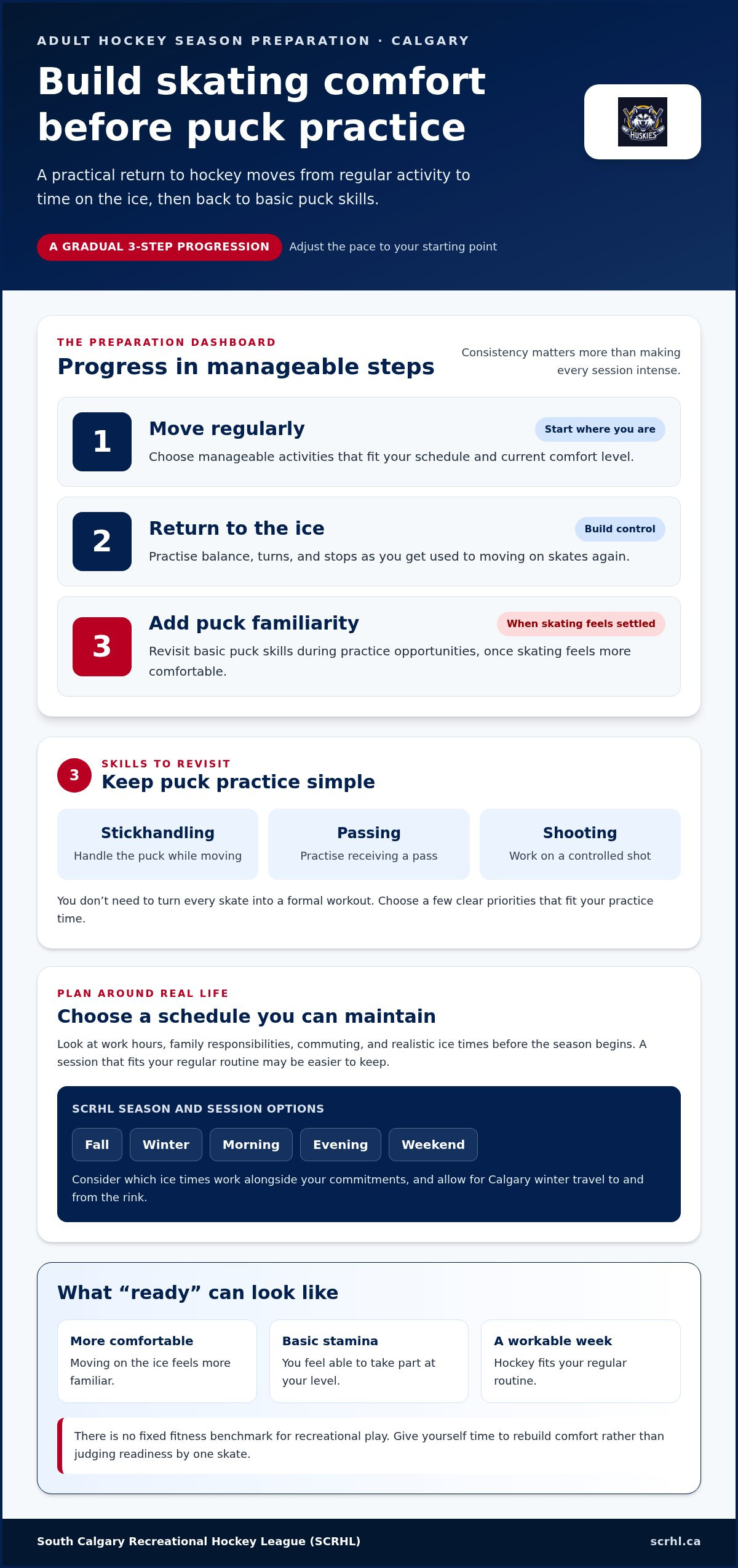
Begin with regular activity that suits your current routine. Consistency matters more than making every session intense. As you feel ready, add skating practice when you have access to ice. Use that time to regain your balance, practise turns and stops, and get used to moving on skates again. These basics can make the first game feel less unfamiliar.
A simple progression can keep preparation focused:
- Move regularly. Choose manageable activities that fit your schedule and current level of comfort.
- Return to the ice. Spend time skating and focus on control, balance, turns, and stops.
- Add puck familiarity. Revisit basic skills during practice opportunities, once skating feels more settled.
Adjust the pace to your starting point. Someone who skates often may be ready to revisit puck skills sooner; someone returning after a long break may prefer to spend more time regaining comfort on the ice. If you have health concerns or a recent injury, seek appropriate professional guidance before changing your activity routine.
Refresh puck skills without making preparation complicated
When you have a chance to practise, revisit stickhandling, passing, and shooting. Focus on familiarity: handling the puck while moving, receiving a pass, or taking a controlled shot. You don’t need to turn every skate into a formal workout. A few clear priorities can make practice useful without adding a complicated plan to an already full week.
Some players prefer structured skills practice, while others return to skating and puck work on their own. The National Strength and Conditioning Association also outlines off-ice training for hockey players, offering another perspective on preparation away from the rink.
For adult hockey season preparation Calgary players can sustain, choose a starting point you can repeat. Build skating comfort first, then add puck practice as it fits. When you’re ready to plan for organized play, explore adult recreational hockey in Calgary.
Choose the preparation route that fits your experience and schedule
Preparation can take different forms. Some players want time to rebuild comfort on their own. Others prefer structured skills practice. Players ready for scheduled games may choose organized league play. These routes serve different needs and can complement each other. Skills practice can refresh fundamentals before a season, while league games provide regular opportunities to play.
Choose based on what would help most right now: more confidence with basic skills, a flexible routine, or a season of organized games. Your approach can change as opening night gets closer.
Skills sessions or self-directed preparation?
Structured skills practice may suit players looking for instruction or a focused confidence refresh. It gives practice a clear purpose, such as working on skating or puck skills. Self-directed preparation offers more flexibility and may suit players who want to rebuild a routine at their own pace through regular movement, skating, or practice when access allows. Neither path is required for every player.
| Preparation route | Purpose | Best fit | What you can practise |
|---|---|---|---|
| Self-directed preparation | Rebuild familiarity on your own schedule | Players who value flexibility | Skating comfort and basic puck skills |
| Adult skills programming | Focus practice on skill development | Players seeking instruction or a confidence refresh | Skating, puck handling, passing, and shooting |
| Organized league play | Take part in scheduled games across a season | Players ready for regular recreational competition | Applying familiar skills in game situations |
Use the table as a starting point, not a ranking. A player returning after time away might begin with self-directed skating and add structured practice. Someone already comfortable on the ice may feel ready to move straight into organized play. Skills development and league participation can work together, but they answer different needs.
When is organized recreational play the right next step?
League play may suit you if you want scheduled games and the structure of a season. It gives preparation a practical focus: you’re getting ready to play with a team rather than practising without a game schedule in mind. SCRHL offers team and individual registration for adult recreational hockey in Calgary. Team registration may suit a group ready to play together; individual registration is an option for players joining on their own.
Match your next step to your goals: practise skills where you want a refresh, or consider organized play when you’re ready for a season of games. If you’re comparing adult league options, SCRHL’s adult league guide is a useful next reference. Choose what fits your experience, schedule, and preferred way to return to the game.
Use this pre-season checklist for gear, recovery, and game-day logistics
Getting ready for a game involves more than skating fitness. An equipment check, a travel plan, and a steady routine around rest and hydration can help prevent last-minute hassles. Use this checklist before the season and revisit it as needed. It focuses on your existing gear and personal preparations.
Check equipment before the first game
Set out your hockey gear with enough time to inspect it without rushing. Check that each item still feels comfortable and fits as expected. Look for visible wear or damage, and address anything that needs attention before you play. If something feels wrong when you try it on, don’t leave that discovery until game day.
- Try on your gear. Check the fit and comfort of your skates and protective gear, and make sure nothing feels unfamiliar or restrictive.
- Look for visible wear. Inspect the equipment you already use and note anything that may need repair or attention.
- Pack your essentials. Gather your skates, protective gear, and the other personal items you normally bring for hockey.
- Prepare clothing. Set aside what you’ll wear to and from the rink, along with any change of clothing you prefer to bring.
A trial pack can help. Put your gear together as if you were leaving for a game, then check that you haven’t missed anything you rely on. This can also show whether something needs cleaning, repair, or a more accessible place in your bag before the season gets busy.
Plan the routine around game day
Build a repeatable game-day routine around your session time. Account for work commitments, travel, and the time you need to get ready. In Calgary, winter weather is another reason to leave room in your travel plan. Preparing a few things in advance can make the day easier to manage.
- Plan your departure. Think through your route and leave enough time for the trip to the rink.
- Pack water and personal items. Put them with your gear ahead of time so they’re ready to go.
- Protect your recovery routine. Aim for consistent sleep and hydration around game days, and avoid adding demanding workouts at the last minute.
- Keep the plan realistic. Choose routines you can maintain alongside work and family commitments.
Preparation should support the season, not turn the evening before a game into a scramble. Use adult hockey season preparation Calgary to spot small issues early and create a game-day routine that works for your life. Once your gear and logistics are in order, explore SCRHL adult recreational hockey in Calgary.
Make your next step an organized adult hockey season with SCRHL
Preparation pays off when it leads to a season that fits your life. If you’re ready for scheduled games, the South Calgary Recreational Hockey League (SCRHL) offers organized adult recreational hockey in Calgary, with Fall and Winter seasons. You can register with a team or as an individual player. Both routes lead into organized league play and suit different starting situations.
Before choosing, think about what you want from the season. Do you already have a group ready to play together? Are you looking to join as an individual? How will games fit around work, family, and travel? These practical questions can help you decide what to explore next.
Team registration or individual registration?
Team registration is for players organizing to take part together. Individual registration is an option if you’re approaching the season without a team. Start by deciding whether you’re planning to play with a group or on your own. For team-specific details, the Fall Season Calgary Hockey Team Registration guide covers the team route. Solo players can use the guide about what to expect after individual hockey registration to understand that path.
Consider your availability alongside the registration route. A group may need to coordinate schedules, while an individual player can consider which session times suit their routine. Focus on the way into organized play that works for your circumstances.
Pick a season and session rhythm that works
SCRHL offers Fall and Winter seasons. Consider which season fits alongside your existing commitments. Session types include morning, evening, and weekend hockey, giving you different weekly rhythms to consider.
Look beyond the game itself. A morning session may mean adjusting your start to the day; evening play may need to work around work or family plans; weekend hockey may compete with other regular commitments. Consider travel, too. The best fit is a session you can plan around, not simply the one that looks easiest on paper.
As you complete your adult hockey season preparation Calgary, bring together the pieces you’ve worked on: skating comfort, gear readiness, and a realistic weekly plan. Then decide whether you’re approaching the season with a team or as an individual, and which season and session rhythm suits you. You don’t need to solve every game-day detail before taking that next step.
Find your place in a Calgary adult hockey season by exploring SCRHL’s adult recreational hockey options.
Carry your preparation into the season
A practical adult hockey season preparation Calgary players can sustain leaves room for hockey alongside the rest of life. You don’t need to have every detail perfected before you take part. Choose a manageable next step, then build consistency as the season takes shape.
Think about what would help you enjoy playing: sharing the ice with familiar teammates, meeting new people through recreational play, or making hockey a regular part of your week. That decision can turn preparation into something to look forward to, not another item on a long to-do list.
SCRHL offers organized recreational hockey for adults in Calgary, with team and individual registration for Fall and Winter seasons. Explore adult recreational hockey with SCRHL and choose a season that fits your plans.
Start where you are, make a realistic plan, and give yourself the chance to enjoy getting back on the ice. Your next season can begin with one practical decision.
Frequently Asked Questions
How far ahead should I start preparing for adult hockey season?
Start as soon as you can make room for regular movement and a return to skating. A practical adult hockey season preparation Calgary plan begins before opening night, leaving time to notice what feels rusty and adjust your routine. You don’t need a strict calendar. If you’re balancing work or family commitments, choose a repeatable time that fits your week and build from there.
Can I join a recreational hockey season if I have not played in years?
A long break doesn’t automatically rule out recreational hockey. Start by getting reacquainted with skating and consider how comfortable you feel moving, stopping, and turning before committing to games. An initial skate can help you assess your starting point. Set a personal goal, such as feeling comfortable on the ice, rather than expecting your old pace to return immediately.
What equipment should I check before adult hockey starts?
Check the hockey gear you already use, including your skates and protective equipment. Try each item on and look for visible wear, damage, or anything that affects fit or comfort. Pay attention to gear that has been stored for a long time or feels different from how you remember it. Pack the essentials you normally bring, then note anything that needs attention before game day.
Should I work on skating or fitness first when preparing for hockey?
Begin with manageable regular movement, then make skating a focus as you return to the ice. General activity can help you re-establish a routine, while skating practice lets you notice how balance and movement feel in hockey conditions. Add puck practice as access allows. There’s no universal benchmark to hit first. If health concerns or an injury affect your plans, seek appropriate professional guidance.
Does SCRHL offer adult hockey sessions at different times in Calgary?
Yes. SCRHL offers morning, evening, and weekend sessions for adult recreational hockey in Calgary. As you plan, consider which times fit your work and family commitments, along with the travel time you’ll need. Putting potential hockey times beside your regular weekly commitments can help you see which schedule is realistic to maintain.
Can I register for adult hockey without bringing a full team?
Yes. SCRHL offers individual player registration, so you can explore organized adult hockey without assembling a full team yourself. This route may suit someone returning to the sport, new to Calgary, or looking to play without coordinating a group. Individual registration is distinct from team registration. Consider which session times fit your routine as you plan your season.
Are adult hockey lessons the same as joining a recreational league?
No. Adult lessons or skills sessions focus on practising and developing hockey skills, while a recreational league centres on organized game play through a season. They serve different purposes. A player who wants a skills refresh may choose practice first, while someone ready for scheduled games may look at league play. Some adults choose both, using skills practice to support their participation in a recreational season.