

What if a hockey night felt like part of the family plan, not time taken from it? Balancing family and beer league hockey can be difficult when games overlap with dinner, bedtime, work shifts, or caregiving. It’s reasonable to want regular ice time and to feel uneasy about asking your household to adjust around it.
A workable routine starts with shared expectations, not last-minute calendar changes. Review the season schedule together, make family commitments visible, and agree on what feels fair before game nights begin. That gives everyone a clearer picture of the time involved and a chance to plan around it.
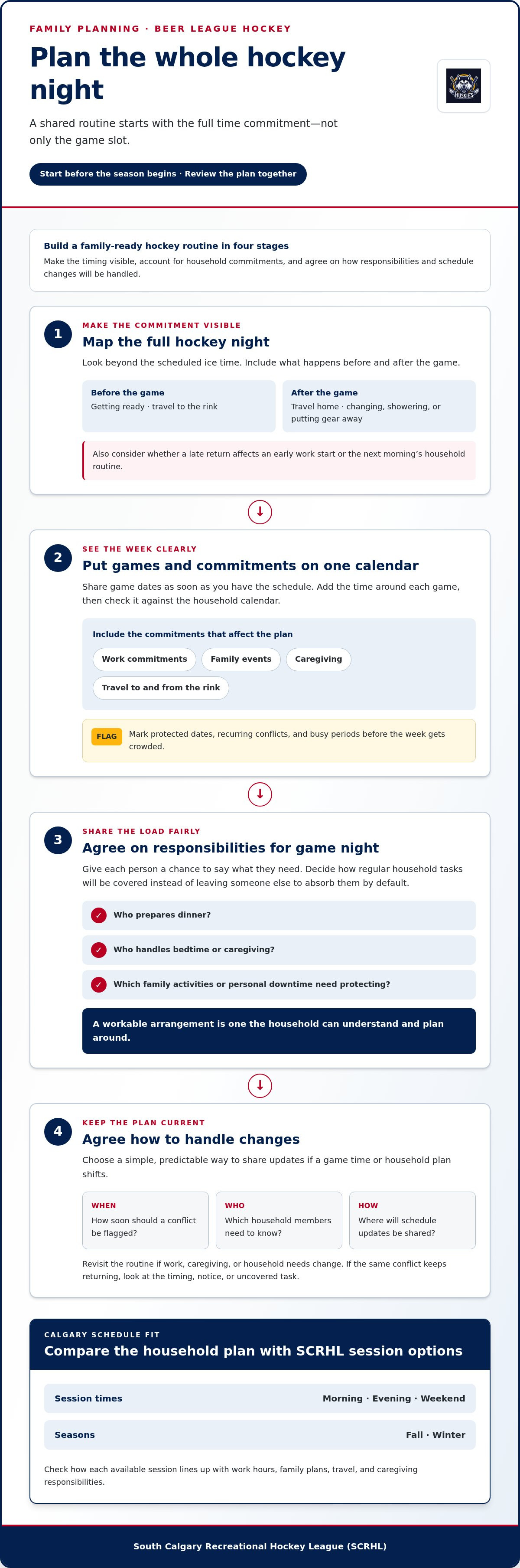
This guide will help you build a realistic hockey routine that respects family priorities while keeping beer league in your life. You’ll find practical ways to compare game nights with household routines, share responsibilities, and revisit the plan when work or caregiving changes. In Calgary, session choices can also affect the fit: South Calgary Recreational Hockey League offers morning, evening, and weekend sessions, as well as Fall and Winter seasons. The goal is a schedule that works for the whole household, not just the player.
Key Takeaways
- Balancing family and beer league hockey starts with making the full time commitment clear before the season begins.
- Use a four-step calendar check to account for household commitments, protect key dates, compare schedules, and agree on a plan.
- Consider whether a consistent game night or a changing schedule will be easier for your household to manage.
- Prepare gear and household tasks ahead of game day, and agree on how to share updates if plans change.
- In Calgary, compare your family’s routine with SCRHL’s morning, evening, and weekend session options.
Why balancing family and beer league hockey can feel difficult
Wanting time on the ice doesn’t mean you care less about your family. The challenge is that a recurring game night takes up more than the time spent playing. Work deadlines, caregiving, household tasks, and family plans still need attention. A schedule that looks manageable on paper can feel different once it meets the week’s routines. Balancing family and beer league hockey is often less about choosing between two priorities and more about making the full commitment visible.
A game can affect who handles dinner, drives someone to an activity, or manages bedtime. It may also limit the household’s flexibility for a family visit or shared evening. Some pressure comes with a full schedule. Other friction is avoidable, such as mentioning a game late or leaving responsibilities unclear. The broader idea of work-life balance includes the way work and personal commitments can compete for time. Recreational hockey adds another commitment to plan alongside both.
Where the pressure points show up
Look beyond the game slot. Getting to the rink takes travel time, and changing, showering, or putting gear away can extend the evening after the final whistle. A late return may affect an early work start or the next morning’s household routine. Bedtime, family events, caregiving, and transportation for children or other family members are common pressure points.
Before agreeing to a season routine, note which conflicts repeat. One game night may overlap with a regular caregiving responsibility, while another may be inconvenient but manageable with planning. Seeing the pattern helps distinguish a difficult week from a schedule that will repeatedly strain the household.
Why guilt is not a scheduling plan
Adults need time for recreation, connection, and physical activity. Those needs can sit alongside family needs; they don’t have to compete. Guilt alone won’t show whether a hockey commitment is workable. A more useful test is whether everyone understands the time involved and whether the household responsibilities around game night are shared fairly.
A personal commitment can cause friction when someone else is left to absorb extra work without warning. Name the tasks plainly: who prepares dinner, handles bedtime, or covers a regular responsibility while you’re at the rink? A sustainable hockey commitment is one the household can plan around, with its time and responsibilities understood in advance.
That distinction matters in Calgary, where a game night’s impact depends on each household’s work hours, travel, and routines. If the same conflict keeps returning, treat it as useful information rather than a personal failing. The issue may be the timing, the amount of notice, or an unshared task, not the fact that you want to play. Identify the pressure point first. Then you can discuss a practical adjustment instead of renegotiating the whole commitment during a rushed evening.
Set family expectations before committing to beer league hockey
Have the conversation before the season starts, when no one is rushing out the door or trying to resolve a game-night conflict. The aim isn’t to ask for last-minute permission. It’s to decide together whether the commitment fits and what needs to happen for it to work.
Describe the whole hockey night, not just the scheduled ice time. Include getting ready, travel to and from the rink, the game, and your return home. Invite household members to flag protected plans, busy periods, and responsibilities that need coverage. A game may be manageable on an ordinary weeknight but difficult during a recurring caregiving commitment or a particularly busy stretch at work.
Clear expectations make recreational commitments easier for a family to plan around.
Agree on what feels fair to everyone
Give each person a chance to explain what they need before settling on a routine. That may mean keeping a regular family activity, arranging caregiving coverage, or making sure everyone has personal downtime. Discuss chores on hockey days, too. If you usually prepare dinner or handle bedtime, agree in advance how those tasks will be managed instead of leaving them to someone else by default.
For balancing family and beer league hockey to feel fair, treat the arrangement as a shared plan. It shouldn’t depend on one person absorbing extra work or repeatedly giving up plans. If household members have different priorities, talk through the trade-offs and find a routine everyone can understand.
Make communication specific and predictable
Share game dates as soon as you have the schedule. Add them to a shared calendar alongside work commitments, family events, caregiving, and the travel time around each game. This gives everyone a clearer view of conflicts before the week gets busy. Mark dates that are especially important to protect rather than assuming they’ll be remembered later.
Agree on a simple communication rule for changes. Decide how soon you’ll flag a conflict, who needs to know, and how you’ll share updates if a game time or household plan shifts. A short message can be enough, as long as it reaches the people affected early enough for them to adjust.
Before committing, review the calendar together and ask practical questions: Which dates already look difficult? What household tasks need coverage? Is there a busy period when hockey should take a back seat? Keep the conversation focused on the schedule and responsibilities, not on whether someone’s interests matter more.
Once you know what timing your household can manage, compare it with Calgary options such as adult recreational hockey sessions. Shared expectations give everyone a clearer starting point for the season and a plan to revisit if family or work commitments change.
Choose a beer league routine that fits your family calendar
A calendar can turn a general sense of “that might work” into a decision you can test. Look at a full stretch of ordinary weeks, not just one unusually quiet week. Note recurring pinch points, such as a late work shift, a regular appointment, or a family activity that needs planning. Then compare possible hockey times with what’s already there.
Use this four-step method:
- Map commitments. Add work hours, caregiving, family activities, household responsibilities, and time to rest.
- Mark protected dates. Identify plans the household wants to keep clear, including one-off events already on the calendar.
- Compare options. Test possible hockey times against recurring conflicts and the full time needed to get to the rink and back.
- Agree. Review the draft with everyone affected and settle on a routine that feels workable.
Build a calendar that shows the whole commitment
Make the calendar realistic. Include time to get ready, travel, change, and return home instead of blocking only the ice time. Add recovery or quiet time if a late night could affect the next morning. Keep the calendar visible to the people whose routines may change, and invite them to point out conflicts before the plan is settled.
Illustrative example, not a typical league schedule: Imagine a household with a standing Tuesday appointment, a protected Saturday family plan, and an early work start on Thursday. Compare a possible hockey night against those constraints. A Thursday game may be workable for one household but not another, depending on travel, rest, and who handles the morning routine.
Compare schedule options against real-life constraints
A fixed weekly game night offers predictability. It can make it easier to plan around the same evening, but a recurring clash with caregiving or a family activity may become difficult to manage. A schedule that changes through the season may avoid a weekly conflict, though it can require more frequent calendar updates. Consider which pattern creates fewer disruptions for your household.
Time of day also changes the trade-offs. A morning session may suit someone whose evenings are committed, while evening play could fit around a daytime schedule. Weekend hockey may preserve weekday routines but overlap with family plans. No time is automatically easiest. Assess your actual week, including travel and responsibilities, rather than relying on an idealized version of it.
Use the Calgary adult hockey options alongside your draft calendar to compare SCRHL’s morning, evening, and weekend sessions with your household’s needs. Then take the proposed routine back to the people it affects. If the calendar shows repeated conflicts, adjust the plan before committing.
Keep family routines steady on game days and when plans change
A game night is easier to manage when small details don’t become urgent at the last minute. Set up a repeatable routine that covers what needs to happen before you leave and what the household needs while you’re away. The aim is to reduce avoidable disruption, not to make every evening run perfectly.
Make game night easier on the household
Prepare your gear earlier in the day, and take care of household tasks that would otherwise be left for someone else. Decide how dinner will work, whether anyone needs a ride, and who is handling essential evening responsibilities. If you’re responsible for a task such as making lunches or feeding a pet, complete it beforehand or agree on who will cover it.
Set an expected departure and return window with your household. Include travel and changing time, and don’t treat the game’s start and finish as the whole commitment. A shared expectation helps everyone plan the evening without guesswork.
Keep the arrangement fair in both directions. If one person is covering a household task during your game, make space for their plans or personal time elsewhere in the week. It doesn’t need to be a formal exchange, but notice whether the routine consistently asks more of one person than the other.
Agree on a straightforward check-in method for delays or changes. Decide who needs an update and how you’ll send it if you’re running late or the plan shifts. A short message can help the household adapt. Don’t assume everyone will find out in time without one.
Reset the plan when the season gets busy
Workload, caregiving, and family needs can change after a routine is set. If a new responsibility affects game night, explain the change early and talk through its impact. Don’t assume another person can take on extra work without discussion. A quick reset can clarify what needs coverage and whether the current arrangement still feels manageable.
Review your hockey routine when family circumstances change, and make adjustments before the strain becomes routine. An adjustment isn’t a sign that the plan has failed. It’s part of keeping the commitment workable as the household’s needs shift. Revisit what’s changed, agree on a practical response, and check in again after trying it.
If the existing routine no longer fits, consider what can be adjusted: how tasks are shared, which plans need protection, or whether your hockey commitment should change for a while. Keep the discussion focused on what the household needs now, rather than treating an earlier agreement as permanent. A flexible plan can help you keep recreational hockey in your life without leaving family routines to chance.
Find a Calgary beer league schedule that works for your family
Once your household has a workable routine, use it as a filter for your next hockey decision. Check the proposed commitment against weeks when work or family responsibilities are busiest, not only the weeks that look clear. A schedule that fits an average week may still need a plan for predictable pinch points.
Match the season and session to your household plan
Look at the calendar period you’re considering and note known changes in work, caregiving, school routines, or family activities. Ask whether the commitment still looks manageable during those stretches. Avoid basing the decision on an ideal week with no delays or competing responsibilities. A realistic choice leaves room for the routines your household already values.
If the calendar shows a regular conflict, pause before deciding. Consider whether the timing can work with a change to your own routine or whether another season would better suit your household. The goal is a choice you can explain clearly and plan around together.
Choose a registration path and take the next step
Before moving forward, make sure everyone understands the expected commitment and has had a chance to raise practical concerns. The Adult Hockey League Calgary player guide can help you prepare for the decision and consider what to factor into your plans. If you’re coordinating a group, the Calgary team registration guide is a useful planning resource.
Finish by checking the calendar together once more. Confirm that important household commitments remain visible and that the routine feels workable to the people it affects. Then you can make the next move with a clearer picture of how hockey fits into family life.
Make your next season plan together
A good routine doesn’t need to be perfect from the first game. Treat it as a plan your household can revisit as work, caregiving, and family priorities change. A quick check-in after the first few games can reveal small adjustments before they become sources of frustration.
That shared approach makes balancing family and beer league hockey more practical. You can protect time for the people at home while keeping a regular place for recreation in your week. Start with the calendar, agree on what feels workable, and adjust together when circumstances shift.
South Calgary Recreational Hockey League organizes adult recreational hockey in Calgary, with morning, evening, and weekend sessions. Players can register as a team or as individuals for Fall and Winter seasons. Explore adult recreational hockey in Calgary and consider which option could fit the routine your household has planned.
With a clear agreement and room to adapt, you can make time for hockey without leaving family plans to chance.
Frequently Asked Questions
Is it selfish to keep one regular night for beer league hockey?
No, a regular hockey night isn’t automatically selfish. The key is whether its impact has been discussed and feels manageable to the household. Ask what would make the arrangement workable for everyone: perhaps sharing caregiving, protecting a family activity, or making sure others have time for their own interests. Family needs matter, and so does maintaining a sustainable activity outside the home. Balancing family and beer league hockey means making room for both.
How many nights a week should I play beer league hockey?
There isn’t one right number of nights for every player. Start with the actual season schedule and consider how each game affects your work hours, caregiving, family activities, and recovery. For example, a game followed by an early work start may feel different from one before a flexible morning. Choose a frequency the household can sustain without repeatedly cancelling important plans or shifting responsibilities. Reassess if your circumstances change.
Can both partners play beer league hockey?
Yes, both partners can play if the household can coordinate the time and responsibilities. Put each person’s games and other commitments in the same calendar, then look for overlaps before they become a same-night conflict. If both have games on different nights, agree on how caregiving, meals, or transportation will be covered. If the schedules collide, discuss options together rather than treating either person’s hockey commitment as the automatic priority.
What should I do if my partner resents my hockey commitment?
Take resentment as a reason to talk about the impact, not as a debate to win. Ask what feels unfair: the time away, a missed plan, extra household work, or short notice. Listen for the specific issue and acknowledge it before suggesting a change. Agree on one practical adjustment, then check whether it helped. If game night is already tense, choose a calmer time to talk rather than trying to settle everything as you leave.
Can I take a break from beer league hockey during a busy family season?
Yes, a temporary break can make sense if family or work demands have changed. Talk through the choice at home and make sure you understand your registration commitment before making plans. You might also set a time to reconsider, such as after a particularly busy work period or once caregiving needs shift. A pause can be a practical adjustment, not a permanent decision about hockey.
How do I explain my beer league schedule to my children?
Use simple, direct language suited to your child’s age. Explain when you’ll be away, who will be with them, and what they can expect while you’re gone. For example, point to the game on the family calendar and name the adult handling the evening routine. Invite questions without making the discussion feel like a negotiation. Be realistic about family plans, too, and avoid promising you’ll attend an event if the schedule may prevent it.