

The lightest hockey jersey isn’t always the most comfortable choice for a full season. Finding the best material for rec hockey jerseys means weighing airflow against durability, fit, and how well the fabric holds up to repeated games and washing.
If you’re comparing mesh, knit, and polyester options, the differences can be hard to judge from a product description alone. Each option may suit a different team, depending on how often you play and what players prefer. This guide explains the trade-offs in comfort, care, and construction, then gives you specific questions to ask before ordering custom jerseys. Checking the details in advance can help your Calgary team set clear expectations across the roster and plan its uniforms more easily.
Key Takeaways
- The best material for rec hockey jerseys depends on your team’s comfort, durability, fit, and care priorities. There is no single fabric that suits every team.
- Polyester describes the fibre, while mesh and knit describe fabric constructions. Knowing the difference helps you compare options more accurately.
- Match your material choice to how often your team plays and what players prefer for feel and airflow.
- Before ordering, ask about fibre content, construction, garment weight, and care instructions so you can compare jerseys on practical details.
- SCRHL offers custom-designed hockey jerseys and apparel for teams and participants. Confirm current material options and order details before choosing.
What makes a jersey material work for recreational hockey?
The right choice depends on comfort, durability, fit, and care. A recreational hockey jersey should allow players to move freely, feel comfortable over their usual layers, and suit the team’s routine for games and washing. There isn’t one material that will feel right for every player or team.
Jersey material refers both to the fibres in the fabric and to how those fibres are formed into a garment. Polyester, for example, names a fibre used in many performance fabrics. Its properties vary by fabric and construction. For background on the fibre, see this overview of polyester fabrics.
Fibre content tells you what the fabric is made from; knit construction tells you how its yarns are formed into fabric. This distinction helps teams compare product descriptions accurately. “Polyester” and “knit” aren’t interchangeable: one identifies fibre content, while the other describes construction.
Consider more than how a jersey feels when you first try it on. Players skate, reach, turn, and stickhandle in it, often over protective equipment and other layers. After a game, the jersey may need washing before the next session. Movement, fit, and care instructions are practical parts of the material decision.
Which jersey qualities matter during a rec hockey game?
Breathability and moisture movement can affect how comfortable a jersey feels as players warm up and play. A flexible feel can also help the garment move with a player while skating or stickhandling, rather than feeling restrictive across the shoulders or arms.
Comfort is personal. Fit, the layers worn underneath, and individual preferences all affect how a jersey feels in play. If possible, ask players about their fit and feel preferences before the team settles on an option.
How often will the team wear and wash its jerseys?
Start with the schedule. How many games will the team play in a season? Will players wear the jerseys at practices, too? More frequent use makes it especially useful to check the garment’s construction and care instructions before ordering.
Regular laundering makes care instructions part of material selection, not an afterthought. Confirm how the jersey should be washed and dried, then consider whether those steps fit the team’s routine. No fabric guarantees a particular lifespan. Wear and condition depend on the material, construction, frequency of use, and care.
How polyester, mesh, and knit options differ in hockey jerseys
These terms describe different things. Polyester is a fibre; mesh and knit refer to fabric construction. A jersey can be made from polyester in a mesh or tighter knit, so the label alone won’t tell you how it feels or performs. Compare the exact fabric details before deciding what suits your team.
Mesh is a fabric construction with an open structure, not a fibre name. That structure can affect airflow and feel, while fibre content and other construction details also shape the finished garment.
What should teams know about polyester hockey jerseys?
Polyester is a commonly used synthetic textile fibre, but the word “polyester” by itself doesn’t specify a jersey’s weight, knit, blend, or feel. Ask the supplier for those details instead of treating the fibre name as a performance guarantee. General information about jersey production can provide useful context, but it doesn’t confirm the specifications of a particular team order.
Does mesh or a tighter knit suit your team better?
An open construction may feel different from a tighter, smoother one and may allow more airflow. A tighter knit may provide a different surface and feel. Neither is automatically the right choice. Consider how the jersey will be worn, what players find comfortable, and what the supplier recommends for its intended use. Ask the supplier to explain construction names such as birdseye or interlock rather than assuming every supplier uses the terms in the same way.
If available, request fabric samples or written specifications before the team approves an order. Compare options side by side, and confirm care instructions for the exact fabric being quoted.
| Option | Feel and airflow | Durability and care | Ask the supplier |
|---|---|---|---|
| Polyester | Depends on the knit, weight, and blend. | Depends on the complete fabric and care routine. | What is the fibre content, weight, and construction? |
| Mesh construction | Open structure; ask how it feels and breathes in the offered jersey. | Confirm construction details and care guidance for the specific garment. | Is the jersey fully mesh or does it use mesh panels? |
| Tighter knit | May feel smoother or denser than an open construction. | Confirm abrasion considerations and washing directions for the fabric. | Which knit is specified, and can we review a sample? |
There’s no universal winner when choosing the best material for rec hockey jerseys. Calgary teams considering custom options can review SCRHL custom jersey apparel and confirm which fabrics and constructions are currently available.
Which rec hockey jersey material fits your team’s priorities?
The best material for rec hockey jerseys depends on what your team values most. A team that plays regularly may prioritize clear care instructions and documented construction details. A group that plays occasionally may focus more on fit, feel, and whether the jersey suits its intended use. Neither situation points to one universal winner.
Don’t judge a jersey by its fibre name alone. “Polyester” identifies a fibre, but doesn’t confirm the fabric’s weight, knit, fit, or how it will feel during play. Compare the full specifications and, where possible, samples. Use this table to organize the decision. Details that need follow-up aren’t confirmed until the supplier provides them.
| Team priority | Potential advantage | Trade-off or question to confirm |
|---|---|---|
| Comfort and airflow | An open construction may appeal to players who prefer a less dense feel. | Confirm: exact construction, sample feel, and suitability for the team’s intended use. |
| Frequent league use | Documented fabric and garment details make options easier to compare for regular wear. | Confirm: seam construction, care label, and supplier guidance for repeated washing. |
| Occasional recreational play | A straightforward fit and comfortable feel may take priority over features the team won’t use. | Confirm: fit, fabric specifications, and recommended care before ordering. |
What if comfort and airflow are the top priorities?
Ask the supplier how the fabric is constructed, how it feels, and what activity the jersey is intended for. Don’t treat terms such as “mesh” or “breathable” as proof that a particular jersey will feel cool during a game. If samples are available, ask players to consider the fit over their usual layers. Preferences can vary across the roster, so gather feedback before making a team-wide choice.
What if durability and easy care matter most?
For regular games or practices, ask about seams, care labels, and supplier recommendations for frequent washing. Compare written specifications and samples rather than relying on broad claims such as “long-lasting.” Check whether the recommended laundering and storage routine works for the team. No material guarantees a set lifespan.
Use the table as a shortlist, then mark each option’s confirmed details and unanswered questions. This keeps the decision grounded in your team’s schedule and preferences, not assumptions about a fabric label.
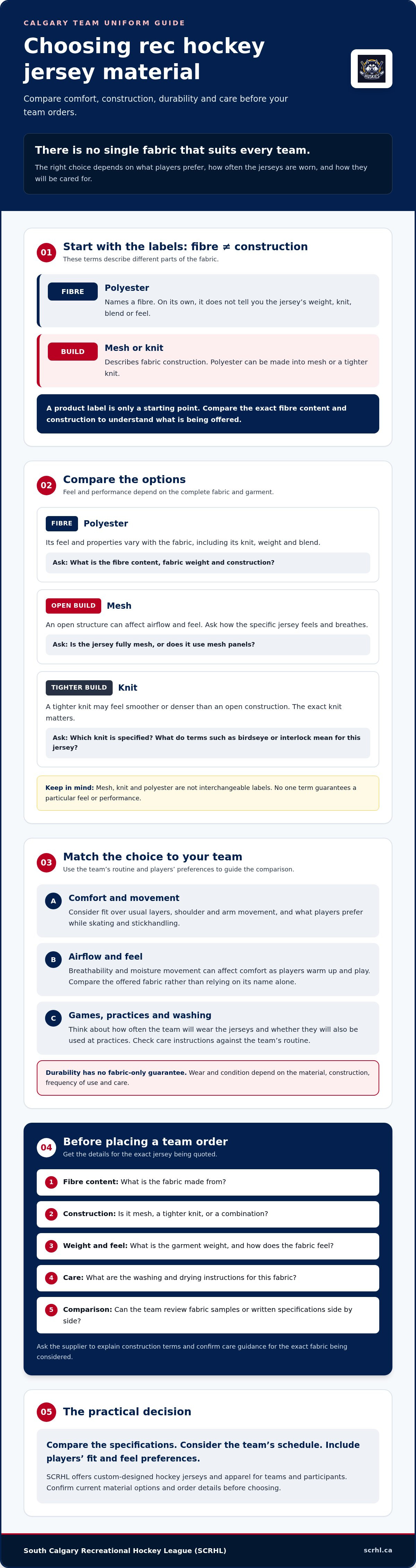
How to choose the best material for rec hockey jerseys before placing a team order
A team order is easier to manage when the captain has clear priorities and supplier-confirmed details. Start with the game schedule and players’ needs, then record the selected specifications before approving the order. Calgary teams can also plan time for sizing, player feedback, and approval so everyone has a chance to review the choices.
Use this checklist to compare options for the best material for rec hockey jerseys:
- 1. Define the use case. Note how often the team plays and whether the jerseys will also be worn at practices.
- 2. Set team priorities. Ask players about fit, preferred feel, and the layers they expect to wear under the jersey.
- 3. Confirm fabric details. Ask for the exact fibre content, knit or other construction, and garment weight. Don’t rely on a fibre name alone.
- 4. Check care requirements. Request written washing and drying instructions, then decide whether they fit the team’s routine.
- 5. Confirm the final order details. Record the chosen specifications and verify them with the supplier before the team approves the order.
What questions should a team captain ask a jersey supplier?
Ask which materials and constructions are currently available for team orders. Check whether the supplier can provide samples, a size chart, and written care instructions. Clarify customization choices separately from fabric composition and construction. A design option doesn’t tell you what the garment is made from, so request each detail in clear, written terms.
How can Calgary teams make a practical material decision?
Compare supplier-confirmed options against your schedule and care routine. Team logistics in Calgary can shape when and how players coordinate sizing, feedback, and approvals, but don’t assume local climate changes how a fabric performs. Keep a record of fibre content, construction, garment weight, care directions, and selected customization details. That gives the team a useful reference if it needs to compare or repeat an order later.
SCRHL offers custom-designed hockey jerseys and apparel for teams and participants. Confirm current fabric options and order details before choosing. Explore SCRHL custom jersey apparel as you plan your team’s uniforms.
SCRHL custom hockey jerseys: confirm the material and plan your order
SCRHL offers custom-designed hockey jerseys and apparel for teams and participants. Confirm the available fabric types, construction details, customization choices, care instructions, and ordering steps before treating any material or feature as part of the offer.
That confirmation is the final step in choosing the best material for rec hockey jerseys. Compare the details you receive with your team’s playing schedule, fit preferences, and care routine. Keep the decision tied to what the supplier confirms, not assumptions based on a fabric name or a previous order.
What should players confirm before approving the jersey order?
Before the team signs off, make sure players and organizers have the same information. Confirm the supplier’s fabric description and care instructions, then review fit and available size information. Check customization details separately, since design choices don’t establish fabric composition or construction.
Agree on who needs to review the design and sizing information and how the team will provide its approval. Then save the confirmed specifications, care directions, and customization details together. That record gives the team a clear reference if it needs to compare a future order with the current one.
How can your team take the next step with SCRHL?
Plan the jersey discussion alongside the team’s season schedule. Give players time to share fit preferences and review confirmed options before the order is approved. Calgary teams looking for custom jersey apparel can ask SCRHL about its current options.
SCRHL’s custom jersey apparel is an option to ask about, but confirm current materials, customization, care details, and ordering steps directly before making a decision. Bring your team’s priorities and questions so you can assess the available choices with the information that matters to your roster.
Explore SCRHL and ask about custom team jerseys.
Make your team’s jersey choice with confidence
The best material for rec hockey jerseys is the option that fits your team’s schedule, comfort preferences, and care routine. Polyester names a fibre, while mesh and knit describe construction, so compare full supplier specifications rather than choosing by label alone. Confirm fabric details, fit information, and care instructions before approving an order.
Collect player feedback early and keep a record of the final specifications. That gives your team a clear basis for its decision and a useful reference for future orders. SCRHL organizes adult recreational hockey in Calgary and offers custom-designed hockey jerseys and apparel for players and teams. Confirm specific fabric options and order details directly.
Explore SCRHL and ask about custom team jerseys as you plan for your team’s needs. Gather your players’ preferences and confirm the available details before moving ahead with an order.
Frequently Asked Questions
What is the best material for rec hockey jerseys?
The best material for rec hockey jerseys is the option that suits your players, schedule, and care routine. Compare the jersey’s fibre content and construction, then consider how it feels over the layers players wear. Ask for exact fabric details instead of relying on a label such as “polyester” or “mesh.” If possible, review a sample and gather player feedback before the team approves an order.
Are polyester hockey jerseys a good choice for recreational players?
Polyester can be a suitable choice, but the fibre name alone doesn’t confirm how a particular jersey will feel or perform. The knit, garment weight, blend, fit, and construction all matter. Ask the supplier for the exact specifications and care instructions for the jersey being considered. Compare those details with the team’s playing frequency and player preferences rather than assuming every polyester jersey is the same.
Is mesh better than a tighter knit for a hockey jersey?
Neither construction is automatically better for every team. Mesh has an open structure, while a tighter knit can have a different feel and surface. The right choice depends on the jersey’s intended use and what players find comfortable over their usual layers. Ask the supplier to explain the construction and provide a sample or written specifications, if available, before deciding.
What fabric should a team choose for jerseys worn every week?
For weekly use, choose based on confirmed fabric and construction details, fit, and care requirements rather than a broad durability claim. Ask about seam construction and washing guidance, too. Consider whether the jersey will also be used for practices, since that affects how often it may need cleaning. No fabric guarantees a set lifespan, so follow the supplier’s care instructions and check the garment regularly.
How should you wash and care for a rec hockey jersey?
Follow the care label or the supplier’s written instructions for the specific jersey. Don’t assume washing or drying directions are identical across fabrics, blends, or customization methods. Before ordering, ask how the garment should be laundered and stored, then share that guidance with the team. Consistent care helps players follow the same routine, though it can’t guarantee a particular lifespan or condition.
Can you choose a hockey jersey material based on how often you play?
Yes. Use your schedule as one factor in the decision. A team playing or practising often may give more weight to clear care instructions and construction details, while a team playing occasionally may focus more on fit and feel. Frequency alone doesn’t determine the right material. Compare supplier-confirmed specifications with player preferences and how the jerseys will be used throughout the season.
What should a team ask before ordering custom hockey jerseys in Calgary?
Ask which materials and constructions are currently available, and request exact fibre content, knit, garment weight, size information, and care instructions. Clarify customization choices and the supplier’s ordering and approval steps separately from fabric details. SCRHL organizes adult recreational hockey in Calgary and offers custom-designed jerseys and apparel for teams and participants. Confirm its current options and ordering details directly before making a selection.