

What if the quickest way to fit in on a new hockey team is to make a little room for everyone else? Starting out can bring practical questions: where to sit, when to change, and what to do with your gear in a busy shared dressing room. Hockey locker room etiquette for new players isn’t about knowing every unwritten rule. It’s about arriving prepared, paying attention, and treating teammates’ space and belongings with care.
If you’re unsure how much room to take or when to join the team’s pre-game routine, you’re not alone. Habits can differ between teams and Calgary rinks, so start with a few considerate basics, then follow the facility’s directions and your team’s routine.
This checklist covers what to do before, during, and after a game: how to get dressed without holding up the room, respect privacy and shared equipment, and take part in post-game routines. The goal is simple: feel more comfortable, be a reliable teammate, and focus on enjoying the game.
Key Takeaways
- Arrive with your gear organized and enough time to get ready without delaying your team.
- Give teammates room, respect their belongings and privacy, and keep conversation welcoming.
- Watch how the team uses shared space and equipment, and follow its routine.
- After the game, pack your belongings, tidy your area, and leave space for others.
- Use this hockey locker room etiquette for new players checklist, and ask a teammate about local routines rather than guessing.
Hockey Locker Room Etiquette for New Players: What Good Teammates Expect
Your first game with a new team doesn’t require you to know every tradition. Basic courtesy goes a long way: pay attention to the people around you, keep your gear in order, and be ready when it’s time to head to the ice. These habits help the room run smoothly and give teammates a chance to get to know you.
Respectful recreational dressing-room etiquette means sharing space considerately, respecting people and their belongings, and helping the team stay on schedule. Some expectations are common courtesy; others are formal rules set by a facility, league, or team. Don’t assume one team’s routine applies to every Calgary dressing room.
What should a new hockey player do first?
Start with a quick hello. Introduce yourself during a natural pause, rather than interrupting someone who’s getting ready or discussing game details. Then look around to see how the room is set up. Seating and bag placement can differ by team and facility, so follow the group’s lead instead of assuming there’s a standard arrangement.
If you can’t tell where your bag should go, ask a teammate. “Where should I set this?” is better than blocking a walkway or taking space someone else needs. Keep your equipment close to your spot, and move it if a teammate needs to pass. Small, practical gestures make a stronger first impression than trying to copy every team tradition.
Which rules are etiquette, and which are policies?
Courtesy is about how you treat people. Formal requirements come from the rink, league, or team and can vary by setting. For example, Hockey Canada’s Dressing Room Policy provides guidance within its hockey membership context. Don’t assume that every detail intended for minor hockey applies automatically to an adult recreational dressing room. Follow the current posted instructions and directions that apply to your team and facility.
The same distinction applies to hockey’s unwritten expectations. The phrase the code of conduct in hockey is often used for informal player norms, but a shared dressing room calls for everyday respect, not guesswork about tradition. Give others privacy, don’t handle their belongings without permission, and keep conversation welcoming. Jokes or comments that pressure, target, or exclude someone aren’t acceptable just because they’re called team banter.
When a routine isn’t clear, ask a teammate or follow posted directions. It’s a simple way to respect the room and be the kind of teammate people are glad to share it with.
Before the Game: A New Player’s Dressing-Room Arrival Checklist
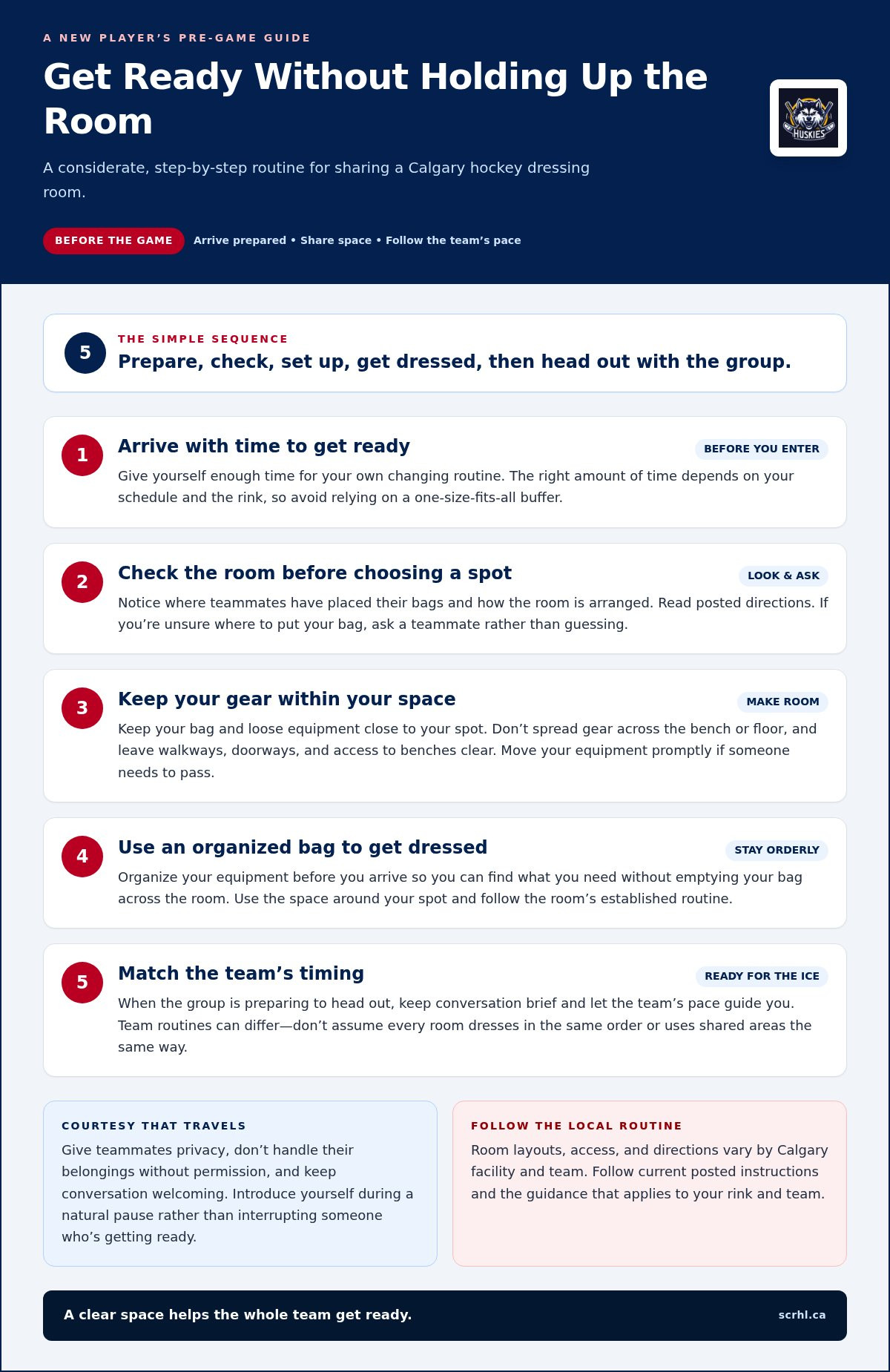
A smooth pre-game routine starts before you reach the dressing room. Arrive with enough time for your changing routine, rather than relying on a buffer that may not suit your schedule or rink. Calgary facilities can differ in layout, room access, and directions, so follow posted instructions and your team’s guidance. Preparation matters: an organized player helps the team get ready and leave for the ice on time.
How should you handle your bag and changing space?
When you enter, notice where teammates have placed their bags and gear. Keep your belongings close to your own spot where possible, and avoid spreading equipment across a bench or floor. Leave walkways, doorways, and access to benches clear. If someone needs to reach a shared area, move your gear promptly rather than making them work around it.
If the room is unfamiliar, follow posted directions or ask a teammate where to put your bag. A quick question can prevent you from blocking a route or taking more room than you need.
How can you get dressed without holding up the room?
Before leaving home, organize your equipment so you can find what you need without emptying your bag across the room. At the rink, use the space around your spot and follow the room’s established routine. Don’t assume every team dresses in the same order or uses shared areas the same way. When the group is preparing to head to the ice, keep conversation brief and let the team’s pace guide you.
- Arrive: Give yourself time to get ready at a comfortable pace.
- Check: Read posted directions and notice how the room is arranged.
- Set up: Keep your bag and loose gear within your space.
- Get ready: Use your organized equipment and follow the team’s timing.
Hockey Canada publishes resources such as Hockey Canada's Dressing Room Policy. Its guidance has a defined scope, so don’t assume rules intended for a particular hockey setting automatically apply to every adult recreational team. Follow the instructions that apply to your facility and team.
These small habits are a practical part of hockey locker room etiquette for new players. If you’re looking for adult recreational hockey in Calgary, explore Calgary adult hockey sessions with the South Calgary Recreational Hockey League.
In the Dressing Room: Respect Privacy, Teammates, and Shared Gear
A dressing room works best when teammates can get ready without worrying about their privacy, belongings, or place in the group. Good hockey locker room etiquette for new players is straightforward: be considerate, communicate respectfully, and don’t assume that a shared room means everything in it is shared.
What conversation and humour help a team feel welcoming?
Keep conversation friendly and low-pressure. A brief question about the game or a simple greeting can open the door without putting anyone on the spot. Make room for quieter teammates, too. Not everyone wants to talk while dressing or preparing to play.
Team humour should bring people in, not make someone the target. Avoid hazing, unwanted teasing, personal remarks, or jokes that pressure or exclude a teammate. If someone looks uncomfortable, stop rather than insisting they take a joke. Before puck drop, read the room: teammates discussing matchups or getting focused may prefer quiet to an extended conversation.
How should players treat shared areas and other people’s belongings?
Use your own equipment. Ask before moving another player’s bag, clothing, or gear, even if you only need to shift it to make room. Keep personal items tidy, and place food or drinks where they won’t spill onto someone else’s belongings or take up needed space. If you move something by mistake, put it back or let the owner know.
Showers and changing areas call for extra consideration. Give others room and privacy, and follow posted facility instructions. Don’t treat someone’s personal space as an invitation to continue a conversation or handle their things.
Phones need the same care. A device may be useful for checking the time or a message, but don’t photograph or record people in a dressing room without their permission. Follow the facility’s and team’s rules for electronic devices. Hockey Canada has dressing-room guidance for its applicable settings, including youth hockey. Those examples don’t automatically establish the requirements for every adult recreational league or Calgary facility. Follow the directions that apply where you’re playing.
These habits are practical: pay attention to the people sharing the room, ask before touching their gear, and choose conversation that helps teammates feel included. Respectful conduct builds trust before the game begins.
After the Game: Leave the Calgary Dressing Room Ready for Others
Your post-game routine is part of being a considerate teammate. Pack your equipment, check your space, and follow instructions posted at the facility. Calgary dressing rooms and shared areas can differ, so don’t assume every rink has the same arrangements for garbage, showers, or equipment. Leave the area ready for the next players without rushing teammates who are still getting changed.
What should you do before leaving the room?
Check the bench and floor for your belongings, loose equipment, and used tape. Pack your gear in a way that keeps shared surfaces clear, and put waste where facility directions indicate. If you used a shower or another shared area, leave it tidy according to posted guidance. Before heading out, make sure you’ve taken everything that belongs to you.
- Gather your gear and personal items.
- Check under and around your spot for tape or equipment.
- Clear shared surfaces and follow facility instructions for waste and showers.
- Leave space for teammates who are still packing.
How can you build team connections after the game?
Acknowledge teammates with a quick thanks or a positive comment about the game. If you’re discussing a play that didn’t go well, keep feedback constructive and respectful. The dressing room isn’t the place to single someone out or turn a mistake into personal criticism. Good post-game conduct helps keep the team atmosphere welcoming after the final whistle.
Some players may need to leave promptly for work, family, or other commitments. Let them pack and go without pressure to stay for conversation. A brief, friendly goodbye is enough. Respect for teammates’ time is part of the dependable approach that helps a recreational team work well together.
These simple habits complete the cycle of hockey locker room etiquette for new players: take responsibility for your belongings, leave shared areas tidy, and treat teammates with consideration. For more context on adult hockey in Calgary, read the adult hockey league guide. If you’re ready to find a recreational hockey setting, explore adult hockey options in Calgary with the South Calgary Recreational Hockey League.
Your First-Game Checklist: Settle In and Become a Reliable Teammate
Your first night doesn’t have to be perfect. A few steady habits will help you feel at ease and show teammates you’re considerate. Keep this checklist in mind, then adapt to the team and facility. Good hockey locker room etiquette for new players comes down to being prepared, respecting others, and staying open to local routines.
What are the five habits worth remembering?
- Arrive ready. Organize your gear so you can get dressed without holding up the room.
- Make a friendly introduction. Say hello when the timing feels natural, and give teammates room to focus.
- Share the space. Keep your bag and equipment close, and leave walkways and shared areas accessible.
- Respect people and belongings. Protect teammates’ privacy, use your own gear, and ask before moving someone else’s items.
- Leave things tidy. Take your belongings with you, check your spot, and follow posted facility directions.
How can new players learn a team’s routine quickly?
Watch how teammates use the room before deciding where to sit or organize your gear. Routines can differ, and a familiar setup at one rink may not match the next. If you’re unsure, ask a short, practical question: “Where should I put my bag?” or “Is there a usual order for getting ready?” Asking is more considerate than guessing and taking space someone else needs.
Keep listening as the team gets ready. You’ll pick up cues about when conversation should pause, how the group moves toward the ice, and what to do after the game. Follow posted facility instructions, too. Those habits make you easier to play alongside, even before you know every teammate’s name.
If you’re exploring organized adult hockey in Calgary as an individual, read about individual hockey registration in Calgary. Players joining with a group can review the Calgary team registration guide.
Good etiquette isn’t about getting every detail right on your first night. It’s about showing respect, adapting to the room, and being a reliable teammate. If you’re ready to explore adult recreational hockey in Calgary, take a look at SCRHL adult recreational hockey.
Bring These Habits to Your First Game
You don’t need to know every team tradition to make a good first impression. Arrive prepared, respect teammates’ privacy and belongings, and keep shared spaces tidy. If a room setup or routine is unclear, ask rather than guess. These simple habits make hockey locker room etiquette for new players easier to put into practice and help build trust with your team.
Good dressing-room habits carry onto the ice. Being considerate of teammates’ time and space is part of being a dependable recreational player. You can take that first step with a team or register as an individual through the South Calgary Recreational Hockey League. Adult sessions include morning, evening, and weekend options.
Explore adult recreational hockey with SCRHL and find a way to join Calgary’s hockey community. Your first game is a chance to learn, meet teammates, and enjoy playing.
Frequently Asked Questions
What should a new hockey player bring into the dressing room?
Bring your hockey equipment and the personal items you need to get ready and play. Organize your gear before you arrive so you can find what you need without unpacking everything across the room. Keep your bag and loose equipment close to your space, and take all your belongings when you leave.
Is there a dress code in an adult hockey dressing room?
There isn’t one dress code you should assume applies to every adult recreational dressing room. Team expectations, facility instructions, and applicable league policies can differ. Follow posted directions and your team’s guidance, and respect other players’ privacy while changing. Hockey Canada policies apply within their defined settings, but youth-specific requirements shouldn’t automatically be treated as adult league rules.
How early should I arrive before a recreational hockey game?
Arrive with enough time to get dressed, organize your equipment, and be ready when your team heads to the ice. There’s no single arrival buffer that suits every player or Calgary rink. Your routine, room access, and facility directions may affect your timing. If you’re new, allow time to find the dressing room and get oriented without rushing teammates or delaying the group.
Can I use my phone in the hockey dressing room?
Follow the facility’s and team’s directions for phone use. A phone may be useful for checking a message, but don’t photograph or record people in a dressing room without permission. Respect everyone’s privacy, and put your device away if teammates are getting ready or the team is preparing to leave for the ice. Phone and recording rules may differ between rinks.
What should I do if I do not know where to sit or change?
Take a moment to observe how teammates are using the room, then ask someone where to sit or place your bag if it’s still unclear. A simple question is better than guessing and blocking a walkway or taking someone else’s space. Dressing-room layouts and team routines can vary across Calgary, so follow posted facility directions and your team’s established setup.
What is good hockey dressing-room etiquette after a game?
Pack your own gear, check your bench and the floor for personal items or loose tape, and leave shared surfaces tidy. Follow facility directions for waste, showers, and other shared areas. Don’t rush teammates who are still getting changed, but be mindful of the next group. A brief thank-you or constructive comment helps close out the game on a respectful note.