

You have just fronted thousands of dollars for the team registration fee, and now your group chat is silent. It is a classic Calgary captain's dilemma; you want to play hockey, not act as a debt collector. Chasing "that one guy" for his share while managing complex spreadsheets is a recipe for burnout. You deserve to focus on the game, not your bank account. Learning how to collect league fees from teammates Calgary players actually pay is the only way to keep your season stress-free.
We agree that the financial risk of leading a team should not fall on your shoulders. You should not have to worry about personal financial loss just to get your friends on the ice. This guide promises to help you master a simple, repeatable system to get the team fully paid before the first puck drop. We will preview the best digital tools for local players, explain how to set firm deadlines, and show you how to enforce a "No Pay, No Play" policy that works for every season.
Key Takeaways
- Calculate your 2026 team budget by balancing base registration fees with a strategic mix of full-time and part-time roster spots.
- Identify the best digital tools, including Interac e-Transfer and specialized apps, to replace the hassle of collecting cash in the locker room.
- Follow a proven four-step system on how to collect league fees from teammates Calgary captains can use to ensure everyone pays before the season starts.
- Implement "Save Your Spot" deposits to secure team commitment early and eliminate the risk of paying the full league fee upfront.
- Streamline your SCRHL registration process to focus on the game and community rather than managing complex spreadsheets.
The Captain’s Dilemma: Why Fee Collection is the Hardest Part of the Season
Managing a recreational hockey team in Calgary is a major commitment. Beyond the schedule and the roster, you are effectively running a small seasonal business. Most captains face a budget that exceeds $10,000 when accounting for ice time, league fees, and insurance. The burden of this total often sits on one person. If you are the primary contact, you likely fronted the deposit or the full amount on your personal credit card. This creates immediate financial risk that many players don't realize.
The social friction is often worse than the financial stress. Asking your friends for money in the locker room feels awkward and repetitive. You want to focus on the game strategy; instead, you're mentally checking off who still owes hundreds of dollars. A casual approach to fees might feel friendly in the pre-season. However, it inevitably leads to mid-season tension. When players don't pay, the captain is forced to cover the deficit or chase people during the playoffs. Learning how to collect league fees from teammates Calgary captains can implement consistently is the only way to protect your own wallet and keep the team focused on winning.
The Real Cost of Adult Hockey in Calgary
A successful season requires a clear understanding of the ledger. Base registration fees cover the essentials like ice time, referees, and player insurance. However, a professional look also matters. Many teams include the cost of custom hockey jerseys Calgary players can keep. These added costs should be calculated upfront to avoid surprise bills. Smart captains take advantage of early bird deadlines. For example, the SCRHL often offers a 10% discount for those who register and pay by the January 31 deadline. This saves the team hundreds of dollars and reduces the individual cost for every player on the roster.
Setting the Standard Early
Transparency is your best tool for avoiding conflict. When you recruit players for the Fall or Winter season, state the exact cost immediately. Provide a clear per-player breakdown. This shows everyone exactly where their money goes. You must establish yourself as an organizer, not a bank. Make it clear that spots are only secured once payment is received. This professional boundary prevents "that one guy" from delaying his payment until the final game of the season. Knowing how to collect league fees from teammates Calgary effectively starts with this firm, transparent communication via email or team apps. It sets a disciplined tone for the entire year.
Calculating Your Total Team Budget for the 2026 Season
Precision in budgeting prevents mid-season shortfalls. Your first step is identifying the core Calgary hockey team registration fee for the 2026 season. This base amount covers the essential ice time and officials provided by the league. However, a captain's budget must look beyond the league invoice. You need to account for the "Spare Factor" to ensure the total cost is covered even if your roster fluctuates. Effective management involves a small slush fund. Allocate a few extra dollars per player for team pucks, water bottles, and the occasional post-game social. Hidden costs like jersey replacements or local tournament entry fees can also derail a poorly planned budget. By including these line items early, you avoid the awkwardness of asking for more money halfway through the schedule. Mastering how to collect league fees from teammates Calgary relies on this initial financial transparency.
Full-Time vs. Part-Time Fee Structures
Flat fees for all players simplify your accounting. Every rostered player pays the same amount; this ensures the total is met quickly. However, this can be a hard sell for players who travel or have inconsistent work schedules. Many Calgary teams use a tiered system. Full-time players pay a set seasonal rate, while "spares" or "subs" pay a premium per-game fee. This per-game rate should be slightly higher than the average cost per game for full-timers to account for the flexibility. Regarding goalies, many leagues suggest a reduced fee or no fee at all to ensure you have a reliable person between the pipes every week.
Jersey and Apparel Costs
Integrating uniform costs into your initial dues is the most efficient approach. Bulk ordering custom jersey apparel through the league simplifies your logistics and ensures a professional look. This professional appearance does more than just look good on the ice; it fosters team identity and improves roster retention for future seasons. When players feel like part of an organized club, they are more likely to commit to the following year. If you are looking to build a new squad, you can register for the Fall Season early to secure your spot and start organizing your team's look.
Digital Tools vs. Cash: The Best Payment Methods for Calgary Teams
Selecting the right payment method is the difference between a streamlined season and an administrative nightmare. In Canada, Interac e-Transfer is the undisputed king of fee collection. It is fast, secure, and integrated into almost every Canadian bank account. Unlike American platforms like Venmo or PayPal, e-Transfer allows for immediate movement of funds without third-party holding periods. You should avoid cash and cheques entirely in 2026. Major Calgary venues like the Scotiabank Saddledome are already cashless; your team management should be too. Physical money is difficult to track, easy to lose, and requires unnecessary trips to the bank. Digital records protect both the captain and the players from disputes.
Professional organizers often set up a dedicated "Hockey" bank account. Keeping team funds separate from your personal finances ensures transparency and simplifies your accounting at year-end. When you use a separate account, you can easily show any teammate exactly where the money went. This level of organization is essential for how to collect league fees from teammates Calgary players trust. It removes the "black hole" perception of team dues and proves you are managing the budget with precision. Using digital tools ensures every dollar is accounted for from the first deposit to the final playoff game.
Interac e-Transfer: Tips for Captains
Efficiency with e-Transfer requires clear rules. Instruct every player to include their full name and "Fall 2026 Fees" in the memo line. This is vital because many players use bank accounts with different names than their roster listing. You must set up Autodeposit on your team account. This eliminates the need to manage security questions and ensures funds are available instantly. To stay organized, create a digital folder on your phone or computer. Save a screenshot of every transfer or flag the bank notification emails. This creates a permanent paper trail without the clutter of physical receipts.
Management Apps: Are They Worth the Cost?
Specialized platforms like TeamSnap or BenchApp offer robust financial features that go beyond simple messaging. These apps allow you to track who has paid, send automated reminders to laggards, and manage game-day RSVPs in one place. While some apps require a paid subscription, the time saved usually outweighs the cost. Using these tools can help you build a rec hockey team roster Calgary captains can rely on season after season. Automation removes the personal friction of asking for money. When the app sends the reminder, you remain the friendly teammate rather than the persistent debt collector. This keeps locker room morale high while ensuring the bills stay paid.
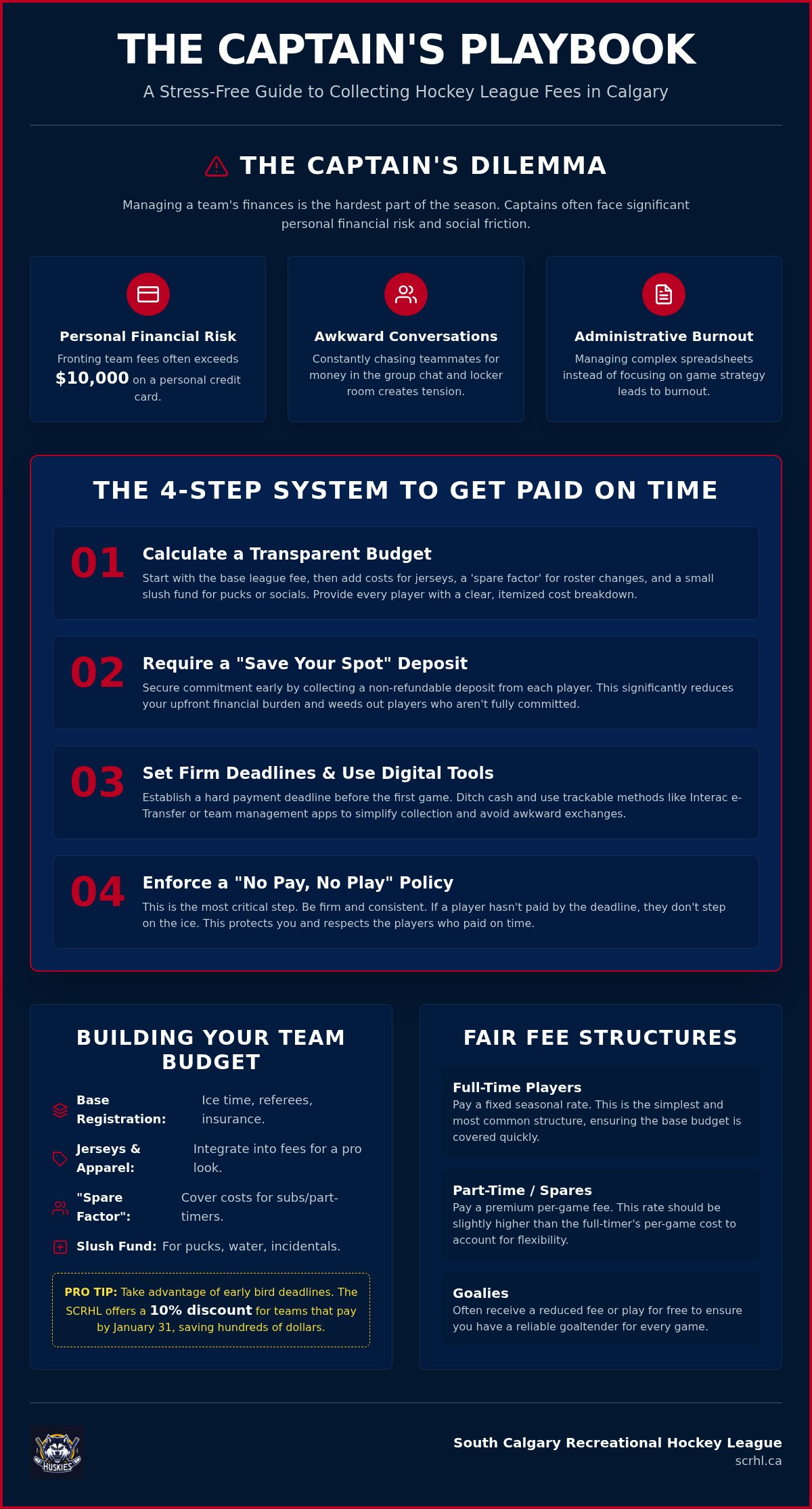
The 4-Step System to Collect Fees Without Chasing Teammates
Relying on good intentions is the fastest way to end up out of pocket. You need a structured, phased approach that removes the burden of constant reminders. Successful captains in the SCRHL use a timeline that starts months before the first puck drop. This system ensures you have the funds ready for the 10% early bird discount by January 31, rather than scrambling on the final February 28 deadline. Implementing a clear process for how to collect league fees from teammates Calgary players respect will save you hours of administrative work and eliminate pre-season stress.
- Step 1: The "Save Your Spot" Deposit: Collect a non-refundable deposit at least two months out. This confirms who is actually playing and provides the funds for your initial team registration.
- Step 2: The Multi-Channel Reminder: Do not rely on a single email. Send updates via WhatsApp, mention it during post-game drinks, and post a notice in the locker room. Visibility is key.
- Step 3: The Hard Deadline: Set your team's internal deadline one week before the league's cut-off. This gives you a buffer to find replacements if someone drops out.
- Step 4: The "No Pay, No Play" Enforcement: This is the final step. If the money is not in the account by the deadline, that roster spot is vacated.
Implementing the "No Pay, No Play" Policy
A "No Pay, No Play" rule is not about being difficult; it is about fairness to those who paid on time. Word the policy professionally. State that the team cannot step on the ice until the league invoice is cleared. Apply this rule consistently to everyone, including your star centre or your best friend. If a teammate faces legitimate financial hardship, consider a structured payment plan. However, these should be rare and documented to avoid confusion. For captains looking to simplify their roster management, you can register your team for the Fall Season early to establish these expectations from day one.
Communication Templates for Captains
Effective communication reduces the need for chasing. Use these three specific templates to keep the process moving. Start with an "Early Bird" announcement that highlights the savings of paying by the January 31 discount date. Follow up with a "Gentle Nudge" for stragglers, framing it as a logistical necessity for the roster submission. Finally, send a "Final Notice" 48 hours before your hard deadline. State clearly that if the e-Transfer is not received, you will be forced to give their spot to a free agent to ensure the team can still compete. This directness protects the team's spot in the league and keeps your bank account secure.
Streamlining Your SCRHL Registration for a Stress-Free Season
Organized fee collection is the foundation of a smooth registration. When you have the funds ready, you can navigate the SCRHL portal without delay or financial stress. The portal is designed to handle the logistical heavy lifting for captains. You can manage player waivers, track roster status, and update contact information directly through the digital system. This ensures every skater is eligible and insured before the first puck drop in the adult hockey league Calgary players rely on for organized competition. Finalizing these details early prevents administrative delays that could impact your team's divisional placement or game schedule.
Transitioning from "Collection Mode" to "Game Mode" is the reward for your hard work. Once the budget is set and the league is paid, you can stop being a bookkeeper. This mental shift allows you to focus on line combinations, locker room culture, and on-ice strategy. Knowing how to collect league fees from teammates Calgary organizers can repeat every year ensures that the logistics never interfere with the sport. You lead better when you aren't worried about a $500 deficit or a late-night e-Transfer that never arrived. Clear finances lead to a clear head on the bench.
Leveraging SCRHL Division Parity
A fully paid team is a more committed team. When teammates have a financial stake in the season, they are more likely to prioritize game nights and show up consistently. SCRHL division parity ensures that every player gets genuine value for their fees. Competing against teams of similar skill levels makes the investment worthwhile for everyone on the roster. This sense of fairness justifies the cost and keeps morale high throughout the winter months. While the Fall season is underway, successful captains already look ahead to the Winter season. Planning your next budget while the current one is fresh ensures a seamless transition between seasons without a gap in play.
Finalizing Your 2026 Roster
Conduct a final audit of your roster at least ten days before the registration deadline. Compare your list of paid players against the official league submission to ensure no one was missed. If you have gaps due to late drops or injuries, consider welcoming individual registrations from the league's free agent pool. These players are often eager to join established teams and pay their share immediately. This strategy fills your bench and secures your budget without further chasing or personal financial risk. Finalizing your roster early allows the league to publish schedules and parity rankings on time, ensuring a professional start to the year. Ready to lead? Register your team for the upcoming SCRHL season today!
Lead Your Team to a Stress-Free Season
Success as a captain depends on your ability to organize the bench and the budget with equal precision. You now have a proven system for how to collect league fees from teammates Calgary players will respect. By implementing firm deadlines and utilizing digital payment tools, you eliminate the financial risk that often burdens local organizers. This structured approach ensures your roster is finalized and paid before the season even begins. You can finally stop acting as a debt collector and start focusing on the community and competition that make rec hockey great.
The SCRHL is Calgary’s most organized adult rec league, providing morning, evening, and weekend ice times to suit your team's needs. We also offer custom jerseys to help your squad look professional from day one. Don't let administrative stress sideline your passion for the game. Register your Calgary hockey team for the 2026 season today and take the first step toward your most organized season yet. We're ready to help you get on the ice.
Frequently Asked Questions
What is the best app for collecting hockey league fees in Canada?
Interac e-Transfer is the most effective tool for moving money between teammates in Canada. It provides an immediate record of the transaction and integrates directly with your bank account. For tracking and reminders, specialized apps like TeamSnap or BenchApp are the industry standards. These platforms allow you to see who has paid and who still owes money in a single dashboard. Using these digital tools is a key part of how to collect league fees from teammates Calgary captains can rely on for accuracy.
How do I handle a teammate who refuses to pay their fees?
Enforce your "No Pay, No Play" policy immediately once the deadline passes. If a player refuses to pay, they cannot be permitted to step on the ice for any scheduled games. You should replace them with a player from the individual registration pool to ensure the team's financial obligations are met. Consistency is vital to maintain fairness for the teammates who paid on time. Professionalism in these moments prevents long term locker room tension.
Should I charge the goalie the same amount as the skaters?
Most recreational teams in Calgary offer goalies a significant discount or allow them to play for free. Reliable goalies are essential for a successful season and are often in high demand across the city. Offering a lower rate ensures your goalie remains committed to your specific schedule. If your team decides to charge the goalie, the fee is typically 50% or less of the standard skater rate.
What is a typical "No Pay, No Play" policy for Calgary rec hockey?
A standard policy requires all fees to be cleared at least one week before the first game of the season. If the payment is not received by this hard deadline, the player's spot on the roster is forfeited. This policy protects the captain from carrying personal debt and ensures the team is fully funded before league play begins. It is an essential rule for managing a team budget effectively.
How much should I collect as a deposit for a new hockey team?
You should collect a non-refundable deposit of $100 to $200 per player at least two months before the season starts. This initial amount covers the team registration deposit required by the league to secure your spot. Collecting this early confirms player commitment and provides the cash flow needed to meet early bird registration deadlines. It also reduces the final amount each player owes later in the pre-season.
Can I use a credit card to pay for my Calgary hockey team registration?
Yes, the SCRHL and most major Calgary leagues accept credit cards for team registration. This is the most efficient way to secure your spot during the busy registration window. However, you should ensure you have already collected the necessary funds from your teammates. This prevents you from carrying a high balance or incurring interest charges on your personal credit card while waiting for stragglers to pay.
What happens if our team budget has a surplus at the end of the season?
Surplus funds should be managed with total transparency to maintain team trust. You can choose to refund the extra money equally among the full-time players who paid the initial fee. Alternatively, many teams vote to use the surplus for a year-end social event or roll the balance over as a deposit for the next season. Always communicate the final balance to the team so everyone knows where the money went.
How do I track payments from multiple part-time spares?
Use a dedicated spreadsheet or a team management app to log every "sub" or "spare" payment as it arrives. Tracking these small, frequent payments is essential for balancing your final budget. Most captains charge spares a slightly higher per-game rate than full-time players to account for the flexibility. These funds can then be used to offset the costs for full-time roster members or to replenish the team's puck and tape supply.