

Why are you paying hundreds of dollars in registration fees just to risk a season-ending injury on a Tuesday night? You joined a Calgary league to stay active and enjoy the game, not to trade hacks with someone who thinks they are in the pros. Learning how to deal with aggressive players in rec hockey is now a necessary skill for any hobbyist. It's frustrating when a lack of consistent officiating makes the ice feel like a danger zone rather than a fun community activity.
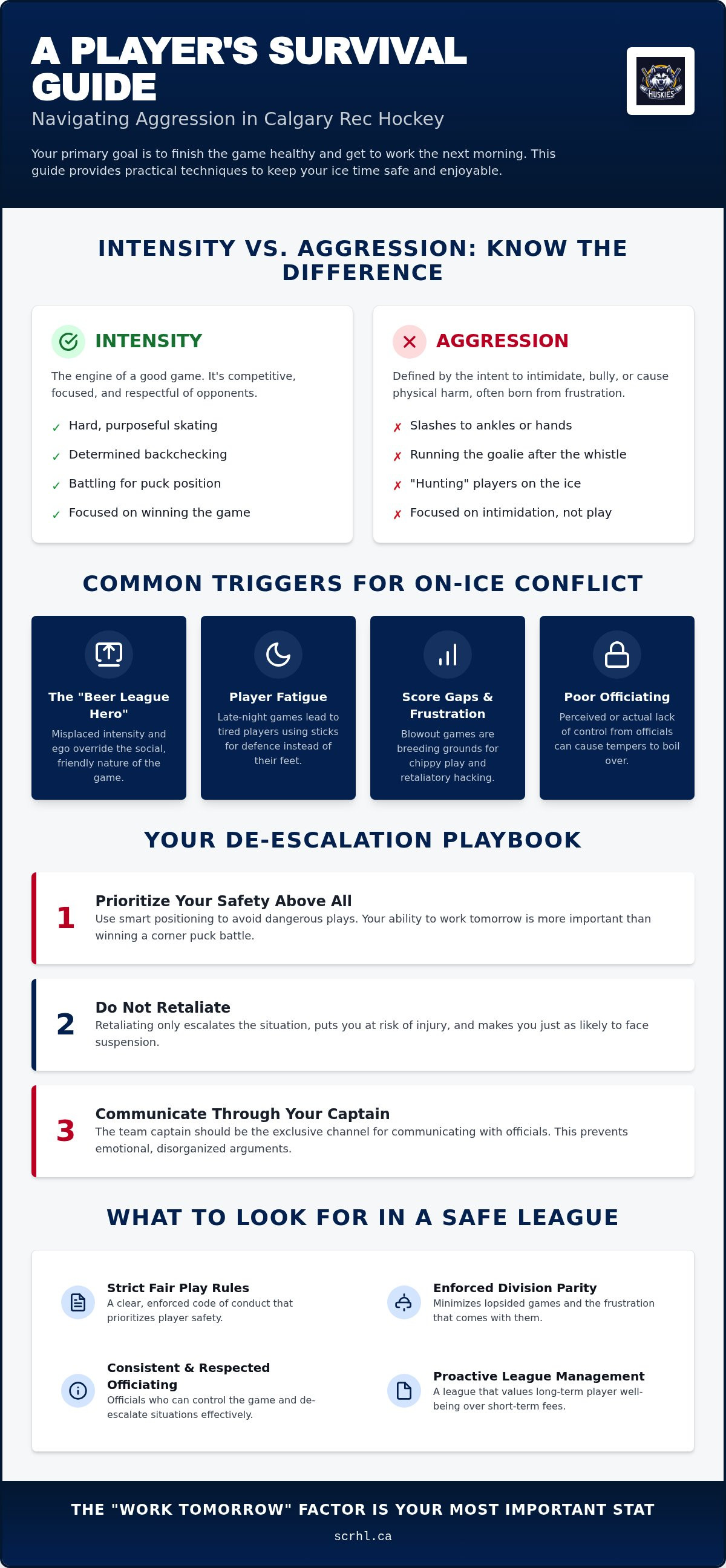
We agree that your primary goal is to finish the game healthy and get to work the next morning. This survival guide provides practical de-escalation techniques to keep your Calgary ice time safe. You'll learn how the 2026 "The Shift Forward" program impacts on-ice conduct and how to handle heated moments before they turn into physical altercations. We also examine how division parity and strict league management help you find a better environment for your weekly game.
Key Takeaways
- Distinguish between competitive intensity and dangerous aggression to maintain a safer game environment.
- Recognize triggers like fatigue and the "Beer League Hero" mentality to anticipate and avoid reckless behaviour.
- Learn how to deal with aggressive players in rec hockey by using smart positioning and prioritizing your safety over winning a verbal argument.
- Use the team captain as the exclusive channel for communicating with officials to de-escalate tension effectively.
- Look for Calgary leagues that enforce strict fair play rules and division parity to reduce the risk of injury.
Understanding Aggression vs. Intensity in Recreational Hockey
Intensity is the engine of a good hockey game. It involves hard skating, backchecking, and battling for puck position. Aggression is different. It is defined by the intent to intimidate, bully, or cause physical harm. Understanding violence in sports requires recognizing that aggression often stems from frustration rather than a desire to win. In a recreational setting, this distinction is critical for player safety. Knowing how to deal with aggressive players in rec hockey starts with identifying these patterns early in the first period.
Many Calgary players struggle with the "non-contact" designation. This label does not mean zero contact. It means no body-checking. Incidental contact is a reality of a fast-paced game on ice. Problems arise when players use this ambiguity to justify reckless behaviour. Escalating these conflicts leads to more than just a two-minute minor penalty. It creates legal risks and the potential for severe physical trauma that can end a player's season or hobby. A single moment of lost temper can have permanent consequences for everyone involved.
The Line Between Hard Play and Chippy Behaviour
Recognizing the line requires focus. Hard play is predictable. A player skates hard to the corner to win the puck. Chippy behaviour is reactionary. It includes slashes to the ankles or "accidentally" running into the goalie after the whistle. Skill gaps in lower Calgary divisions often complicate this. A less experienced skater might lose their balance and collide with you. This isn't aggression; it's a lack of control. True aggression is calculated. If a player is "hunting" others on the ice, they have crossed the line from competitor to liability.
Why Safety Matters More in Adult Rec Leagues
Most players in Calgary leagues have a job to go to on Monday morning. The "work tomorrow" factor is the most important metric for any game. One reckless play can lead to broken bones or concussions, resulting in lost wages and medical costs. Beyond the individual, aggressive behaviour destroys team culture. High-conflict games are less enjoyable, leading to lower retention rates. When a league allows chippy play to go unchecked, registration numbers eventually drop as players seek safer environments. Keeping the game clean is a matter of long-term league health and community stability.
Why Aggression Happens in Calgary Rec Hockey
The "Beer League Hero" is a common fixture in local rinks. These players often skate as if a professional scout is watching from the bleachers. In reality, the stands are empty, and everyone has work the next morning. This misplaced intensity is a primary reason why you need to know how to deal with aggressive players in rec hockey. When ego overrides the social nature of the game, physical safety becomes an afterthought.
The Misplaced Competitive Drive
Some participants struggle to separate their high-pressure day jobs from their time on the ice. They treat a Tuesday night game like a boardroom battle. This psychological carryover often fuels unnecessary physical confrontation in what should be a friendly environment. According to academic research on hockey aggression, social factors and peer pressure significantly influence how players behave in competitive settings. In a non-contact environment, a "tough guy" persona is usually a sign of frustration rather than actual athletic skill.
Fatigue also plays a massive role in on-ice incidents. Most Calgary games take place late at night, often starting after 9:00 PM. By the third period, legs are heavy and tempers are short. Tired players tend to use their sticks instead of their feet to defend. This leads to dangerous tripping, hooking, and slashing. Alcohol consumption before a game or during late-night sessions further impairs judgment and coordination. This combination turns a standard puck battle into a significant safety hazard.
The Role of Frustration and Score Gaps
Frustration peaks when there is a significant skill gap between teams. Blowouts are breeding grounds for chippy play. When a team is down by several goals in the final frame, some players vent their frustration through hacking and slashing. This is why choosing a non-contact hockey league in Calgary with strict division parity is vital. Balanced tiers ensure that games remain competitive and respectful until the final whistle.
Poor officiating, or even just the perception of it, can also cause tempers to boil over. If you feel the game is getting out of hand, focus on how to deal with aggressive players in rec hockey by staying disciplined and avoiding retaliation. Retaliating only escalates the situation and puts you at risk of suspension. Finding a league that prioritizes fair matchups and safe play is the best way to ensure your season remains enjoyable and injury-free.
De-escalation Strategies for Aggressive Rec Hockey Players
Prioritize physical safety. Winning a verbal argument provides zero value if you leave the rink with an injury. This is the foundation of how to deal with aggressive players in rec hockey. Use the "Skate Away" rule. Referees often miss the initial provocation. They almost always penalize the retaliation. Don't be the second person in. Keep your team off the penalty kill and stay out of the box.
Use neutral body language to signal a lack of engagement. Avoid squaring your shoulders or making prolonged eye contact after a whistle. These are universal signs of aggression. Turn your back and head toward the bench or the face-off circle instead. This non-verbal communication often causes the aggressive player to lose interest. Communicate with your teammates. Remind them not to retaliate on your behalf. Retaliation only fuels a cycle of chippy play.
Verbal De-escalation on the Ice
Use short, calm phrases if an opponent tries to bait you. A simple "I'm just here for a skate, man" can diffuse tension instantly. Chirping back only validates the aggressive player's behaviour. It gives them the emotional reaction they want. When you remain indifferent, their antics look ridiculous to everyone else on the ice. This includes the officials.
Physical Space and Defensive Positioning
Keep your feet moving. Stationary players are easy targets. When playing at rinks like Cardel Rec South, stay out of the high-risk zones if an opponent is headhunting. Protect yourself along the boards. Keep a low centre of gravity. Use your shoulder to absorb incidental contact. Your stick is a tool for the puck. It is not a shield or a weapon. Keep your blade on the ice to signal you are playing the game, not the person.
The Mental Game: Staying Focused
Spiking heart rates are common after a chippy shift. Use your time on the bench to breathe deeply and reset. Focus on your own performance and your team's systems. Rec hockey is a social hobby designed for fitness and community. Reminding yourself of these goals helps you realize that one aggressive player is not worth your composure. Staying disciplined is the best way to show your teammates how to deal with aggressive players in rec hockey while keeping the game's flow intact.
The Captain’s Role: Managing Conflict and Talking to Officials
The captain acts as the professional bridge between the team and the officials. This is a logistical necessity. Referees cannot manage 20 different voices yelling for a call. By rule, the captain or alternate is the only person authorized to discuss rule interpretations. Understanding this structure is a core part of how to deal with aggressive players in rec hockey. When the captain stays calm, the rest of the bench usually follows suit. A disciplined leader prevents a chippy shift from turning into a bench-clearing argument.
Effective Communication with Officials
Approach the referee during a stoppage in play. Do not scream from across the ice. Use a collaborative tone. Instead of demanding a penalty, ask for "help" with a specific player's behaviour. Phrases like "Can you watch number 22 for the slashes?" are more effective than yelling for a whistle. Building this rapport over a season creates a professional environment. If a game becomes dangerous, the captain must report the incidents to league management immediately after the final buzzer. This ensures a paper trail for repeat offenders and keeps the Calgary hockey community safe.
Setting the Team Culture
A disciplined team starts with the captain's conduct. Implement a strict "no-retaliation" policy for your roster. Remind your players that the second person in always gets the gate. If a teammate is becoming a liability, manage them on the bench before they cost the team a game. Reviewing how to build a rec hockey team roster in Calgary helps you select players who value safety and community over ego. A roster built on respect is much easier to manage when tempers flare.
League management is your partner in safety. If a specific opponent is consistently "hunting" players, the captain should document the dates and times. Organized leagues like the SCRHL prioritize fair play and parity. They rely on captain feedback to identify toxic behaviour and take administrative action. If you are tired of managing high-conflict games, consider moving your group to a league that values organized and safe recreational hockey. Proper league administration is the ultimate tool for reducing on-ice aggression.
Finding a Safe Rec Hockey League in Calgary
Your choice of league is the most significant factor in your personal safety. It dictates the culture of every shift. If you are struggling with how to deal with aggressive players in rec hockey, the solution often lies in the administration. Strict rules and consistent enforcement reduce the presence of reckless individuals. Look for organizations that prioritize a Fair Play mandate over a winning at all costs mentality. A disciplined league protects its participants through clear expectations and firm consequences.
Division parity is the best tool for preventing on-ice frustration. When teams are mismatched, the game often becomes chippy and dangerous. Organized leagues reduce this risk by monitoring scores and moving teams between tiers. This ensures that every puck battle remains competitive but respectful. Proper league selection is the most effective way to learn how to deal with aggressive players in rec hockey by removing them from your schedule entirely. We focus on providing a stable environment where you can enjoy the sport without fear of injury.
SCRHL Fair Play and Parity Standards
SCRHL manages team skill levels through a methodical balancing process. This prevents the blowout games that often lead to late-game aggression. Our league officials monitor player behaviour across all divisions to identify and address toxic patterns. A strong adult hockey league in Calgary requires this level of leadership. We maintain a professional register while keeping the language grounded in the needs of local players. Our goal is a safe, community-oriented experience for every skater.
- Continuous division monitoring to ensure fair matchups.
- Strict enforcement of non-contact rules and sportsmanship.
- Direct communication between captains and league management.
- Focus on long-term player safety and retention.
Choosing the Right Environment for Your Style
Consider the time of day you play. Morning hockey sessions often attract a different crowd than late-night weekend slots. Both offer high-quality ice, but the social atmosphere varies. Evaluate the atmosphere at rinks like the South Fish Creek Recreation Centre. These facilities provide a professional backdrop for our organized sessions. The social accountability found in a well-managed league acts as a natural deterrent to aggression. You are less likely to encounter reckless play in a community where participants respect their opponents.
Take the next step for your health and your hobby. Register for a league that values your safety as much as your skill. Whether you prefer morning sessions before the office or evening games on the weekend, we provide the structure you need. Our administrative approach ensures that your Calgary rec hockey experience remains safe and organized. Focus on your game and leave the management to us.
Take Control of Your Calgary Hockey Experience
Your safety on the ice depends on a combination of personal discipline and professional league management. Mastering how to deal with aggressive players in rec hockey requires you to prioritize de-escalation and lean on your team captain for official communication. By choosing to "skate away" and focusing on your own performance, you protect your ability to return to work the next morning without injury. However; individual tactics only go so far when the league environment itself is disorganized.
The South Calgary Recreational Hockey League provides the structure necessary for a safe season. We use strict division parity to ensure fair matchups and offer organized morning and evening ice times to fit your schedule. Our staff maintains a high standard through the rigorous enforcement of Fair Play rules; removing the "goon" element from your weekly game. Don't settle for a league that ignores reckless behaviour. Register your team for the upcoming SCRHL season to experience a community focused on respect and athletic competition. We look forward to seeing you at the rink for a clean, competitive year of hockey.
Frequently Asked Questions
What is the best way to handle a player who keeps hacking at my shins?
The most effective response is to skate away and avoid any physical or verbal retaliation. Retaliating often results in a penalty for the second player involved. Keep your feet moving to stay a harder target. Inform your team captain about the repeated hacking during the next stoppage. They are the only ones authorized to discuss these specific safety concerns with the officials to ensure the behaviour is monitored for the rest of the game.
Should I talk to the referee if an opponent is being too aggressive?
Individual players should never approach the referee to complain about an opponent's aggression. League rules dictate that only the captain or designated alternates can speak with officials regarding rule interpretations or safety issues. If you feel an opponent is crossing the line, communicate this to your captain on the bench. They will then approach the referee in a calm, professional manner to ask for closer monitoring of the situation during the next play.
How do I stop my own teammate from being the aggressive one?
Address the behaviour immediately on the bench between shifts. Remind your teammate that reckless play puts the entire team at risk of penalties and ruins the social atmosphere of the game. If the behaviour continues, the team captain must step in to manage the conflict. Establishing a clear team culture that values safety over winning helps prevent these situations. It is better to sit a hot-headed player than to lose the game or face league discipline.
Is fighting common in Calgary recreational hockey leagues?
Fighting is extremely rare and strictly prohibited in Calgary recreational hockey leagues. Most organized leagues, including the SCRHL, enforce a zero-tolerance policy for fighting and deliberate intent to injure. Engaging in a fight typically results in an immediate game misconduct and a multi-game or season-long suspension. The focus of local rec hockey is on fitness and community, so officials are instructed to shut down physical altercations before they escalate into dangerous situations.
What happens if a player is consistently dangerous in the SCRHL?
The SCRHL takes a disciplined administrative approach to player safety. If a player is identified as consistently dangerous, league management reviews the official game reports and captain feedback. Consequences include mandatory suspensions or permanent removal from the league for repeat offenders. This strict enforcement of Fair Play rules ensures that all participants can enjoy their ice time without fear of injury. We prioritize the safety of the community over the participation of any single aggressive individual.
Can I change divisions if my current one is too chippy?
If your current division feels too chippy, you should discuss the situation with league management. Frustration often stems from a lack of skill parity between teams. We monitor game results and division dynamics throughout the season to identify these issues. Learning how to deal with aggressive players in rec hockey often involves moving to a tier that better matches your team's skill level. Re-tiering is a standard part of our organized league management to maintain a safe environment.
How does SCRHL ensure teams are playing in the correct skill tier?
We use a methodical division parity system to ensure every matchup is fair and safe. Our administrators track scores, penalty minutes, and player statistics to verify that teams are placed in the appropriate tier. If a team is dominant or struggling significantly, we move them to a different division to restore balance. This data-heavy approach reduces the frustration that leads to aggression. It ensures that morning, evening, and weekend sessions remain competitive and enjoyable for all participants.