

Finding a full-time goalie is easier when your team clearly shares its schedule, level of play and season commitment. To find a full-time goalie for a rec team in Calgary, reach out to adult recreational teams and league communities with those details, along with the goalie’s experience, availability and preferred role.
A focused first message helps teams assess the fit without a long back-and-forth. Include the commitment you need and what the goalie can expect from the team.
This guide covers where Calgary teams can look for goalie openings, what to include in an inquiry and how to compare skill fit and schedule expectations. It also explains the difference between a full-time season role and substitute coverage.
Key Takeaways
- Look for goalie openings through Calgary recreational hockey teams and league communities, and focus on the season and schedule that suit you.
- Make your first message useful: include your experience, availability, preferred role and the team details you’re seeking.
- Compare full-time placement with substitute coverage, then assess whether the team’s level and goalie expectations fit your experience.
- If you’re looking to join or register a team, SCRHL offers individual and team registration for Fall and Winter seasons.
Finding Calgary recreational hockey goalie opportunities
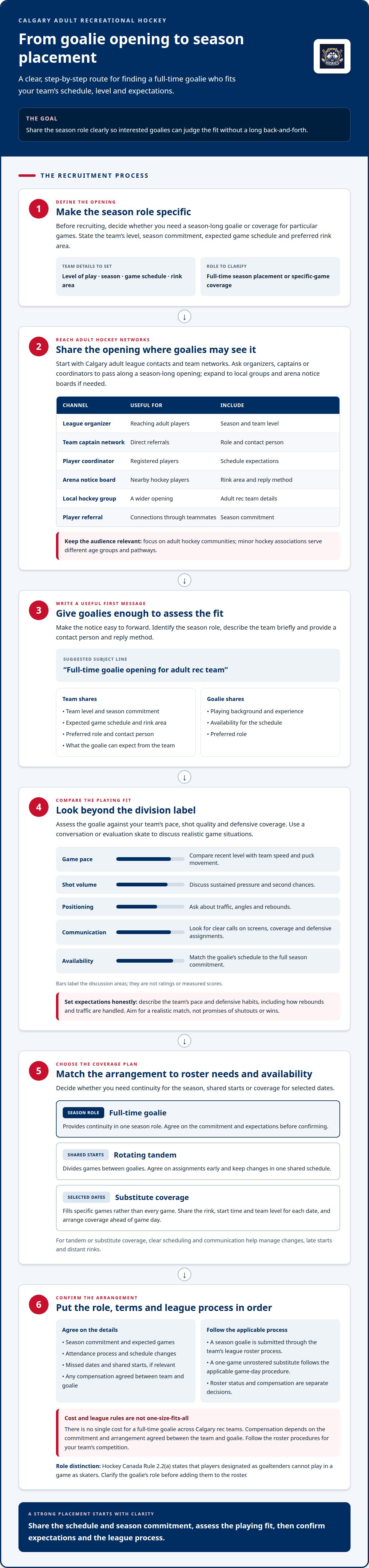
Start with adult league organizers, team captains and player coordinators. Ask them to share a season-long opening through their hockey contacts. If you’re deciding how to find a full-time goalie for a rec team in Calgary, state the role clearly from the outset. Include the team’s level, season commitment, expected game schedule and preferred rink area so interested goalies can assess the opportunity.
There is no single cost for a full-time goalie that applies to every Calgary rec team. Any compensation depends on the commitment and the arrangement agreed between the team and goalie. Discuss the expected role, schedule and terms directly before confirming a placement.
Make your notice easy to forward. Include a contact person, the role you’re seeking and a brief description of the team. Invite interested goalies to share their playing background and availability privately. A specific subject line, such as “Full-time goalie opening for adult rec team,” makes it clear that this is a season role, not a request for one game.
Begin with Calgary adult league contacts and team networks. Local hockey groups and arena notice boards can help spread the word. Focus on adult hockey communities, since minor hockey associations serve different age groups and pathways.
| Option | Best use | Include in the notice |
|---|---|---|
| League organizer | Reach adult players | Season and team level |
| Team captain network | Find direct referrals | Role and contact person |
| Player coordinator | Share with registered players | Schedule expectations |
| Arena notice board | Reach nearby hockey players | Rink area and reply method |
| Local hockey group | Post a wider opening | Adult rec team details |
| Player referral | Connect through teammates | Season commitment |
To find a full-time goalie for a rec team in Calgary, start with adult league channels and expand your search if needed.
Goalie placement and team availability
The right option depends on your roster needs, goalie availability and league procedures. Decide whether you need immediate game coverage or a season-long placement before filling the position.
Alternatives to a Full-Time Goalie
If no goalie can commit for the season, plan coverage around your actual schedule. A rotating tandem divides games between goalies, while a substitute arrangement fills specific dates without covering every game. A full-time goalie provides continuity in one season role; shared or substitute coverage depends on clear scheduling and communication.
For a tandem, agree on game assignments early and keep changes in one shared schedule. For substitute coverage, send each goalie the rink, start time and team level for every game. Arrange coverage ahead of game day, especially for late starts or distant rinks. Youth hybrid-goalie pathways are not adult rec placement rules.
Paid and Rostered Goalies in Rec Leagues
Roster status and compensation are separate decisions. A goalie may join a team roster for the season, while any payment arrangement is agreed between the team and goalie under the league’s procedures. Do not assume one city-wide rule applies to every Calgary rec league: follow the roster process for your team’s competition.
Before confirming a placement, write down the season commitment, expected games, attendance process and agreed compensation. Then have the team organizer submit the goalie through the league’s roster process. A one-game unrostered substitute follows the applicable game-day procedure instead. A written agreement can also clarify missed dates, shared starts and schedule changes.
If schedule compatibility is limiting recruitment, compare the team’s game times with Calgary hockey session options before choosing a placement plan.
Matching goalie skill level to a rec team
Assess the goalie against your team’s pace, shot quality and defensive coverage, not just its division label. A team that faces frequent rebounds and traffic in front needs a goalie comfortable tracking screened shots. A developing team may suit someone building confidence in positioning and communication.
A full-time rec goalie should have experience suited to the team’s level and properly fitting goalie equipment in usable condition. There is no single qualification for every Calgary league. Prioritize reliable attendance, clear communication and the ability to handle the types of shots your team typically faces.
Use a short, practical comparison before offering a season spot:
- Game pace: Compare the goalie’s recent level with the team’s speed and puck movement.
- Shot volume: Discuss how they handle sustained pressure and second chances.
- Positioning: Ask how they manage traffic, angles and rebounds.
- Communication: Look for clear calls on screens, coverage and defensive assignments.
- Availability: Match their schedule to the team’s full season commitment.
Use a conversation or evaluation skate to discuss these points. Describe the team’s pace and defensive habits honestly. For example, explain whether defenders usually clear rebounds or leave the goalie to manage traffic alone. Aim for a realistic match, not promises of shutouts or wins.
Clarify the role before adding a goalie to the roster. According to Hockey Canada, under Rule 2.2 (a), players designated as goaltenders cannot play in a game as skaters. That distinction matters if someone wants to rotate between positions. Agree on the goalie’s role, expected attendance and communication process before the season starts.
Compare the goalie’s expectations with your team’s level. Someone seeking competitive, high-tempo games may not enjoy a slower recreational pace, while a newer goalie may value clear communication about defensive responsibilities. Ask about their playing history and discuss a representative game situation before confirming the fit.
Are there Calgary goalie-for-hire or substitute goalie services?
Calgary teams can arrange a spare goalie for one game or use a substitute when their regular goalie is unavailable. That fills an immediate schedule gap but does not provide the continuity of a full-time season placement. Treat it as game coverage, not a long-term roster plan.
Agree on payment and timing before confirming the booking, then tell the team how the cost will be shared.
Start by asking team contacts and local hockey networks for goalie referrals. Send the game date, start time, rink, level of play and whether the goalie needs to bring equipment. Include a contact number and reply promptly. A 10:45 PM game at a rink across Calgary can be a challenging booking, so share the location and late start upfront.
Games starting at 10 PM or later often cost more. Keep that in mind when comparing a spare shift with a season commitment. The key difference is the scope: a substitute covers a specific game, while a full-time goalie commits to the team’s broader schedule. If the team needs repeated cover, track each open date and contact goalies early rather than treating every game as a last-minute search.
Before confirming, settle these details in writing:
- The game date, start time and Calgary rink.
- The agreed fee and how the team will divide it.
- Equipment arrangements and the goalie’s expected arrival time.
- Any league process required for a substitute to play.
For a team moving from one-off coverage to a season plan, review team registration options as part of organizing the roster and schedule.
South Calgary Recreational Hockey League (SCRHL)
South Calgary Recreational Hockey League (SCRHL) helps Calgary adults organize their recreational hockey participation through team and individual registration. If your goalie search is part of building a roster for an upcoming season, Fall Season Team Registration and Winter Season Team Registration provide team registration options. Individual Player Registration is another route for players looking to join recreational hockey.
Ice-time preferences matter too. Morning Hockey Sessions may suit players whose schedules do not align with evening games. Consider your team’s season plans and preferred ice times when deciding what kind of goalie placement to pursue.
For information about recreational hockey registration and session options, contact SCRHL.
Set your goalie search in motion
A sound approach to finding a full-time goalie for a Calgary rec team is to make the search part of roster planning. Choose one team contact to coordinate replies and keep the process organized. They can track interested goalies, note the status of each conversation and share decisions with the team. Clear ownership helps prevent missed messages and mismatched expectations.
Before the next season takes shape, agree on what matters most to your team. Separate essential requirements from preferences. This gives your captain a consistent basis for assessing potential goalies and helps the team make a timely decision together.
For help with recreational hockey participation and registration options, contact South Calgary Recreational Hockey League. A well-organized search can bring your team closer to a goalie arrangement that works for the season ahead.
Frequently Asked Questions
What should I include when contacting a Calgary team for a goalie shift?
Say whether you’re available for one game or seeking a season-long role. Include a brief playing background, your usual goalie position and the best way to reach you. For example, mention your adult recreational hockey experience and whether you can cover a particular game date. A concise message lets the captain quickly understand your experience and availability.
Where can Calgary recreational hockey teams find a full-time goalie?
Ask current and former teammates to introduce you to goalies considering a new team. Referrals can connect captains with people familiar with adult recreational hockey. Try the same approach with players from other Calgary teams, particularly during roster planning before a season begins. Give each contact a short description of the role so they can share the opportunity accurately.
How can a Calgary team recruit goalies through local hockey groups and classifieds?
Write a focused post for Calgary hockey groups or classifieds, and ask moderators to place it in the appropriate adult-hockey category. Keep personal details out of the public post and move scheduling conversations to direct messages. Describe the team’s level and whether the opening is full-time, then invite interested goalies to share their background and availability privately.
What should a team agree on with a goalie about attendance, fees, and cancellations?
Agree on attendance expectations, payment timing and how cancellations will be handled before the first game. Decide who will notify the goalie about schedule changes, how much notice the team aims to provide and what happens if either side cannot attend. Put the arrangement in writing, including whether a missed game affects payment. Clear terms help prevent confusion during a busy week.