

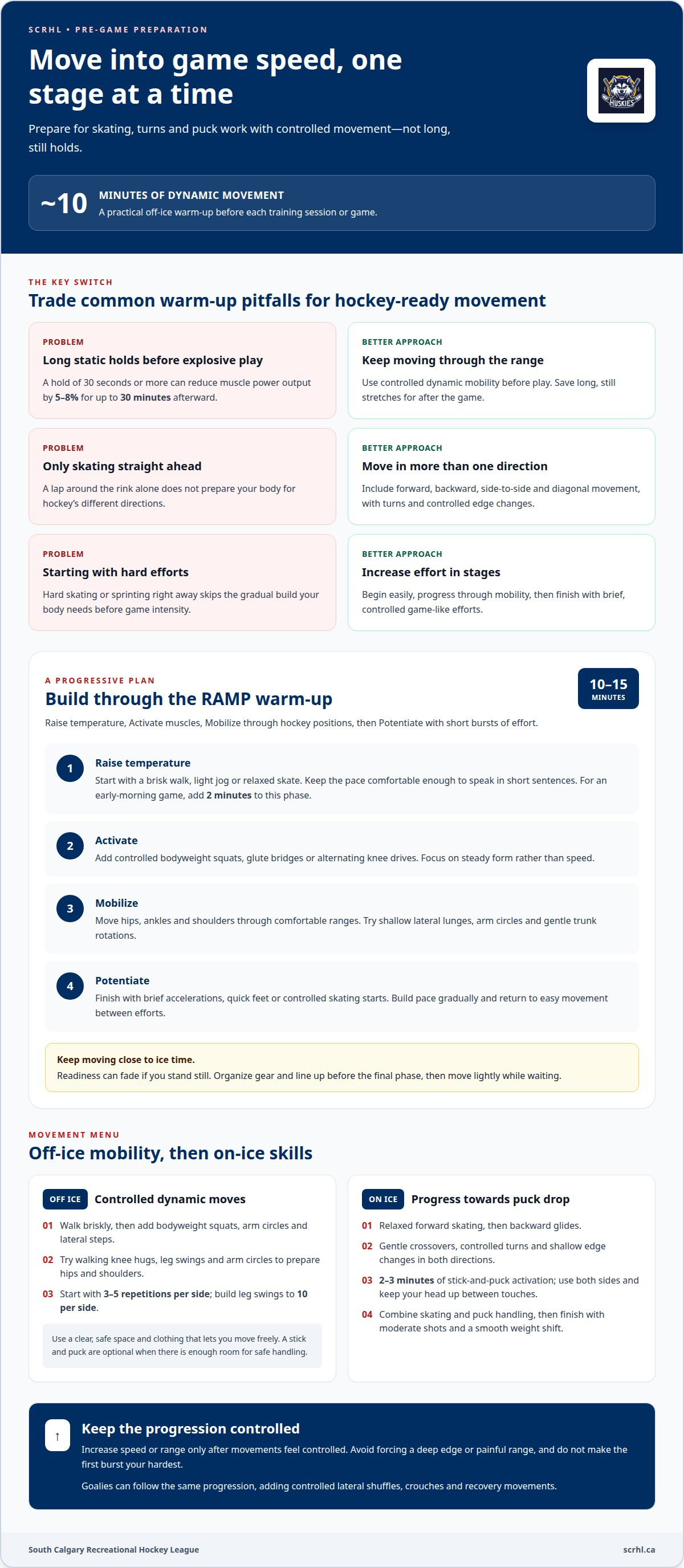
Skip long static holds before rec hockey. A pre-game warm up routine for rec hockey should use about 10 minutes of dynamic movement to prepare your body, gradually raise your heart rate and warm your muscles. Holding a static stretch for 30 seconds or more before explosive activity can reduce muscle power output by 5-8% for up to 30 minutes afterward.
Stretching before skating makes sense, especially if you feel stiff after a day at work. The key is how you move: save long, still holds for after play, and start with controlled movement that reflects the demands of hockey.
Learn how to prepare your movement, body temperature and heart rate before stepping on the ice. These steps cover dynamic mobility, skating-related movements and a gradual increase in effort, so you can feel ready at puck drop instead of rushed.
Key Takeaways
- Start with dynamic movement instead of long static stretches to prepare for hockey’s quick, powerful actions.
- Include forward, backward, side-to-side and diagonal movement to get ready for skating and puck work.
- Build effort gradually so your heart rate and body temperature rise before you step on the ice.
- Use a short off-ice sequence to activate your hips, shoulders and core before your first shift.
Why is static stretching bad before hockey?
Long static holds may reduce power before hockey’s explosive starts, stops and turns. Use dynamic movement instead, following the steps below to build your pre-game warm up routine for rec hockey before practice or a game.
-
Use Off-Ice Dynamic Exercises
Start with about 10 minutes of movement before every hockey training session and game. Walk briskly, then add controlled bodyweight squats, arm circles and lateral steps to raise your temperature without rushing. Keep the movements smooth, and use a clear space where you can move safely. A lap around the rink alone doesn’t prepare your body for the different directions hockey demands.
-
Add Dynamic Pre-Game Stretches
Move through each stretch instead of holding one position. Try walking knee hugs, leg swings and arm circles to prepare your hips and shoulders for skating and stick work. Start with 3-5 repetitions per side; build to 10 per side for leg swings. Keep your balance and use a comfortable range. Save long static holds for after play, not the moments before explosive activity.
- Follow a practical order: raise your heart rate with light movement, work through mobility and dynamic stretches, then finish with hockey-specific drills. Goalies can follow the same progression and add controlled lateral shuffles, crouches and recovery movements for their position. Keep each movement controlled before increasing its speed or range. This sequence gives your pre-game warm up routine for rec hockey a clear progression.
- You don’t need special warm-up equipment for basic off-ice movement. Wear clothing that lets you move freely; add a stick and puck only when you have enough room for safe handling. Static stretches held for 30 seconds or more before explosive activity can reduce muscle power output by 5-8% for up to 30 minutes afterward. Choose motion over long holds before the game.
Movement range for skating, stickhandling, and shooting
Follow a progressive on-ice warm-up before puck drop. A progressive on-ice routine can move from easy skating to directional drills, puck control and shots.
- Begin with relaxed forward skating, then add backward glides. Use the full length of the available space, keep your knees comfortably bent and let your stride lengthen naturally. This first pass gives you time to find your balance on your edges. Don’t start with hard accelerations or sharp stops.
- Add side-to-side and diagonal movement. Try gentle crossovers, controlled turns and shallow edge changes in both directions. Repeat the sequence with a little more pace while keeping your upper body steady. These patterns prepare you to change direction during a game without forcing a deep edge or painful range, especially around an existing injury.
- Bring in a puck for 2-3 minutes of stick-and-puck activation. Skate forward while stickhandling, then change direction and practise keeping the puck close through a turn. Use both sides of your body. Keep your head up between touches so puck control doesn’t become the only movement you practise.
- Progress to short skating drills that combine movement with puck handling. For example, glide forward, turn diagonally, carry the puck back, then repeat backward without it. Keep each pass controlled before adding speed. A hockey warm-up should include forward, backward, side-to-side and diagonal movement, rather than just one straight-line lap.
- Finish with moderate shots after your legs and hands have moved through the sequence. Take a few passes to settle your stance, then shoot with a smooth weight shift and follow-through. Avoid making every attempt a full-power shot. Players who want regular ice time to practise these skills can explore Calgary recreational hockey sessions.
Gradually raising heart rate and body temperature
Plan a 10-15-minute RAMP warm-up before playing. Build effort in stages rather than starting with hard skating or sprinting.
- Raise your temperature with easy movement. Begin with a brisk walk, light jog or relaxed skate, depending on the space available. Keep the pace comfortable enough to speak in short sentences. This opening phase gets you moving before more demanding work. For an early-morning game, add 2 minutes to the Raise phase so your body has extra time to warm.
- Activate the muscles you’ll use. Add controlled movements such as bodyweight squats, glute bridges or alternating knee drives. Focus on steady form, not speed. These movements prepare the muscles that support skating posture and repeated pushes. If an exercise feels awkward, reduce its range rather than forcing it.
- Mobilize through hockey-related positions. Move your hips, ankles and shoulders through comfortable ranges. Try shallow lateral lunges, arm circles and gentle trunk rotations. Keep each motion smooth and continuous. The aim is to prepare your joints for skating, stickhandling and reaching, not to hold a stretch in place.
- Potentiate with short bursts of game-like effort. Finish with brief accelerations, quick feet or controlled skating starts. Gradually increase the pace, then return to easy movement between efforts. This final step bridges the gap between warming up and playing. Avoid making the first burst your hardest; build intensity as your body responds.
- Keep moving until it’s time to play. A dynamic warm-up raises body temperature, blood flow, joint range of motion and neural drive to working muscles. These changes support movement readiness, but fade if you stand still. Organize your gear and line up before the final phase, then move lightly while waiting. Finish the sequence close to ice time, not well beforehand.
Off-ice warm-up exercises
- Choose a clear, dry space beside the rink. Begin with walking knee hugs, lifting each knee and briefly holding it near your chest. This activates your hip flexors while testing balance and control. Keep the motion smooth, and shorten the range if your footing feels unstable or another player crosses your path.
- Add hip and shoulder mobility before increasing speed. Use alternating arm circles, controlled trunk turns and shallow lateral steps. Move through each position without forcing a joint to its limit. These movements prepare your shoulders for stick work and your hips for skating positions. Choose a space clear of sticks and bags.
- Use two short accelerations from a push-up start to build effort progressively. Begin with a 50% sprint, then return to your starting position at an easy pace. Follow with a 75% sprint if you have enough room. Keep both efforts controlled, and avoid a full-speed launch before your muscles have warmed through movement.
- Include core work while you’re still off the ice. Try a controlled plank or steady repetitions of a bodyweight exercise that keeps your trunk stable. The purpose is to activate the muscles you’ll use to maintain skating posture and manage contact with the puck. Focus on form rather than racing through repetitions.
- Adapt the sequence to the rink and time available. For a cold Calgary rink, keep moving between exercises and wear warm layers until you’re ready to skate. If only 5 minutes are available, use a brief RAMP warm-up: raise effort, activate key muscles, mobilize, then add a short, quicker movement. Skip extra drills, not the gradual build.
Put these movements into practice before your next game. Explore recreational hockey sessions and make regular ice time part of your routine.
South Calgary Recreational Hockey League (SCRHL): Fall Season Team Registration
South Calgary Recreational Hockey League (SCRHL) offers Fall Season Team Registration for adults in Calgary ready to fit recreational hockey into their schedule. If you have a team, registration is the next step from preparing for game night to joining an organized season.
Playing solo? Individual Player Registration offers another route into the league. SCRHL also offers Winter Season Team Registration and Morning Hockey Sessions, giving you options when choosing a season or ice time. Pick the format that fits your situation, then review the registration details before getting started.
If your team is planning its fall season, start with Fall Season Team Registration. Visit scrhl.ca to explore registration options and find the next step that fits your plans.
Make your next game a fresh start
Make preparation part of your game-day schedule instead of leaving it to the last minute. A pre-game warm up routine for rec hockey works best when it’s practical enough to repeat and flexible enough for the rink, available space and how you feel that day. Set out your gear in advance, arrive ready to move and adjust the pace without skipping the gradual build. Step onto the ice focused on playing, not still sorting out your plan.
Use your next game to settle on a sequence you can follow consistently. Notice which movements help you feel ready, and keep the order simple enough to remember. If you’re planning your next season or looking for a way to join a team, connect with SCRHL about your options.
Contact South Calgary Recreational Hockey League to explore your next step. Get organized, get on the ice and enjoy your game.
Frequently Asked Questions
Can I use the same routine before practice?
Yes, follow the same basic sequence before practice and games. A familiar order helps you start without spending warm-up time deciding what comes next. Adjust the final effort to the session: use controlled skating and puck touches before a technical practice, then add sharper, game-like movement before a competitive skate. Keep movements comfortable and adapt them if rink space is busy.
How long should a hockey warm-up be before a game?
Allow 10-15 minutes for off-ice preparation, then use a standard 15-minute on-ice warm-up. Treat them as separate parts of your schedule, not competing options. If your ice time is short, keep the off-ice sequence focused and use the first on-ice laps to progress from easy skating to puck work. Avoid standing still for a long stretch between the two.
Why is a Pre-Game Routine Important?
A pre-game routine gives you a repeatable way to shift your attention from work, travel or rink logistics to playing. Choose a simple cue, such as checking your equipment, taking a few steady breaths and picturing your first shift. Repeating these actions can make preparation feel more organized and help settle nerves. Keep the routine practical enough to use when the dressing room is busy.
How long should a pre-game warm-up be for recreational hockey?
Set aside about 10 minutes for a dynamic warm-up, then account for on-ice preparation separately. The right schedule depends on when you can access the ice and how much time you have to move beforehand. Plan the sequence before game day, including changing and equipment checks, so those tasks don’t cut into active preparation or leave you rushing to the bench.
What off-ice dynamic stretches are best before a recreational hockey game?
Choose moving exercises that prepare your hips, shoulders and trunk without holding a position. For example, combine walking knee hugs with controlled arm circles and shallow lateral steps. Move smoothly and keep your balance; don’t force a deeper range just to make the stretch feel stronger. If the space near the rink is crowded, use compact movements that won’t interfere with other players.
What hockey-specific skating drills prepare players for a game?
Use a sequence that changes direction and skating position. Start with forward strides, add backward glides, then practise controlled turns and crossovers in both directions. Once your edges feel settled, carry a puck through a diagonal route and finish with a few smooth shots if space allows. Keep your head up and leave room between players, sticks and the boards.