

A regular hockey game can give you a reason to step away from work and focus on an activity you enjoy. The mental health benefits of playing hockey Calgary adults may experience often begin with simple things: a recurring activity, focused time on the ice and connection with teammates. Hockey isn’t a treatment, and it won’t guarantee a change in mood. It can, however, be one practical part of a broader approach to well-being.
It’s understandable to wonder whether you’ll feel fit enough, know anyone on the team or manage to fit hockey into a busy week. A recreational league adds structure through scheduled ice times, while teammates bring a social element to the game. To assess whether that structure will work for you, consider your weekly schedule, travel time, energy after work and how comfortable you feel joining a group activity.
This article explores how hockey may support mood, stress management, confidence and social connection, while keeping expectations realistic. You’ll also find practical ways to make playing more manageable, including registering as an individual if you don’t already have a team and choosing from morning, evening or weekend sessions. The aim is to help you decide whether adult recreational hockey in Calgary could be a sustainable fit.
Key Takeaways
- Hockey may support well-being through movement, focus, routine and social connection, but the experience varies from person to person.
- Use a scheduled ice time to make room for a recurring activity outside work and home responsibilities.
- Build confidence through participation, communication and personal goals, without expecting every team to become a close-knit social circle.
- Weigh hockey’s physical demands, time commitment and social setting against your needs and preferences.
- Explore the mental health benefits of playing hockey Calgary adults may experience, and consider SCRHL’s team or individual registration as a route into adult recreational play.
How can playing hockey support mental well-being?
Hockey may support well-being through movement, routine, focus and social connection. A recreational game gives players physical activity, shared tasks to concentrate on and a reason to spend time with teammates. For Calgary adults considering the mental health benefits of playing hockey, the realistic answer is that the experience depends on the person and the setting.
Recreational hockey can be a structured, social form of activity that may support everyday well-being, but it isn’t a mental health treatment. Benefits aren’t guaranteed. Enjoyment, access, personal health and the atmosphere on the ice all matter. A welcoming, manageable game may feel rewarding; an uncomfortable or overly demanding one may not.
What does mental well-being mean in a recreational sport?
Mental well-being describes how you’re doing in everyday life. It can include mood, how you manage stress, your sense of connection and your ability to cope with routine demands. Mental health is part of everyone’s overall health; mental illness refers to specific health conditions. They’re related, but they aren’t interchangeable terms.
Hockey can be one activity within a broader approach to well-being, alongside the relationships, habits and supports that fit your life. Playing may offer a regular change of pace and shared time with others. It can’t diagnose or treat a condition, and participation alone doesn’t promise improved mental health.
Why might hockey feel different from solo exercise?
Solo exercise lets you move at your own pace. Hockey adds shared goals and communication: players read the play, pass, defend and adjust to teammates. Skating and puck play ask you to pay attention to what’s happening in the game. For general background on how physical activity can affect the brain, see this overview of the neurobiological effects of exercise.
The team setting can feel energizing if you enjoy shared activity. For another player, group play, competition or the pace may add pressure. Neither option is automatically better. Your preferences matter. A recreational game should feel like a worthwhile part of your routine, not another source of stress.
Hockey mental health: movement, focus, and routine
Hockey combines physical effort with decisions that change from shift to shift. Players skate, track the puck, assess space and decide whether to pass, carry or reposition. That mix can give some adults a useful break from everyday pressures. It doesn’t mean every game will feel relaxing, or that a positive experience is the same as a clinical treatment outcome.
Canada’s 24-Hour Movement Guidelines for Adults include regular physical activity as part of healthy living. This supports activity as a well-being habit, not a promise that hockey will treat a mental health condition.
Can exercise during hockey help with stress?
For some players, getting on the ice offers a constructive change of pace. The game gives attention a specific job: follow the play, find an open teammate or get back on defence. Afterward, a player may feel more settled or simply glad to have moved and taken part. Those are personal experiences, not proof that hockey cures anxiety, depression or another health condition.
Keep the distinction clear. A recreational game may complement other habits and supports, but it isn’t a substitute for professional care when that’s needed. If hockey adds pressure rather than relief, adjusting your expectations or choosing another activity may be a better fit.
How can practice and game routines support focus?
A scheduled session can reserve recurring time for an activity outside work and home responsibilities. In Calgary, adult players can consider morning, evening or weekend hockey sessions when deciding what fits their week. Compare the options against your actual routine: consider work or family commitments, travel time and whether the timing leaves room for rest. A schedule that regularly conflicts with those needs can become another source of stress.
On the ice, attention moves with the play. You might scan for a passing option, notice a teammate changing position, then react when the puck turns over. That moment-to-moment focus can make a session feel absorbing. It’s different from trying to solve every decision at once off the ice, though the effect varies by player and game environment.
Regular play also creates repeated chances to communicate and coordinate. La Salle University discusses how socialization and shared affinity can contribute to a sense of belonging in sport. That connection isn’t automatic, but shared play can give teammates common ground over time.
If recurring ice time sounds like a practical fit, explore Calgary adult recreational hockey with SCRHL’s team and individual registration options.
How can a hockey team build connection, confidence, and resilience?
A recreational hockey team gives adults regular opportunities to communicate, contribute and share a goal. That can create opportunities for connection, but friendship isn’t automatic. Team culture, how players treat one another and a newcomer’s comfort level all shape the experience. The social side is one part of the mental health benefits of playing hockey Calgary players may experience, not a guaranteed result.
Why does team belonging matter for adult players?
Connection often starts with ordinary moments: coordinating a line change, calling out a pass or checking in after a shift. Familiar faces and brief conversations after a game can make participation feel more comfortable over time. New players may need a few sessions to learn names, team habits and how communication works on the ice. That adjustment is normal.
Repeated shared activities can create opportunities for belonging, as teammates build familiarity through regular communication and common goals. Still, a team isn’t a replacement for close relationships or professional support. You can enjoy the group without becoming close friends with everyone. Respectful communication and a welcoming environment matter more than forced socializing.
Can hockey build confidence and coping skills?
Confidence may grow through small, realistic markers of progress. You might learn where to position yourself, make a useful pass or contribute to a shift by supporting a teammate. Setting a personal goal, such as communicating more clearly, can give your effort a focus beyond the scoreboard. These gains depend on how you experience the team and the game.
Mistakes and setbacks are part of sport. A missed pass, a lost puck or a disappointing result can offer a chance to reset and keep participating, but that response isn’t guaranteed. Some players may feel encouraged by a challenge; others may find competition or physical demands stressful. Your goals, comfort and team environment all shape the experience.
Keep expectations practical. Look for signs that participation feels worthwhile: you’re able to contribute, communicate and return to play after an ordinary mistake. If the game consistently feels discouraging or unsafe, that’s useful information too. Recreational hockey should be a positive part of life, not a test of toughness or a measure of personal worth.
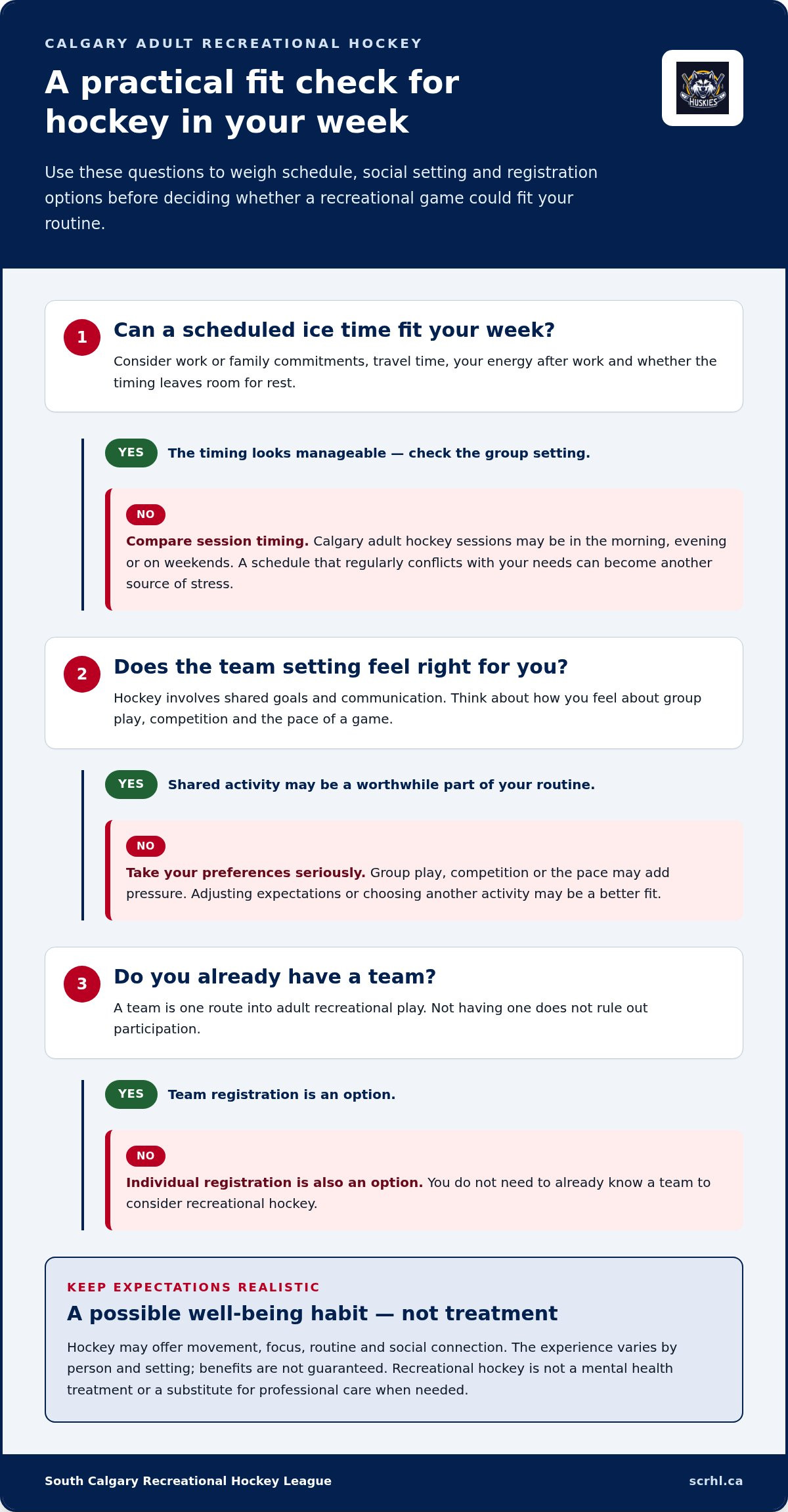
What if hockey feels intimidating, stressful, or hard to fit into Calgary life?
Hockey isn’t the right fit for everyone, or for every season of life. Work demands, family commitments, health, travel time and comfort with a team environment can all affect whether playing feels manageable. Possible mental health benefits are only one part of the decision. Enjoyment and fit matter too, particularly when you’re weighing a regular commitment in Calgary.
Is recreational hockey too competitive for a beginner or returning player?
It’s reasonable to feel unsure about your skill, fitness or getting back on the ice after time away. Comfort depends on the team setting, the level of play and what you expect from yourself. Rather than measuring success by goals or performance, consider whether the game feels welcoming and whether you can take part at a pace that suits you.
If contact, competition or the pace of play is a concern, be realistic about what feels comfortable for you. Set a modest first goal, such as getting used to the pace or communicating with teammates. Progress doesn’t need to happen all at once.
How can Calgary adults make hockey easier to sustain?
Choose a session that works with your actual week, including work, family responsibilities, travel and recovery. SCRHL offers Calgary adult recreational hockey sessions in the morning, evening and on weekends. A convenient time can make regular attendance easier, but the right choice is the one that doesn’t add strain to the rest of your routine. For more participation context, consult an adult hockey league player’s guide.
Keep the commitment manageable. You don’t need to chase performance or turn every game into a test. Notice how the activity fits your schedule and how you feel about returning. If the demands outweigh the enjoyment, it’s reasonable to pause or choose another form of activity.
Hockey can be part of a broader approach to well-being, but it isn’t a substitute for mental health care. If distress persists or affects daily life, speak with an appropriate health professional. Seeking support doesn’t prevent you from enjoying sport; it helps match the support to your needs.
If a scheduled team activity seems like a good fit, explore adult recreational hockey in Calgary with SCRHL, which offers team and individual registration.
How can Calgary adults take a practical first step toward playing hockey?
Start with a simple plan. Decide what you want from playing, choose a session that fits your week, then consider which adult league registration route suits you. Your goal might be regular movement, time with a team or simply getting back on the ice. Keep it realistic. Whether the mental health benefits of playing hockey Calgary adults experience feel worthwhile depends partly on whether the activity is enjoyable and manageable in everyday life.
South Calgary Recreational Hockey League (SCRHL) is an adult recreational hockey league in Calgary. It offers Fall and Winter seasons, with morning, evening and weekend sessions. Compare those options with your schedule and priorities rather than assuming one time works for everyone.
Should you register with a team or as an individual?
If you already have a full team, team registration may be the practical route. If you don’t have a team, individual player registration offers another way to enter adult league play. Think about what would make starting feel comfortable: playing with familiar teammates, or joining without needing to organize a full roster. For more detail, read a guide to what to expect after individual hockey registration in Calgary.
How can league play become a positive routine?
Set a participation goal that leaves room for rest, work and family commitments. A scheduled game can help create a recurring activity, but the routine should fit your life rather than compete with it. After playing, take stock: Did you enjoy the session? Did the team connection feel comfortable? Was the timing manageable alongside travel and recovery?
Those personal signals can help you decide whether to continue, adjust your schedule or take a break. There’s no need to measure success only by performance or attendance. A good starting point feels sustainable and gives you a reason to return, rather than adding pressure.
If you’re ready to explore a structured way to play, consider SCRHL’s adult league registration for a team or as an individual player. It’s a way to add scheduled hockey and team connection to life in Calgary, without expecting sport alone to change how you feel.
Make room for a routine that fits
Recreational hockey may support well-being through movement, focused play and time with teammates, but the experience is personal. Enjoyment, a manageable schedule and a welcoming team environment all matter. Treat hockey as one possible part of your well-being, not a guaranteed fix or a replacement for professional support. The mental health benefits of playing hockey Calgary adults may experience are worth exploring when the game fits their needs and everyday life.
SCRHL is a Calgary adult recreational league with team and individual registration options. Fall and Winter seasons, along with morning, evening and weekend sessions, offer different ways to build scheduled ice time into your routine. If you’re ready to see what could work for you, explore adult recreational hockey with SCRHL.
Start with a realistic goal and pay attention to how playing feels. A sustainable routine can begin with one practical step.
Frequently Asked Questions
Can playing hockey improve mental health?
Playing hockey may support everyday well-being, but it won’t improve everyone’s mental health in the same way. Movement, a regular activity and time with teammates can feel positive for some adults. The experience depends on personal health, enjoyment, access and the team environment. Treat hockey as one possible part of a broader approach to well-being, not as a guaranteed outcome or a way to diagnose or treat a mental health condition.
What are the mental health benefits of playing hockey?
Possible benefits include having an activity to look forward to, focusing on the play and connecting with teammates. The mental health benefits of playing hockey Calgary adults may experience depend on whether the sport suits their interests, health and schedule. Shared play can create opportunities to communicate and work towards common goals, while a recurring session can add structure to the week. These are possibilities, not promised results.
Can hockey help reduce stress?
For some people, playing hockey offers a constructive break from work or other daily pressures. Following the puck, making a pass or changing lines gives attention something immediate to focus on. A player might feel more relaxed afterward, but that personal experience isn’t the same as a clinical treatment outcome. Hockey doesn’t cure anxiety, depression or other health conditions, and it may feel stressful if the pace or setting isn’t a good fit.
Is adult recreational hockey good for beginners in Calgary?
It can be an option, but suitability depends on your skating ability, comfort and the league’s level and environment. SCRHL is a Calgary adult recreational hockey league with team and individual registration. If you’re new or returning after time away, consider your goals and what would make participation manageable. Don’t assume every recreational league is designed for beginners; choose a level and setting where you can take part comfortably.
How can team sports help with loneliness?
Team sports can create regular chances to see familiar people, communicate and share an activity. In hockey, connection may begin with coordinating a play, greeting teammates or chatting after a game. Those interactions can help someone feel included, but friendships aren’t guaranteed, and a team won’t replace close relationships or professional support. A welcoming environment and repeated participation may make it easier to get to know people at your own pace.
Can playing hockey replace therapy or other mental health care?
No. Recreational hockey can be one part of a well-being routine, but it isn’t a substitute for therapy, medical care or other professional support. If distress persists, affects daily life or feels difficult to manage, speak with an appropriate health professional. You can still play hockey if it feels helpful and manageable, but don’t rely on sport alone to address a mental health concern.
What hockey sessions are available for adults in Calgary?
SCRHL offers adult recreational hockey in Calgary during Fall and Winter seasons, with morning, evening and weekend sessions. Adults can register as a full team or as individual players. Session timing can help you consider how hockey might fit around work, family commitments and recovery. Use the league’s registration information to explore the options for the season you’re considering.