

Recovery doesn’t end at the final whistle. After a single game, most players feel largely recovered within 24-48 hours when they cool down, refuel, rehydrate and sleep well. A practical approach to post-game recovery for older hockey players starts with those basics, then adjusts to how your body feels.
It’s normal to feel tired or stiff after a hard skate. What you eat and drink can help replenish what you’ve used and lost, while gentle movement and quality sleep support recovery between games.
This guide covers carbohydrates, protein, active recovery, rest and sodium, including how to replace sweat losses without overdoing salt. You’ll also learn what can affect recovery time and when lighter activity may make more sense than pushing through another hard session.
Key Takeaways
- Most players feel largely recovered from a single game within 24-48 hours when they cool down, refuel, rehydrate and sleep well.
- Choose a post-game meal with carbohydrates and protein to support glycogen replenishment and muscle repair.
- Try gentle, low-intensity movement after a game or on a recovery day; save complete rest for when your body needs it.
- Replace sweat losses with fluids and balanced food choices, including natural sources of sodium, without overdoing salt.
1. Carbohydrates and glycogen replenishment
After an intense hockey game, carbohydrates help replenish glycogen, the stored fuel muscles use during repeated shifts. Choose familiar options such as brown rice, oats, potatoes, fruit or whole-grain bread. For example, pair rice with chicken and vegetables for a post-game meal that provides both carbohydrates and protein.
Suggested carbohydrate amounts vary. One approach is 0.5-1 g of carbohydrate per kilogram of body weight after a game or workout. Another post-game target is 1-1.2 grams per kilogram of body weight immediately after the game. Treat these as distinct suggested ranges, not amounts to add together. Your body weight and the demands of your hockey training help frame the calculation.
Timing can help make refuelling practical. Aim to have carbohydrates and protein within about 30-60 minutes after exertion. If a full meal isn’t convenient, choose a simple snack first, such as fruit with yoghurt, then eat a balanced meal when you can. A sample meal could include brown rice, a lean protein source and vegetables.
Protein supports muscle repair, while carbohydrates replace used fuel. One suggested post-game protein target is 20-25 grams; another is 0.5 g per kilogram of body weight immediately after a game or workout. Pair a protein food, such as chicken, beans or dairy, with a carbohydrate source. For older players, a repeatable meal plan can make recovery easier to manage across sports and weekly games.
Keep the first step simple: drink water, then choose a carbohydrate-and-protein snack or meal. You can stretch gently once you’ve cooled down, but stretching doesn’t replace refuelling.
When should post-game symptoms prompt medical care? If symptoms feel severe, worsen or don’t settle with rest, seek medical care rather than treating them as routine fatigue. A meal can support recovery, but it isn’t a substitute for care when something feels wrong.
2. Is active recovery better than complete rest?
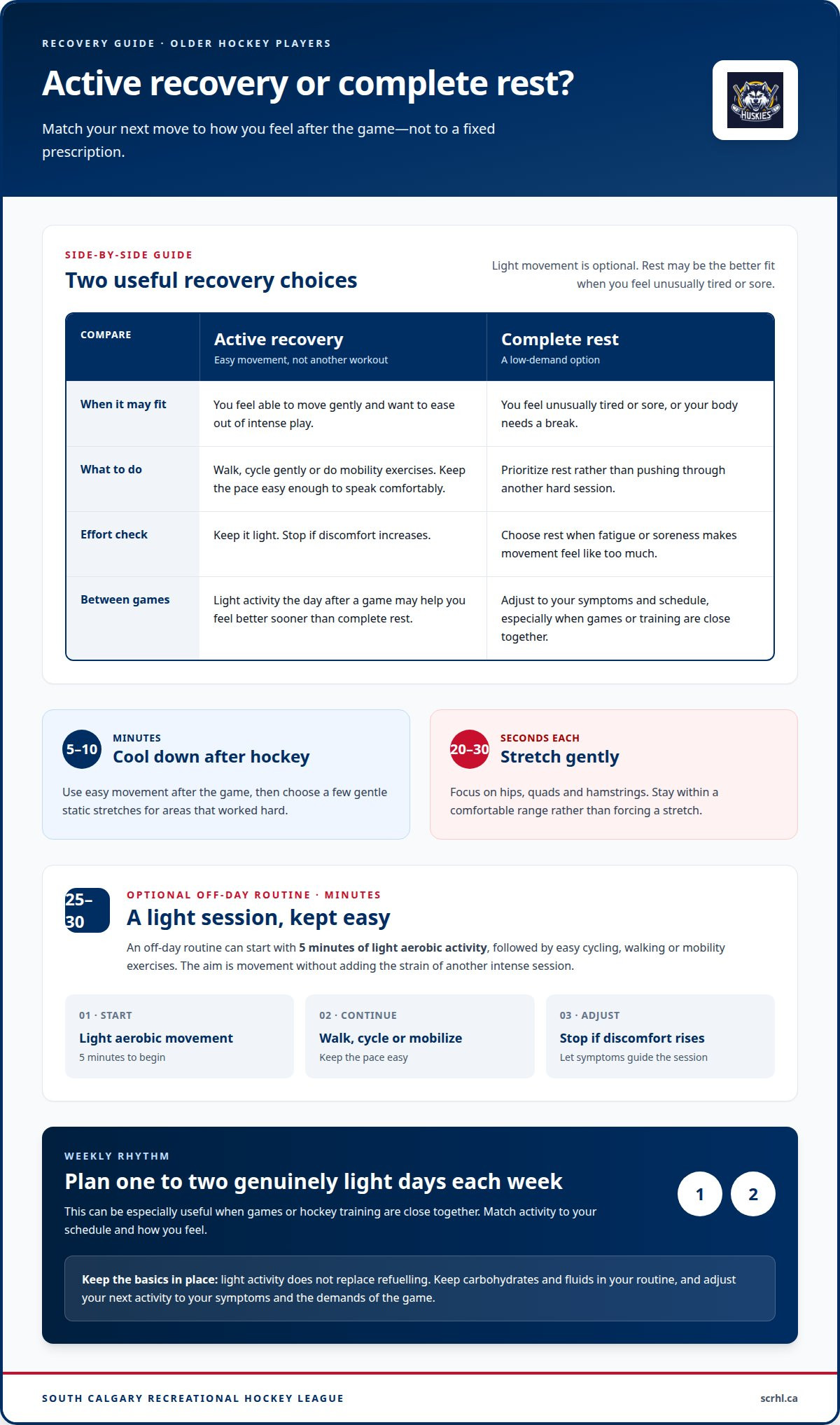
After a game, low-intensity activity can help maintain blood flow and ease the transition out of intense play. Try walking or gentle cycling at a pace that lets you speak comfortably. Keep the effort light, not another workout. Active recovery is optional; complete rest may suit you on a day when you feel unusually tired or sore.
Cool down with 5-10 minutes of easy movement after hockey. Then choose a few gentle static stretches, holding each for 20-30 seconds. Focus on areas that worked hard, such as your hips, quads and hamstrings. Move within a comfortable range rather than forcing a stretch.
On a non-game day, a light session can include easy cycling, walking or mobility exercises. One suggested off-day routine lasts 25-30 minutes, starting with 5 minutes of light aerobic activity. Keep the pace easy and stop if discomfort increases. The aim is movement without adding the strain of another intense exercise session.
Between games, match activity to your schedule and how you feel. Light activity the day after a game may help you feel better sooner than complete rest. Plan one to two genuinely light days each week, especially when games or hockey training are close together. Keep carbohydrates and fluids in your routine, too: a recovery session doesn’t replace refuelling.
For recreational hockey in South Calgary, use these steps as practical recovery guidance, not a fixed prescription for every older adult. Adjust your next activity to your symptoms and the demands of the game. There’s no single cooldown that suits every player.
Want a regular skate that fits around your recovery routine? Explore Calgary recreational hockey sessions and choose a schedule that works for you.
3. Sleep and food as the foundations of recovery
Sleep gives your body time to repair after a game and training session. Aim for 8-10 hours of quality sleep per night. A steady bedtime and wake time can make that target easier to maintain, even when a late game shifts your evening routine. Keep the bedroom dark and quiet, and set aside time to wind down after competition. A calmer post-game routine can help separate the excitement of play from bedtime.
Build meals around foods that provide protein and a range of nutrients. Chicken, fish, beans and dairy are protein options; berries, leafy greens and fatty fish add variety. Avocado or nuts can round out a meal with healthy fats. A whole-food meal within an hour after a game is one practical target. Keep water available and have fluids with meals to support hydration after sweating. Food and drinks can also replace electrolytes lost through sweat.
Track how ready you feel each morning rather than relying on one tough game. Rate morning freshness on a scale from 1 to 10, and record the score alongside sleep and fatigue. If freshness stays low for three mornings in a row, switch a hard session for an easy one. That simple log can reveal whether late games, short sleep or a busy training week affect your readiness.
Use these notes to make a repeatable plan. After a late skate, prepare an easy meal before game day, then allow time to wind down and sleep. The next morning, compare how fresh you feel with previous days. If fatigue remains high, keep activity light and prioritize rest, food and hydration. Consistent eating and sleep habits provide a steadier foundation for recovery than relying on one post-game meal or one long night’s sleep.
4. Sodium in post-game recovery
Recovery starts when the game ends, not the next morning. Start with fluids and food soon after your skate. Drinking at least 500 mL of water after a game is one suggested step. Sodium and potassium are electrolytes lost through sweating, and foods or drinks can help replace them. Electrolytes support hydration, muscle function and the body’s fluid balance.
Sodium matters, but adding extra salt isn’t automatically better. Aim for balance rather than consuming too much sodium. A regular meal can provide sodium through foods such as meat, vegetables, nuts and dairy. For example, a meal with chicken, vegetables and yoghurt offers familiar options without making salt the focus of your recovery nutrition.
Let thirst, the game’s intensity and how much you sweated guide your choices. Water is a practical starting point; an electrolyte-containing drink is another option after heavy sweating. You don’t need to treat every skate like an endurance event or reach for a salty drink by default. Pair fluids with a meal, then keep drinking over the next few hours.
For older athletes, the key is consistency: replace fluids and electrolytes, but don’t try to speed recovery by eating excess salt. A balanced meal and water support the body’s normal fluid balance. If you have a health condition that affects sodium intake, follow the advice already given for your care rather than changing your diet around hockey.
Keep the steps simple: drink water after the final whistle, eat a balanced meal, and continue hydrating as needed. That routine supports recovery after recreational hockey without making sodium the only focus. Keep recovery in your game plan as you plan your next recreational skate.
South Calgary Recreational Hockey League (SCRHL): Fall Season Team Registration
South Calgary Recreational Hockey League (SCRHL) offers Fall Season Team Registration for adults planning their next recreational season in South Calgary. If your team is ready to play, registration is a practical next step after setting a recovery routine that fits your schedule.
Joining without a full team? Individual Player Registration is another option. SCRHL also offers Winter Season Team Registration and Morning Hockey Sessions, giving players different ways to fit recreational hockey around work, rest and training.
Choose the registration path that matches how you want to play, then make recovery habits part of your season plan. For details on registration and sessions, visit scrhl.ca.
Make your next season work for you
A recovery routine is easier to maintain when it fits the way you play. Before committing to another season, consider your work schedule, preferred game times and how much rest you need between skates. Planning ahead can make post-game recovery for older hockey players a regular part of your hockey calendar, not an afterthought.
South Calgary Recreational Hockey League (SCRHL) offers Fall Season Team Registration and Winter Season Team Registration for teams planning ahead. Individual Player Registration gives players another way to take part. Choose the option that matches your plans, then build recovery habits around your games.
Contact South Calgary Recreational Hockey League (SCRHL) today to explore registration options. Set your season plan, make room for recovery, and enjoy getting back on the ice.
Frequently Asked Questions
How long does it take to recover after a hockey game?
Most players feel largely recovered from a single game within 24-48 hours when they cool down, refuel, rehydrate and sleep well. A late game followed by another demanding session can make that window harder to manage. Compare how you feel before your next skate, and keep the session easy if you’re still unusually tired or stiff.
How much sleep do hockey players need?
A hockey recovery guide recommends 8-10 hours of quality sleep per night. Protect that time by planning a simple wind-down after late games, such as preparing your gear for the next day before relaxing. If competition leaves you alert, a consistent bedtime routine can help signal that the game is over and it’s time to rest.
Is active recovery better than complete rest?
Neither option is always better: choose based on how your body feels after the game. Gentle walking or easy cycling can keep you moving without turning recovery into another hard workout. Rest may suit you when you feel depleted or movement aggravates discomfort. Reassess the next day before deciding whether to exercise or take it easy.
What are the signs of overtraining?
A low morning freshness rating can be a useful warning to reduce training load. Rate freshness from 1 to 10 each morning; if it stays low for three mornings in a row, replace a hard session with an easy one. Track the score alongside your schedule so you can spot patterns after closely spaced games.
What does post-game recovery involve for older hockey players?
Post-game recovery for older hockey players means matching your next steps to the game’s demands and your readiness. After a hard skate, plan time to cool down, eat and drink, then protect your sleep. The following morning, note how fresh you feel before choosing another strenuous activity. If discomfort worsens or feels severe, seek medical care.
How much sleep do older adults need for recovery after hockey?
A hockey recovery guide recommends 8-10 hours of quality sleep per night, with no separate target given specifically for older adults. After an evening game, protect a regular sleep window where possible. If the late finish disrupts your routine, keep the next day’s training light and return to your usual sleep schedule that night.