

A hockey team offers more than a reason to get on the ice. The social benefits of joining a hockey team include regular opportunities to meet people, work toward shared goals and feel part of a group. Sport can help people meet others, according to the Government of Canada, while Canadian Heritage notes that relationships formed through sport can support belonging.
It’s natural to wonder whether joining a team will lead to real connections, especially if you’re new to the sport or returning after time away. Connections often grow through simple routines: showing up, communicating on the ice and sharing the ups and downs of a game. You don’t need to arrive with a ready-made circle of friends to take part.
This article explains how hockey can make socializing easier, build camaraderie and support confidence and mood. You’ll also learn how regular time with teammates can create a stronger sense of belonging, and what adult recreational hockey in Calgary can offer.
Key Takeaways
- Use regular time on the ice to turn shared interests into familiar faces and team connections.
- Notice how the rhythm of a game can offer a healthy focus when everyday stress feels distracting.
- Set personal goals on the ice and recognize progress as one way to build confidence and belonging.
- Explore team or individual registration with the South Calgary Recreational Hockey League to find a way into adult recreational hockey in Calgary.
Making friends and enjoying camaraderie
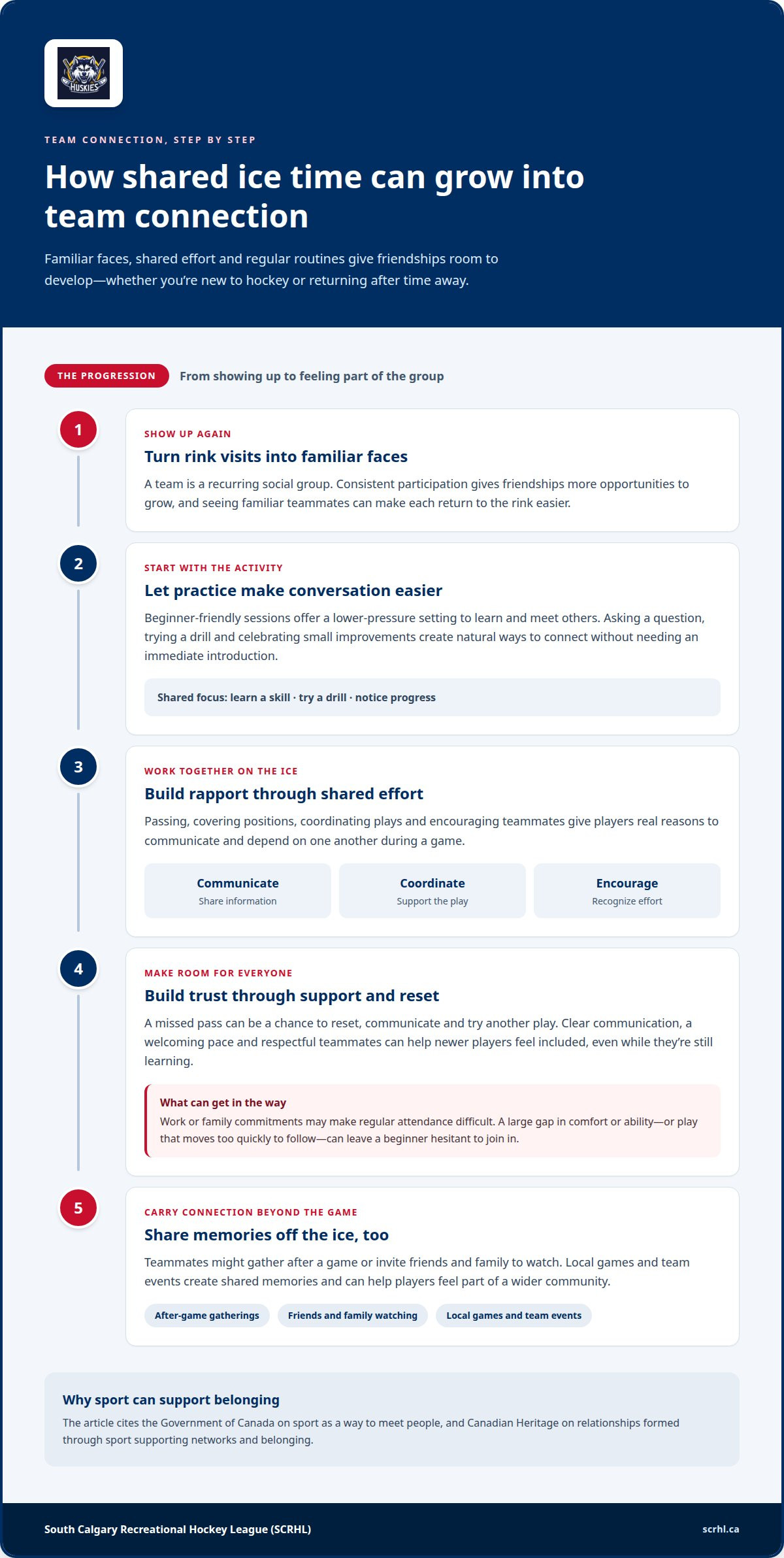
Playing on a hockey team helps people build friendships through repeated contact and shared effort. Teammates communicate, coordinate plays and depend on one another during games.
Building Friendships and Networks
A hockey team is a recurring social group built around playing toward shared goals. Passing, covering positions and encouraging teammates create natural reasons to talk and cooperate. The Government of Canada identifies sport as a way to meet people of different ages. Canadian Heritage also connects relationships formed through sport with supportive networks and belonging. For a newcomer, familiar faces can make each return to the rink easier.
Connections can continue beyond the final whistle. Teammates might gather after a game or invite friends and family to watch. Local games and team events create shared memories, from a close finish to a well-played pass. These routines can help players feel part of a wider community, not just connected during play.
Socializing in Beginner-Friendly Sessions
Beginner-friendly sessions give newer players a lower-pressure setting to learn and meet others. Shared practice creates chances to ask questions, try a drill and celebrate small improvements together. As players work on coordination and agility, conversation can develop around the activity rather than requiring an immediate introduction. That structure can make socializing more manageable for someone arriving without friends.
Barriers can still affect the experience. A session that conflicts with work or family commitments can make regular attendance difficult, while a large gap in comfort or ability may leave a beginner hesitant to join in. A new player, for example, may feel out of place if play moves too quickly to follow. A welcoming pace, clear communication and respectful teammates help reduce those obstacles. Consistent participation gives friendships more opportunities to grow.
Mood, stress, and mental well-being
Playing hockey gives attention a clear task: track the puck, read teammates’ movement and make a play. That focus can redirect stress toward decisions happening on the ice. A player carrying a busy workday into a game, for example, can concentrate on a pass or defensive assignment. The shift offers a practical mental break, not a promise that every worry disappears.
Movement also plays a role. Physical activity releases endorphins, which can help ease stress and anxiety. In a team sport, physical effort combines with communication and shared goals. A player might arrive feeling tense, then become more engaged while skating, passing and responding to teammates. Being active and focused can support mood during and after a session.
Hockey also asks players to stay alert. The puck changes direction, teammates move into open space, and players adjust quickly. These demands give the mind something immediate to work on. A beginner learning to follow a play can focus on one task at a time, such as watching the puck before deciding where to move. This kind of attention can interrupt a cycle of everyday distractions.
Regular play can create a useful routine, too. A scheduled game gives the week a planned point for movement, team contact and time away from other demands. Finding a workable balance matters: a session that fits around work and family is easier to make part of a routine. Morning Hockey Sessions or evening and weekend play may suit different schedules. Explore hockey session options to find a time that fits. Skating also challenges strength and stamina, while learning plays keeps each game mentally engaging. After a difficult day, taking part can provide structure, movement and a shared focus.
Hockey asks beginners to stay alert and pay attention. Playing hockey a few times a week is recommended to improve outlook and mental well-being.
Self-confidence and belonging
Confidence can develop through achievable challenges, supportive teamwork and visible progress. On the ice, each new skill gives players a practical opportunity to recognize what they can do.
Confidence and Self-Esteem
Hockey can build self-esteem as players learn skills and reach personal goals. A beginner might first focus on controlling the puck, then feel more comfortable passing during play. These steps make progress easier to recognize. Playing regularly also offers a chance to practise coordination and fitness while contributing to a team. Progress isn’t limited to scoring: completing a pass or staying involved in a shift can feel meaningful, too.
Belonging grows when players are included in team decisions and shared responsibilities. Teammates can call out a passing option or acknowledge a strong defensive play, for example. Those moments show that each player has a role, regardless of experience. A team environment can also help reduce feelings of isolation by bringing players together around a familiar group and shared activity.
Resilience Through Teamwork
Teamwork can support resilience by helping players respond to success and setbacks together. If a pass misses its target, teammates can reset, communicate and try another play. That response shifts attention from blame to the next useful decision. Players also learn to handle wins and losses, building confidence through effort rather than results alone. Each game offers opportunities to practise persistence and sportsmanship.
Trust matters, too. A player covering a teammate’s position learns that cooperation works in both directions. This shared responsibility can make it easier to contribute without expecting perfect performance. Over time, players can see how their actions support the group, from communicating clearly to staying engaged after a mistake.
Hockey combines teamwork with physical activity. Skating and play can support strength, balance and fitness, while team goals give that effort a social purpose. Returning to a challenging drill after a difficult attempt, for example, lets a player practise persistence alongside teammates. Repeated experiences like these can ground confidence in skills, effort and connection.
Team hockey as a way to socialize
A team turns meeting people into a shared activity with a clear purpose. Players connect through scheduled games, communication and time spent working together.
Social Benefits Across Hockey Settings
Youth, adult recreational and competitive teams offer different ways to connect through hockey. Youth teams can help children meet peers and develop friendships with teammates and mentors. Adult recreational teams combine exercise with regular social contact among people who share an interest. Competitive teams also build cooperation, though their focus on performance and results can shape how players spend time together. These differences matter when choosing the kind of team experience that fits your life.
In adult recreational hockey, the social routine can extend beyond the game. Players coordinate on the ice, then may talk about a close play or arrange to meet again. The sport creates common ground, even for people with different jobs or backgrounds. Hockey also involves cardiovascular exercise, so playing can combine movement with time spent with others.
Newcomers Building Community
Adult recreational leagues can help newcomers meet people by creating regular opportunities to play and interact. A newcomer to Calgary, for example, can join teammates for a game and learn names through line changes and shared plays. Regular contact makes future conversations easier, while team commitments give players a common point of connection. This can help newcomers feel more involved in local community life.
Socializing doesn’t have to begin with a long conversation. Introduce yourself before a game, ask a teammate about positioning, or acknowledge a helpful pass. These small exchanges make meeting others feel more natural. Over time, familiar faces and shared routines can turn rink conversations into friendships. A useful first step is simply taking part in a session that fits your schedule.
For adults in Calgary looking to meet teammates through a team sport, explore recreational hockey in Calgary and find a way to get involved.
South Calgary Recreational Hockey League (SCRHL)
South Calgary Recreational Hockey League (SCRHL) gives adults in Calgary a practical way to join organized recreational hockey and meet teammates through regular play. If you already have a team, Fall Season Team Registration and Winter Season Team Registration offer seasonal options. If you’re joining on your own, Individual Player Registration provides another way to get into team hockey. Morning, evening and weekend sessions can help players find a schedule that fits their routine.
Choose the registration path that matches how you want to take part: with a team or as an individual player. The social side develops through shared games, communication and returning to the rink. For details about joining, contact South Calgary Recreational Hockey League (SCRHL).
Make your next move on the ice
For adults in Calgary, one social benefit of joining a hockey team is having a shared reason to try something new. You don’t need a perfect plan before taking that step. Start with a simple intention: experience a team setting, take part at your own pace and see whether hockey fits the routine you want to build.
Give yourself room to be new. A first session is a starting point, not a test of what you can already do. Connections can grow through participation over time, so focus on showing up and being open to the experience.
If you’re ready to explore adult recreational hockey in Calgary, contact South Calgary Recreational Hockey League (SCRHL) to discuss your next step. A place on the ice could be the beginning of a rewarding new routine.
Frequently Asked Questions
What social benefits do people gain from joining a hockey team?
The social benefits of joining a hockey team can include new acquaintances, regular interaction and chances to feel part of a group. Teammates may share a ride to a game or chat while getting ready, for example. Sport also creates opportunities to meet people of different ages, according to the Government of Canada. The experience grows through participation and respectful engagement with others.
How does team hockey improve communication, cooperation, and teamwork skills?
Hockey gives players practical reasons to communicate and coordinate during fast-moving play. A defender can call out an opponent’s position while a teammate moves to cover open space. Players also need to pass at the right time and adapt when a play changes. These shared tasks let people practise clear communication, trust and cooperation in a setting where each person’s decisions affect the group.
How can joining a hockey team support mental health and reduce social isolation?
The social benefits of joining a hockey team may include more structured contact with others and a shared activity outside home or work. Taking part in a local game, for instance, can give someone who has moved to Calgary a reason to connect with teammates. Canadian Heritage notes that relationships formed through sport can promote belonging. Hockey can complement other support, but it isn’t a substitute for mental health care.