

For sublimated versus stitched hockey jerseys, sublimation is usually a moderate-cost option, while tackle twill is generally the most expensive. Screen printing can cost less for simpler designs. A sublimated vs stitched hockey jerseys cost comparison also depends on the jersey base and the details your team wants.
Stitched jerseys have a raised, traditional finish, and the extra material and sewing can affect the total cost. Sublimation dyes designs into the fabric, making it suitable for full-colour patterns without sewn-on layers. Screen printing is another option for simpler artwork. Each method suits different team priorities.
This guide compares sublimated vs stitched hockey jerseys cost, production time, durability and style, alongside screen printing. You’ll learn which design details affect a quote and how to choose a method that fits your team’s uniform goals. Start by comparing the complete design, including names, numbers and logos, rather than the jersey alone.
Key Takeaways
- Sublimation suits full-colour designs printed into the fabric, while tackle twill adds sewn-on texture and a traditional look.
- Screen printing can be a cost-conscious fit for simpler designs with two or three colours.
- Compare the full design, including names, numbers and logos, since added stitched details can affect the total cost.
- Build production time into your team’s schedule; custom jerseys can take longer than decorating in-stock jerseys.
- Choose based on your budget, preferred style and how much structure or detail you want in the finished jersey.
Sublimated or Tackle Twill Hockey Jerseys?
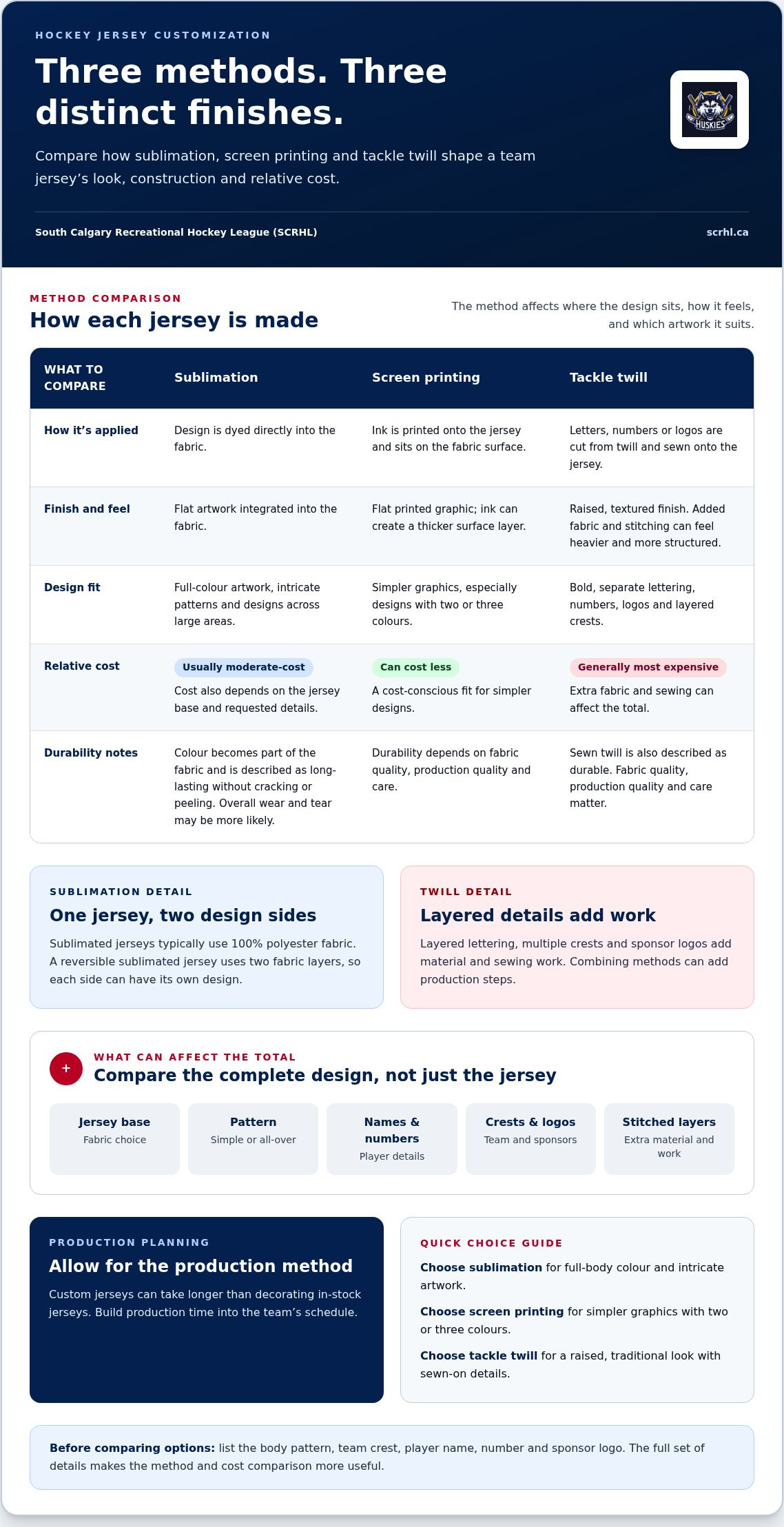
Sublimation and tackle twill create different finishes on custom hockey jerseys. Sublimation puts the design into the fabric; tackle twill adds fabric pieces sewn onto the jersey. That choice affects the look, feel and placement of team colours, names and logos.
With sublimation, the design is dyed directly into the jersey fabric. This allows full-body artwork, from collar to hem, without separate printed or sewn layers. Teams can combine detailed logos, gradients, patterns and multiple colours across the front, back and sleeves. The method gives teams broad colour and design flexibility.
Sublimated jerseys typically use fabric made from 100% polyester. The design becomes part of the fabric, rather than sitting on top as a separate layer. A reversible sublimated jersey uses two layers of fabric, so each side can carry its own design. That can suit teams needing different colour layouts on the same jersey.
Tackle twill takes a more traditional approach. Letters, numbers and logos are cut from twill fabric, then sewn onto the jersey. The raised edges create a textured, dimensional finish. For example, a team can use sewn-on shoulder numbers and a layered chest crest for a classic look. Added fabric and stitching can make the jersey feel heavier and more structured.
Design complexity affects what each method can achieve. Sublimation can carry intricate patterns and full-colour artwork across large areas. Screen printing can suit simpler designs with two or three colours, while tackle twill works well for bold, separate lettering and logos. Combining methods can add detail, but also adds production steps.
Durability depends on fabric quality, production quality and care. Sublimated colour becomes part of the fabric and is described as long-lasting without cracking or peeling. Sewn twill is also described as durable, though sublimated jerseys may be more prone to wear and tear overall.
| Option | Design placement | Appearance | Useful for |
|---|---|---|---|
| Sublimation | Dyed into fabric | Flat, full-colour artwork | All-over patterns and detailed designs |
| Tackle twill | Cut fabric sewn onto the jersey | Raised, textured finish | Traditional lettering, numbers and crests |
| Screen printing | Printed onto the jersey | Flat printed graphic | Simpler designs with two or three colours |
Choose sublimation for full-body colour and intricate artwork; choose tackle twill for a raised, traditional finish and sewn-on team details.
Sublimation versus screen printing and tackle twill
Each method builds the jersey differently, giving the finished artwork a distinct feel. Sublimation dyes the design into the fabric. Screen printing applies ink onto the jersey, while tackle twill adds sewn fabric pieces. These construction choices affect how team numbers, sponsor logos and detailed artwork appear.
With sublimation, the ink becomes part of the fabric rather than a separate surface layer. That approach suits large, detailed designs, including patterns that cross the body and sleeves. Colours and artwork can extend across the jersey without separate pieces for each graphic. For teams planning elaborate uniforms, it offers wide-ranging design options.
Screen printing works well for a simpler layout, particularly one using two or three colours. The ink sits on top of the fabric and can create a thicker layer. That makes it useful for clear, bold graphics, such as a single chest logo or lettering. It is less suited to an all-over design with many colours and intricate patterns.
Tackle twill begins with the design pieces. The maker cuts letters, numbers or logos from twill, positions each piece, then sews it onto the jersey. Layered tackle twill can build a bold crest, with contrasting fabric outlines around a team name. Embroidered patches can also create a textured crest or shoulder detail. These additions add depth, but require more material and stitching than printing.
Construction matters when teams compare embroidered twill hockey jersey prices. Traditional customization often starts with a blank jersey, followed by printing or sewn-on details. A basic name and number set involves fewer additions than layered lettering, multiple crests and sponsor logos. Each extra element can add material and sewing work. For embroidered twill jerseys, the price depends on the base jersey and customization, including added twill and logos; a quote is provided on request.
- Sublimation: best suited to full-colour artwork integrated into the fabric.
- Screen printing: practical for simpler graphics with two or three colours.
- Tackle twill: adds sewn layers for raised letters, numbers and crests.
Before choosing, map every design element: body pattern, team crest, player number, name and sponsor logo. That list makes it easier to compare methods by the actual work involved, not just the jersey’s front graphic. Teams planning custom uniforms can review custom jersey apparel alongside their design priorities.
Choosing a customization method by budget and style
For sublimated versus stitched jerseys, the price depends on the design, jersey base and customization. Compare the complete order, including player names, numbers, crests and fabric choices, before choosing a method.
Customization Options and Added Costs
Customization can include team colours, a chest crest, shoulder details, player names and numbers. Each addition changes the artwork or production work. For example, adding a name and number to a simple jersey differs from creating a full-body pattern with layered lettering and a shoulder logo.
Sublimation incorporates colours and patterns into the fabric design. Sewn twill adds individual cut pieces and stitching for selected details. A league choosing a clean, single-colour crest may need fewer design elements than one requesting layered names, numbers and sponsor marks. List the required details first, then compare how each method handles them.
Factors Affecting Jersey Prices
The main cost factors are the base jersey, design complexity and customization. For stitched options, added twill and multiple logos can increase the cost. A single chest mark involves different work from a design with a crest, sleeve details, player numbers and names across a full team order.
For sublimation, the design’s coverage and detail shape the production work. A simple colour layout differs from artwork spanning the body, sleeves and shoulders. Fabric and the number of requested elements matter, too. Compare like with like by using the same design brief and jersey requirements for each method.
A custom single-jersey price depends on the design, fabric, base jersey and requested names, numbers or logos; a quote is provided on request. Single orders can differ from team orders because each garment may need its own player name and number. Request quotes using the same specifications so the comparison reflects the actual order, not an incomplete base price.
Use this quick planning sequence before choosing:
- Set the style: decide whether the team wants a flat printed finish or raised sewn details.
- List the artwork: record colours, logos, player names, numbers and shoulder elements.
- Set the budget priority: decide which details are essential and which can be simplified.
- Compare complete designs: include every requested detail, not just the front crest.
Comfort is part of the decision, too. Sewn layers can add structure, while a printed design keeps decoration integrated with the fabric. For a recreational league, choose the balance that fits the team’s preferred look, player comfort and full customization needs.
Cost and production-time trade-offs
Printed jerseys are usually less expensive and quicker to produce than fully stitched jerseys. The exact balance depends on the design and whether production starts with a blank jersey or creates a custom one. For Calgary teams, plan around the date jerseys are needed for the first game, not just the order date.
Sublimated hockey jerseys can have production and shipping timelines ranging from a few weeks to a few months. One listed production and shipping timeline is 4-6 weeks. Embroidered hockey jerseys have a listed production and shipping timeline of 4-8 weeks, with design complexity affecting the schedule. Treat these as planning reference points, not identical deadlines for every design.
Construction helps explain the difference. Sublimation integrates artwork into the fabric, while tackle twill involves cut pieces and sewing. A jersey with layered lettering, player numbers, a crest and sponsor details includes more sewn elements than a printed design. More steps can mean a longer production process, alongside the higher cost associated with stitched customization.
Custom hockey jerseys also differ from decorated in-stock jerseys. Traditional suppliers may add screen printing or sewn details after making a blank jersey. Decorating an in-stock traditional jersey can be quicker than producing a custom one, which may suit a team with a tight schedule and simpler design. A full-body pattern or a specific combination of colours and patterns may call for custom production instead.
Rush production needs careful scheduling. Start with the date the team needs the jerseys, then account for production and shipping. Compare that deadline with the listed timelines, and keep the design focused if time is limited. Choosing an in-stock base for simple decoration can reduce the work compared with creating a custom garment, while extensive twill details involve added sewing steps.
Use this planning sequence before placing an order:
- Set the delivery deadline: work backwards from the first game or team event.
- Choose the design route: match all-over colours and patterns with sublimation, or sewn details with twill hockey construction.
- List every customization: include player names, numbers, crests and sponsor logos.
- Compare the full schedule: include production and shipping, not production alone.
For a cost comparison, keep the jersey base and design details consistent across options. Sublimation pricing is described as a flat rate that includes design elements, while traditional pricing depends on the base jersey and customization. Added twill or multiple logos can increase traditional costs. The price depends on the design, jersey base and customization; a quote is provided on request.
Relative cost of sublimated, screen-printed, and stitched jerseys
In Canada, sublimated jerseys sit in the moderate-cost tier, screen printing is generally the low-cost choice for simple designs, and stitched tackle twill is usually the highest-cost option. The final amount depends on the base jersey and the decoration included in the order.
Sublimated Jersey Costs
Sublimation uses a flat-rate pricing approach that includes design elements, rather than pricing each printed feature as a separate add-on. Its moderate cost can suit a team wanting all-over colours, patterns and detailed artwork without sewn layers. There is no single average for Canadian orders: garment choice, artwork coverage and order specifications shape the quote.
For a beer league team, compare the full uniform design, not only the crest. A simple colour layout and a detailed body pattern may both use sublimation, but they require different artwork preparation. Use the same jersey specifications and design coverage when comparing prices.
Stitched Jersey Costs
Stitched tackle twill is generally the highest-cost option in this comparison. Its sewn-on numbers, letters and logos add materials and labour to the base jersey. Multiple crests or layered lettering require more customization than a single sewn detail, so traditional pricing reflects both the garment and the requested decoration.
This construction creates a classic, raised finish. A team choosing stitched player numbers and a layered chest crest is paying for more than a printed graphic. Screen printing is lower in the cost comparison for simpler designs, while DTF printing can add sharp details, bright colours and clean edges onto the fabric.
Printing and stitching also change the jersey’s feel. Sublimation dyes the design into the fabric, keeping the surface free of added decoration. Screen printing and DTF place ink on top; DTF can reproduce fine logo details, names and numbers. Tackle twill adds sewn material, giving the jersey a more structured finish than lightweight printed options.
Use the design brief to make a fair comparison:
- List each element: include team crest, player name, number and sponsor logo.
- Choose the finish: flat printing, detailed DTF graphics or raised tackle twill.
- Compare complete quotes: match the jersey base and every requested decoration.
For a single custom jersey, the player’s name, number and logo choices affect the total. Screen-printed jersey costs tend to favour simple layouts; additional colours and design details change the production work. Get a quote based on the complete design, rather than treating a base garment as the finished price.
Compare jersey options for your team as you settle on the finish and design details.
South Calgary Recreational Hockey League (SCRHL): Fall Season Team Registration
South Calgary Recreational Hockey League (SCRHL) offers Fall Season Team Registration for adult teams ready to organize their season. Once your jersey plan is set, registration is a practical next step for joining organized recreational hockey in Calgary.
Teams planning for another season can also choose Winter Season Team Registration. Players without a full team can use Individual Player Registration. Morning Hockey Sessions offer another option for players whose schedules suit earlier ice times.
Choose the registration path that matches your situation: a team joining the Fall season, a team planning for Winter, an individual player, or a player looking for morning sessions. For registration details, contact South Calgary Recreational Hockey League (SCRHL).
Set your jersey plan before the season starts
Use your sublimated vs stitched hockey jerseys cost comparison to set a uniform budget before the season starts. Decide who will approve the artwork, confirm the team colours and collect player details in one place. A clear process helps keep the team organized as the order moves forward.
Next, assign someone to coordinate the order and share the approved design with the team. Keep jersey planning connected to your season schedule instead of leaving uniform decisions until the last minute. For Calgary players, planning where and when to play is another step toward the season.
Contact South Calgary Recreational Hockey League (SCRHL) to discuss your recreational hockey plans. Bring your team’s priorities and season timing, and take the next step toward getting on the ice. A clear plan makes it easier to move forward together.
Frequently Asked Questions
Stitched vs Printed Hockey Jerseys: Which Is Best?
Printed jerseys suit teams prioritizing design flexibility and a lower-cost option for simpler artwork; stitched jerseys suit teams wanting raised, traditional details. For a beer league team with a detailed colour scheme, printing can carry the design cleanly across the garment. For a heritage-style uniform, sewn lettering and crests provide a more classic finish. Decide what matters most: all-over artwork, budget, or the look and feel of sewn details.
Which Hockey Jersey Customization Method Is Best?
The best method depends on the design, budget and desired finish. Start by listing the required elements: team crest, player names, numbers, shoulder details and sponsor logos. Choose sublimation for artwork that covers broad areas, screen printing for a simpler graphic, or tackle twill for raised lettering. Then compare complete designs, including every requested feature. This keeps the choice tied to your actual uniform plan.
What Are the Minimum Orders and Pricing for Ice Hockey Jerseys?
Minimum order quantities and prices depend on the supplier, jersey type and customization plan. A team order may include the same crest across each jersey, with individual names and numbers added for players. A single custom jersey has a different production setup. Before comparing options, list the garment, artwork and player-specific details, then compare quotes on the same basis. This makes any order minimum easier to assess.
What is the average cost of stitched hockey jerseys in Canada?
Stitched jerseys are generally the highest-cost option among sublimated, screen-printed and tackle-twill designs. An average price alone may not reflect a team’s actual order, since the base jersey and added customization affect the total. A simple sewn crest differs from layered tackle twill with names, numbers and multiple logos. Compare quotes using the same jersey base and decoration list to judge relative cost fairly.
How much do custom sublimated hockey jerseys cost per player for a full team order in Canada?
Per-player cost depends on the full team quote and the number of jerseys ordered. To compare options, divide the complete order total by the number of players, making sure the total includes the same garment and design requirements. Sublimation is described as a moderate-cost method, with design elements included in a flat-rate pricing approach. Artwork coverage and jersey specifications still shape the quote.
How much do custom stitched hockey jerseys cost per player for a full team order in Canada?
There is no single per-player amount that fits every stitched team order. The base jersey, sewn tackle twill, layered logos and player-specific lettering all affect the total. To make a useful per-player comparison, divide the full team quote by the number of players in the order. Keep the requested names, numbers and crests consistent across quotes so the comparison reflects equivalent customization.
How do sublimated and stitched hockey jerseys compare in appearance and customization options?
Sublimated jerseys can carry detailed artwork across the body and sleeves, including patterns and multiple colours. Stitched jerseys create visible texture through sewn-on letters, numbers and crests. For example, a team can use sublimation for a patterned jersey body or tackle twill for a raised name and number. The choice affects how the uniform looks from the stands and how much decoration is added to the garment.
Do Canadian hockey jersey suppliers charge extra for names, numbers, patches, or setup?
Those charges depend on the supplier’s pricing structure and the customization requested. Some sublimation pricing includes design elements in a flat rate, while traditional jersey pricing depends on the base garment and added customization. Twill details or multiple logos can raise the total. For a fair comparison, check whether names, numbers, patches and artwork setup are included in each quote, rather than comparing base prices alone.