

It's 10:45 PM on a Tuesday. You're at the Trico Centre, and three "can't make it" texts just hit your phone from your top line. Finding the best way to manage a beer league team in Calgary shouldn't feel like a second full-time job. Most captains spend more time chasing e-transfers and hunting for subs than actually playing the game. It's frustrating to deal with "forgetful" teammates or mismatched skill levels that ruin the locker room vibe.
We understand that your time is valuable. This 2026 guide will help you master the logistics of roster management, fee collection, and scheduling to keep your Calgary hockey team organized and on the ice. You'll learn how to secure a full bench every game and ensure fees are paid in full before the season starts. We will preview the best automation tools and communication strategies to build a team culture that players actually enjoy. From navigating division parity to managing seasonal registration, this is your blueprint for a stress-free season at the rink.
Key Takeaways
- Maintain a roster of 13 to 15 skaters plus a dedicated goalie to ensure a full bench despite last-minute Calgary weather or work conflicts.
- Protect your personal finances by adopting a strict "No Pay, No Play" policy and collecting all registration fees before the first puck drop.
- Discover the best way to manage a beer league team Calgary captains rely on by using automated apps to track player availability and RSVPs.
- Prioritize long-term team stability by selecting leagues that focus on division parity and professional officiating to ensure fair competition.
- Build a sustainable team culture by vetting new recruits for social fit and a shared commitment to the "work tomorrow" recreational philosophy.
The Reality of Managing a Beer League Team in Calgary
Managing a recreational hockey team in Calgary is a complex balancing act. It sits at the intersection of logistics, finance, and community building; it's a role that requires more than just a passion for the game. For those looking for the best way to manage a beer league team Calgary provides, it starts with recognizing that you are essentially the CEO of a small, athletic non-profit. You're responsible for ensuring 15 people are in the same place, at the same time, with matching jerseys, having all paid their dues.
Unlike unstructured pick-up hockey where players show up and throw sticks in the middle, organized league play demands accountability. This structure preserves the spirit of amateur sports by providing a stable environment for fair competition. You aren't just a player; you are the primary liaison between the league administration and the locker room. If there's a schedule change or a disciplinary issue, you're the one who gets the call.
The Captain’s Role: Commissioner, Accountant, and Coach
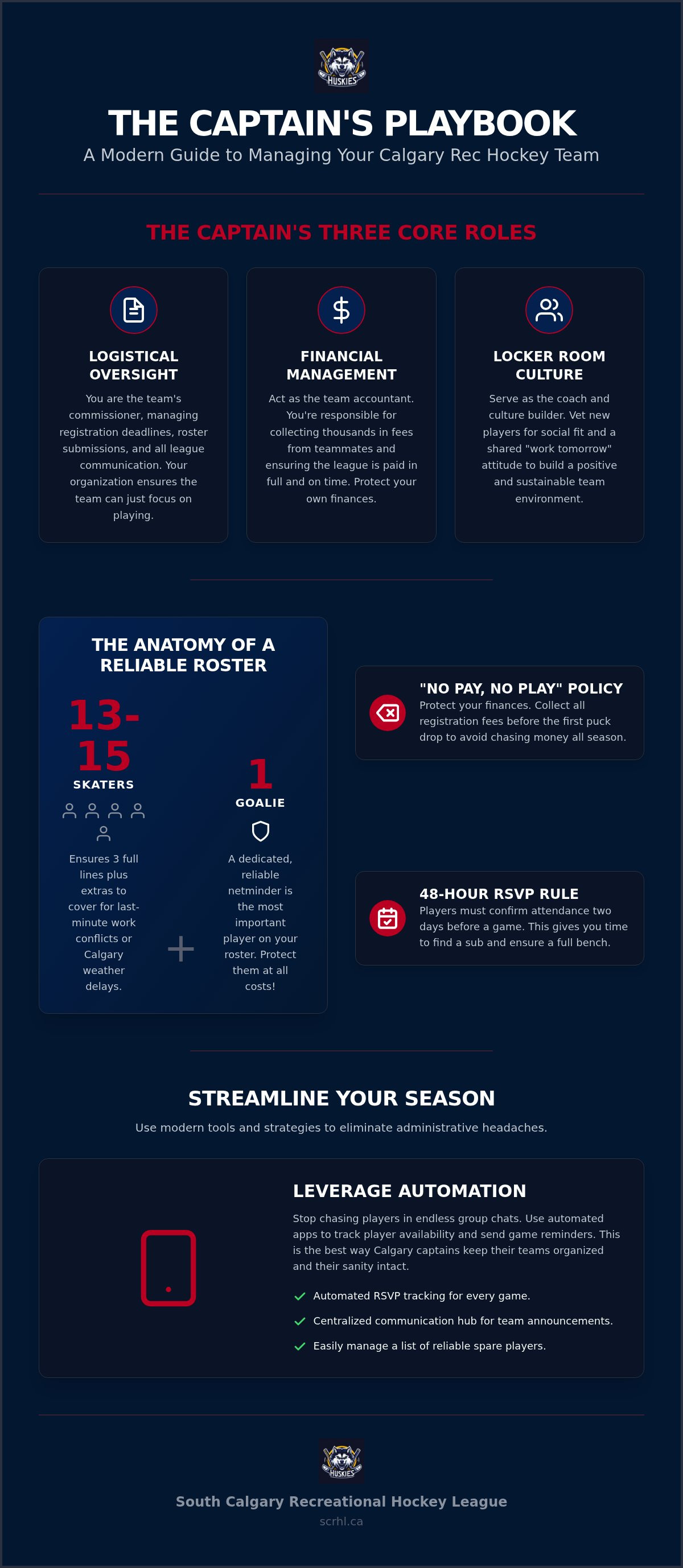
A successful captain handles three distinct jobs throughout the season. You're the glue that holds the roster together. It's a significant time commitment that starts long before the first whistle. Finding the best way to manage a beer league team Calgary captains rely on involves mastering these specific duties:
- Logistical Oversight: Managing registration deadlines and roster submissions.
- Financial Management: Collecting thousands of dollars in team fees and paying the league on time.
- Locker Room Culture: Vetting new players to ensure they fit the team's social vibe and "work tomorrow" attitude.
Balancing the "fun" aspect with organized administrative needs is the secret to longevity. If the team is too chaotic, players get frustrated and leave. If it's too rigid, it feels like work. You have to find the middle ground where the logistics are invisible because they're handled so efficiently.
Why Calgary Logistics Matter
Calgary's geography presents unique challenges for team management. Rink distribution is spread across the city, meaning travel times vary wildly. A game at Cardel Rec South in the deep SE might be a 40-minute drive for a player living in the NW. Proactive scheduling is mandatory to ensure a full bench. You must account for traffic, weather, and the varying ice availability in different quadrants.
Calgary leagues often offer morning hockey sessions for shift workers or evening and weekend slots for the standard nine-to-five crowd. Seasonal planning for Fall and Winter hockey starts months before the ice is even ready. You need to secure your spot and organize your roster while other teams are still thinking about summer golf. Being organized means your players can focus on the game instead of wondering where the rink is or if the goalie is showing up.
Recruiting and Retaining a Reliable Roster
A successful season depends on the quality of your roster. Finding the best way to manage a beer league team Calgary captains recommend starts with the right numbers. You need enough bodies to survive the flu season and Deerfoot traffic, but not so many that players feel short-changed on ice time. The ideal roster size is 13 to 15 skaters plus a dedicated goalie. This allows for three full lines and two defensive pairings, ensuring everyone stays fresh without sitting on the bench for ten minutes at a time.
Vetting is essential. Skill is secondary to reliability and attitude. A superstar who misses half the games or complains in the dressing room is a liability. If you're short on players, don't just grab a random name from a Facebook group. Use the league's Individual Player Registration system to find skaters who are already committed to an organized season. Building a "Spare List" of local Calgary fill-ins is another proactive move. Keep a spreadsheet of five to ten reliable subs who can jump in on short notice.
The Art of the Roster Mix
A balanced team is a happy team. You want a mix of experience levels. This keeps things competitive. Balancing age groups, such as integrating how to build a rec hockey team roster Calgary veterans with younger skaters, creates a more stable environment. Ensure skill parity across your lines to avoid internal frustration. If one line is significantly faster than the others, the team chemistry will eventually suffer.
Combating the "Ghosting" Culture
The biggest headache for any captain is the last-minute dropout. Implement a strict "48-hour out" rule. Players must confirm their attendance at least two days before puck drop. This gives you enough time to activate your spare list. Building loyalty outside the rink is the best way to prevent ghosting. Organize occasional team socials to strengthen bonds. Investing in custom jersey apparel also helps. When players wear a professional-looking uniform, they feel like part of a real organization rather than just a group of individuals. If you're looking to solidify your group for the upcoming season, consider Winter Season Team Registration to secure your spot early.
Streamlining Team Finances and Fee Collection
Chasing registration fees is the single biggest point of friction for any captain. To protect your own bank account, you must adopt a strict "No Pay, No Play" policy. It's the only way to ensure the team remains solvent throughout the season. The best way to manage a beer league team Calgary players respect is to be upfront about costs from the very beginning. Before the season starts, calculate the total seasonal expenses. This includes the league registration fee, custom jersey costs, and a small buffer for social funds or year-end parties.
Break the total cost into manageable payment milestones. A common structure includes an initial deposit to secure a roster spot, a mid-season installment, and a final balance due before the halfway point of the schedule. Use automated spreadsheets or team management apps to track who has paid and who is lagging. This removes the personal element from fee collection; you aren't "the bad guy," you're just following the established team protocol. If a player hasn't paid by the deadline, they don't step on the ice. It's that simple.
The Calgary e-Transfer Workflow
Administrative friction kills momentum. Setting up a dedicated team email address for Interac e-Transfers is a game-changer. It keeps team funds separate from your personal finances and allows for easy auditing. Enable auto-deposit to eliminate the need for security questions and manual password entry. For a better understanding of what to expect, review hockey league registration fees Calgary teams typically encounter. This helps you set a realistic per-player cost that covers all league requirements without leaving you short at the end of the month.
Transparency and Trust
Trust is built through transparency. Provide your teammates with a simple budget sheet at the end of each month. It doesn't need to be complex. A basic list of inflows and outflows is enough to show where their money is going. You should also establish clear rules for spare fees. Many Calgary teams charge spares a set fee per game to help offset the core roster's costs. Decide early if spares play for free if they're filling a critical gap, such as a goalie. Finally, have a written policy for refunds. If a player suffers a season-ending injury, a prorated refund is the fair approach, provided you can find a permanent replacement to cover the remaining balance. Clear rules prevent locker room drama.
Modern Communication: Apps and Scheduling Strategies
Relying on a group chat for a 10 PM game at Cardel Rec South is a recipe for a short bench. The best way to manage a beer league team Calgary captains prefer involves moving away from messy WhatsApp threads and into dedicated management platforms. While social media groups are fine for locker room banter, they fail at logistical precision. You need a system that provides a single version of the truth for every game time and rink location.
Availability tracking is the single most important feature for any modern captain. Calgary adults lead busy lives; your roster likely includes oil and gas professionals on shift work, consultants who travel, and parents balancing minor hockey schedules. You can't spend your Tuesday afternoon scrolling through fifty messages to count how many defencemen are actually coming. A dedicated app allows players to tap a single button to RSVP, giving you an instant headcount and enough lead time to find a replacement if you're short.
Choosing Your Communication Hub
Tools like BenchApp and TeamSnap offer specialized features that simple spreadsheets lack. These platforms automate the "pestering" process. You can realize the full benefits of automated reminders by setting them to trigger exactly 48 hours before puck drop to prompt forgetful players. While some teams stick to free tools, the small cost of a premium subscription often pays for itself in saved time and fewer forfeited games. If your roster is still in the building phase, consider Individual Player Registration to find tech-savvy skaters who value an organized team environment.
Mastering the Schedule
Calgary's rink landscape can be confusing for new players. For example, the Cardel Rec South and South Fish Creek designations often refer to the same complex, yet players still end up at the wrong doors. Your communication hub should link directly to Google Maps for every facility. This is especially critical for teams that bounce between morning hockey sessions and late-night weekend slots. Consistency is the goal, but when the league schedule varies, your app must be the definitive source.
Managing the "emergency" goalie search in South Calgary requires a proactive strategy. Don't wait until two hours before the game to realize your starter is stuck in traffic on the Macleod Trail. Use your app to maintain a dedicated "Goalie Only" contact list. Integrating the league schedule directly into player calendars ensures that game times are visible alongside work and family commitments. This level of organization reduces the likelihood of last-minute dropouts and keeps your bench full from September through April.
Choosing the Right Calgary League for Long-Term Success
Picking a league is the final piece of the puzzle. You've organized the roster and the finances; now you need a stable environment. The best way to manage a beer league team Calgary captains recommend is to choose a league that prioritizes division parity and fair play. If your team is constantly mismatched, players will lose interest quickly. Professional officiating and consistent ice times are non-negotiable for a well-run season. You want to know that your 10:15 PM game will actually start on time and be called fairly.
Transitioning from a "renegade" pick-up group to an organized SCRHL squad changes the team dynamic. You move from chasing ice time yourself to having a dedicated administrative body handle the heavy lifting. This support makes the captain's job sustainable over multiple years. Instead of fighting for rink slots at different facilities across the city, you benefit from a structured schedule that players can actually plan around. This stability is what keeps a core group together for a decade rather than just a single season.
The SCRHL Advantage for Captains
SCRHL focuses on ensuring every game is competitive. Our division parity system prevents the frustration of weekly blowouts. When teams are matched correctly, every game feels meaningful. We also provide access to custom jersey apparel services. This helps professionalize your look and builds a sense of team identity from day one. For more details on what to expect as a participant, check out our adult hockey league Calgary guide. Having the league handle the administrative details allows you to focus on the locker room culture.
Registering for the 2026 Season
Registering a full team for the Fall Season Team Registration or Winter Season Team Registration is a straightforward process. First, confirm your core roster of 13 to 15 skaters. Next, select your preferred ice times. We offer morning hockey sessions for those with non-traditional work hours, as well as evening and weekend hockey sessions for the standard corporate crowd. Finally, submit your team registration before the early-bird deadlines to ensure the best scheduling options and to secure your spot in the appropriate division.
Stay mindful of jersey order lead times. If you want custom jerseys for opening night, finalize your order at least six weeks before the season begins. Taking these steps early ensures you aren't scrambling in September. Organized leadership leads to a better experience for everyone on the bench. Ready to lead? Register your team with SCRHL today!
Lead Your Team to a Successful 2026 Season
Successful team management relies on clear communication and financial transparency. By maintaining a roster of 13 to 15 skaters and using automated tools for availability, you eliminate the stress of short benches. Transitioning to an organized league structure ensures that your efforts as a captain are supported by professional scheduling and fair play enforcement. This systemic approach allows you to focus on the locker room culture rather than administrative headaches. A well-run team is one where the logistics are invisible; the focus remains on the game itself.
Finding the best way to manage a beer league team Calgary captains can sustain starts with choosing the right partner. SCRHL offers the most organized recreational environment in the city. We provide morning and evening sessions to suit any schedule; we also include custom jersey design in our team packages to help you build a professional identity. Our focus on division parity means your players stay engaged and competitive all season long. You deserve a league that is as punctual and organized as you are.
Register Your Calgary Hockey Team for the 2026 Season today to secure your spot and take the first step toward a hassle-free winter. We look forward to seeing your squad at the rink for a great year of hockey. See you on the ice.
Frequently Asked Questions
What is the best app for managing a Calgary beer league team?
BenchApp and TeamSnap are the top choices for local captains due to their robust availability tracking and automated reminder features. These platforms allow you to see your headcount in real time; this eliminates the need for messy group chats. Using these tools is the best way to manage a beer league team Calgary players find reliable because it provides a single source of truth for schedules and rink locations.
How many players should I have on my recreational hockey roster?
You should aim for a roster of 13 to 15 full-time skaters and one dedicated goalie. This size ensures you have three full lines even when players miss games for work or family commitments. It strikes the perfect balance between giving everyone enough ice time and protecting the team from playing with a short bench during the flu season or bad weather.
How do I find reliable spare players in Calgary?
The most effective way to find spares is to use the league’s Individual Player Registration list or to maintain a private database of reliable local skaters. Many captains keep a spreadsheet of ten "go-to" subs who live near South Calgary arenas. This proactive approach ensures you can fill a roster spot within hours of a last-minute dropout, keeping your lines consistent.
What is the average cost to register a hockey team in Calgary for 2026?
Team registration costs in Calgary vary depending on the league and the number of guaranteed games. According to 2026 market data, full-season team fees in the city typically range from $11,999 to $13,225. These fees generally cover ice rental, officiating, and insurance. Captains should always verify the specific payment deadlines and early-bird discounts offered by their chosen league to maximize savings.
How do I handle a player who refuses to pay their team fees?
You must implement a strict "No Pay, No Play" policy from the first day of the season. Set clear payment milestones and inform the team that anyone with an outstanding balance will be removed from the lineup. This protects your personal finances and ensures the team remains in good standing with the league. Consistency is key to maintaining financial discipline within the locker room.
Is it better to register as a full team or have players register individually?
Registering as a full team is the best option for groups of friends who want to play together and control their own roster. Individual Player Registration is designed for solo skaters who need the league to place them on an existing team. Full team registration gives the captain more authority over the team's social culture and ensures a consistent group of players every week.
What are the most common rinks for adult hockey in South Calgary?
Adult recreational hockey is frequently hosted at the Trico Centre, Cardel Rec South, and the South Fish Creek complex. These facilities are the primary hubs for South Calgary leagues. Familiarizing your team with the specific travel times and dressing room locations at these rinks helps ensure everyone arrives on time for warm-ups and puck drop.
How can I ensure my team is placed in the correct competitive division?
Provide an accurate description of your team's collective skill level during the registration process to ensure proper placement. Most organized Calgary leagues monitor the first few games of the season to evaluate division parity. If your team is winning or losing by significant margins, the league administration will typically move your squad to a more appropriate tier to maintain fair play.