

Your old team level isn’t a reliable guide to your next Calgary hockey division. If you’re asking what division should I play in Calgary hockey, start with how you play now, not the highest level on your past résumé.
You might worry about slowing down teammates or finding the pace too demanding. Division labels also vary between leagues, so a letter or number won’t tell you exactly how a game feels. Your current skating, puck control, decision-making, and comfort with game speed offer a better starting point.
This guide will help you compare your current skills and playing goals with the recreational level you’re looking for. You’ll learn how to assess your game, weigh past experience without letting it define you, and compare league details before registering in Calgary. We’ll also look at how division parity can support fairer, more engaging games. If you’re considering the South Calgary Recreational Hockey League, this self-assessment can help you choose between team or individual registration and decide what kind of hockey experience you want.
Key Takeaways
- Think of a division as a guide to competition, not a universal rating shared by every Calgary league.
- Assess skating control, puck handling, passing, shooting, and on-ice awareness separately to build a clearer picture of your current game.
- Compare pace, puck control, transition speed, and playing experience with the kind of games you want to play.
- To decide what division should I play in Calgary hockey, note specific examples from recent games, then compare them with league descriptions and your schedule needs.
- Consider your preferred pace and schedule when exploring SCRHL’s adult recreational hockey, with team and individual registration for Fall and Winter.
What Calgary hockey divisions mean and what they don't
A recreational division helps organize games at a broadly comparable level of competition. It can give you an idea of the players and teams you may face, but it isn’t a universal rating, a promise about individual performance, or a precise measure of every player’s ability.
Adult recreational divisions also serve a different purpose from minor-hockey age categories and competitive pathways. Minor hockey is organized around age groups and development streams, while adult recreational divisions organize competition among adult players. A former team, age category, or league can offer context, but none of those details alone determines which adult level suits you now.
Why division names are not universal skill ratings
Calgary leagues can organize and describe their competitive levels in different ways. A letter, number, or label in one league may not indicate the same pace or mix of skills in another. For broader context on league structures, this overview of ice hockey leagues by division may be useful, but a local league’s own descriptions are more relevant when comparing recreational divisions.
Look beyond the label. Check whether a league describes expected experience, game pace, or the kind of competition it’s designed to support. Two Calgary leagues may use the same division name and still offer different playing experiences. Don’t assume SCRHL’s division names correspond to another league’s system.
What a good level match feels like
A suitable level gives you a meaningful role in the game while still challenging you. You should have opportunities to make plays, while also needing to read pressure, support teammates, and adjust when possession changes. The pace can depend on how quickly players move the puck and how often play shifts from one end of the rink to the other.
Division fit means finding competition that challenges your current game while leaving room for you to contribute and enjoy playing.
Consider more than raw skating speed. A game with longer stretches of puck possession can feel very different from one with quick transitions, even when players skate at a similar pace. Decision-making matters too. The time you have to look up, choose a pass, and get into position can determine whether a game feels manageable or rushed.
Division parity is part of fair recreational play. Better-matched competition can help keep both teams involved, rather than leaving one with few opportunities to participate. Parity doesn’t mean every player has identical skills or every game feels the same. Teammates bring different strengths, experience, and roles.
If you’re considering what division should I play in Calgary hockey, treat a league label as a starting point, not a verdict. Read the current division descriptions and consider the kind of game they describe. Then compare those expectations with your own on-ice habits and the competition level you want.
Assess your current hockey skills before choosing a Calgary division
Start with the player you are now. A former competitive level can tell you what skills you developed, but it doesn’t show how sharp your skating, timing, or puck confidence feels today. If you’re asking what division should I play in Calgary hockey, a review of recent games is more useful than relying on an old team label.
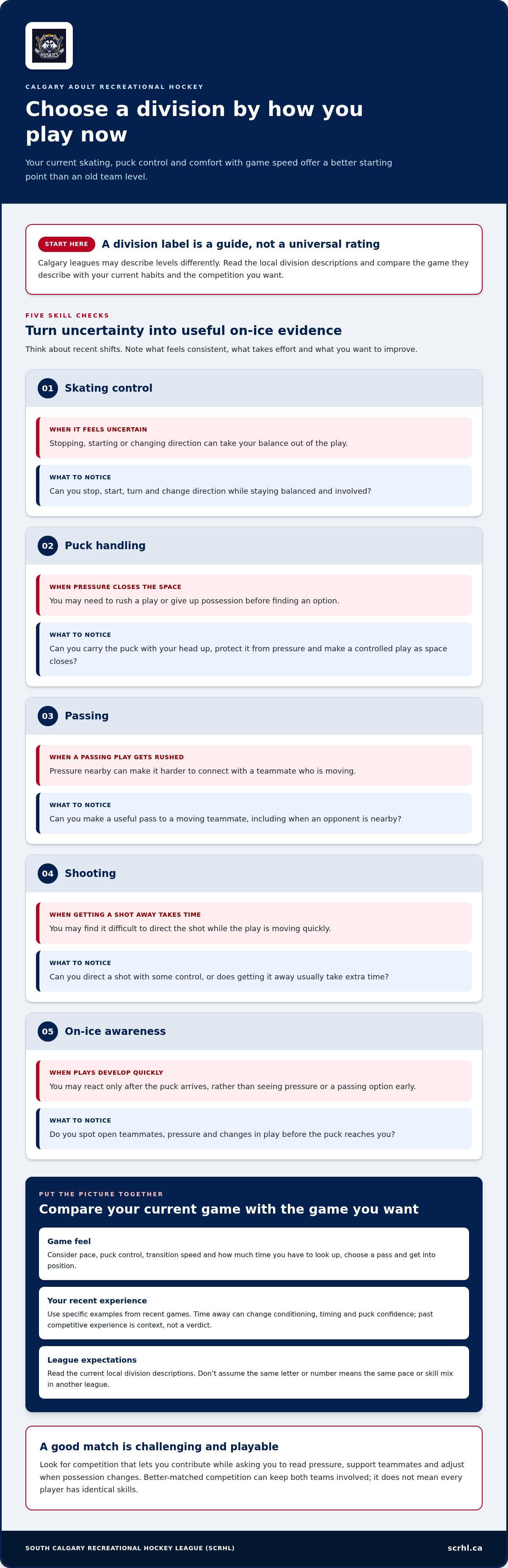
Consider each skill separately. You don’t need to give yourself an overall grade. Note what feels consistent, what takes effort, and what you want to improve:
- Skating control: Can you stop, start, turn, and change direction while keeping your balance and staying involved in the play?
- Puck handling: Can you carry the puck with your head up, protect it from pressure, and make a controlled play when space closes?
- Passing: Can you make a useful pass to a moving teammate, including when an opponent is nearby?
- Shooting: Can you direct a shot with some control, or does getting it away usually take extra time?
- Awareness: Do you notice open teammates, pressure, and changes in play before the puck reaches you?
Use on-ice examples instead of a single self-rating
Broad labels such as “beginner” or “advanced” can hide useful details. Think through a recent shift instead. Could you stop and turn without losing control? Could you keep possession long enough to find a pass, or did pressure force a quick clearance? When a play developed, did you anticipate where to move, or mostly react once the puck arrived? Specific examples make your assessment more practical.
Account for time away and changing goals
Past competitive experience may still help, but conditioning and puck confidence can change after time away. A player who once handled a fast pace may need time to rebuild stamina or timing. That’s normal. Returning players and newer skaters can take part in recreational hockey too. The aim is to find competition that suits your current ability and the experience you want.
Your current game is a better guide to division fit than credentials earned years ago.
Consider context alongside skill, not as a substitute for it. A fast game can demand more stamina even if your puck skills feel comfortable. Comfort with contact can also affect how much space you use and how confidently you pursue the puck. These factors shape your playing experience, but they aren’t scores or proof that you belong in a particular level.
Be clear about your goal, too. Are you looking for social play, a steady challenge, or faster competition? Your answer can help you weigh your strengths and the areas you’re rebuilding without judging yourself against someone else’s timeline. If you’re looking for adult recreational hockey in Calgary, explore South Calgary recreational hockey as a local option while you consider the pace and experience you want.
Compare Calgary hockey levels by pace, skill mix, and playing goals
League descriptions can tell you more than a division label. Compare the pace, puck control, transition speed, and experience each league mentions. Use these details to picture the game, not to assign a rating to Calgary divisions.
- Pace: Does the description suggest steady play or shifts that demand quick decisions?
- Puck control: Are players likely to have time to settle possession, or is play often contested under pressure?
- Transition speed: How quickly might play move between ends, and how much time could players have to recover or join the attack?
- Experience: Does the league describe a range of playing backgrounds or a particular level of experience?
These details help you picture game flow, but they don’t tell the whole story. A team’s skill mix matters. One player’s speed or puck handling doesn’t necessarily reflect what most shifts will feel like. Consider how the team plays together: whether players support one another, maintain possession, and create chances as a group. Those patterns can shape your experience as much as individual highlights.
Compare the game you want with the game you can play now
Think about the intensity you enjoy, then compare it with what feels manageable in your current game. A more relaxed pace may leave room to settle into a shift. Faster, more pressured play may suit someone who enjoys making quick decisions and competing for possession. Decide whether you value social play, development, competition, or a mix, then look for a pace that also fits your present abilities.
Your goals can change how you read a league description. If you want to develop, look for a level that sounds challenging without making every shift feel rushed. If social play is your priority, consider whether the pace leaves room to participate and connect with teammates. A stronger challenge may suit you if you can keep making plays under pressure and want more demanding competition.
Read league descriptions for useful signals
Look for clear details about expected experience and competitive balance. Terms such as “beginner,” “recreational,” and “advanced” aren’t standardized across Calgary, so compare the explanation behind each term rather than matching labels. SCRHL’s adult hockey guide can add local context as you weigh your options and consider which description sounds closest to the game you want.
If you’re still deciding what division should I play in Calgary hockey, use league descriptions to narrow your options, not to predict every shift. Compare the expected game with your current abilities and preferred intensity. A good fit should give you room to contribute while offering the competition you’re looking for.
How to narrow down your Calgary hockey division choice
Turn your self-assessment into a short player profile, then use it to compare league information. This keeps your decision tied to your current game and practical needs, rather than a broad label or one memorable shift.
Build a short, honest player profile
Record your recent playing experience, time away from hockey, current fitness, and preferred intensity. Add specific examples. You might skate confidently but feel less sure handling the puck under pressure, or read plays well while rebuilding stamina. Keep the profile focused on your own game, rather than how you compare with a particular player.
Include scheduling needs as well. Morning, evening, or weekend ice times may determine which options work with your routine. Mark each preference as either essential or flexible.
Use the profile to compare league options
Follow this process in order:
- Record your current skills. Note what you can do consistently in skating, puck control, passing, shooting, and reading play. Use recent examples instead of rating yourself only as “beginner” or “advanced.”
- Set your playing goals. Decide whether you want social play, steady development, stronger competition, or a mix. Describe the pace you’d enjoy while keeping your present abilities in view.
- List your schedule needs. Separate fixed requirements, such as a workable time of day, from preferences you could adjust. Consider whether morning, evening, or weekend hockey fits your week.
- Compare league information. Read current descriptions of competition and season format. Look for details that match your profile, and don’t assume the same division label means the same experience in different Calgary leagues.
- Identify what matters most. Use the season information to compare the details that affect your decision, such as the described level of competition and session timing. Keep essential needs separate from preferences you can adjust.
This comparison should narrow your options, not predict every game perfectly. Give more weight to essentials, such as a workable ice time, than to preferences you can be flexible about. Your preferred pace matters, but a session that conflicts with regular commitments may not be practical.
If you’re considering individual registration, read the SCRHL article about what follows after registering as an individual player. It can help you understand the next step without confusing the registration process with a division label.
Once your profile and priorities are clear, you’ll have a more useful basis for deciding what division should I play in Calgary hockey. Explore SCRHL individual player registration as you plan your next adult recreational hockey season.
Find your next adult hockey step with SCRHL in Calgary
A practical division decision brings four things together: your current skills, the pace you want, your playing goals, and the season logistics that fit your life. You don’t need to match a past team label. Use what you’ve learned about your game to choose a recreational hockey experience that feels manageable and engaging.
If you’re asking what division should I play in Calgary hockey, compare your self-assessment with current league information. SCRHL is an adult recreational league in Calgary, with team and individual registration for Fall and Winter seasons. Morning, evening, and weekend sessions give you different timing options to consider as you plan.
Choose a registration route that matches your situation
If you’re joining without a full team, individual registration is an option. If you already have an established group, review team registration for the season you plan to play. Choose the route that suits who is registering, the season, and the session timing that works for you or your group.
Planning for Fall? The Fall team registration guide is a useful place to review the information before organizing your group. For Winter, use the information for that season. Compare the season details with your calendar, work commitments, and preferred ice times before deciding which registration path fits.
Make the decision with fair play in mind
Division fit matters to the whole game, not just one player’s experience. Recreational hockey is more enjoyable when competition gives both teams room to participate and contribute. SCRHL’s focus on division parity supports fair play, but it doesn’t mean every game or player will be identical or guarantee a particular placement.
Before registering, review your notes. Do the described competition and session options align with your current abilities, preferred pace, goals, and schedule? Avoid choosing based only on a division name or a comparison with one standout player.
Your choice doesn’t have to predict exactly how every shift will feel. It should reflect the hockey you can play now and the experience you want with teammates. A clear picture of your priorities makes it easier to move from considering levels to choosing a registration route.
Review SCRHL’s Calgary adult hockey options and choose the registration route that fits your situation: Review SCRHL registration options.
Make your next season a good fit
Your division choice doesn’t define your hockey identity. It’s a decision for the season ahead, not a permanent label. If you’re still weighing what division should I play in Calgary hockey, focus on the experience that will make you want to keep showing up and playing.
Set one simple intention for your season, such as staying involved in each shift or making confident decisions with the puck. A clear goal gives you something useful to focus on beyond the score. Let the game be a chance to reconnect with hockey and enjoy being part of a team.
When you’re ready, review the details for your plans and choose the registration route that suits you.
Review SCRHL registration options and get ready for your next season on the ice.
Frequently Asked Questions
How do I know what division I should play in for Calgary hockey?
To decide what division should I play in Calgary hockey, consider the pace you can sustain across a full game, not just a strong opening shift. Before registering, note which expectations in the league description matter most to you. After playing, reflect on whether you felt engaged and challenged. That experience can help you make a more informed choice for a future season.
Are hockey division levels the same across Calgary leagues?
No. Treat each league’s division descriptions as specific to that league. When comparing options, make sure the information describes adult recreational play and the current season, rather than a minor-hockey age category or an older season. This keeps your comparison focused on the hockey you’re considering. Don’t assume a label or description transfers directly between leagues.
Can I play Calgary recreational hockey if I have not played in years?
Yes. Give yourself time to settle back into organized play before deciding how well the experience fits. Your first few games may involve adjusting to team routines, line changes, and the rhythm of a full game. Adult recreational hockey in Calgary is one way to get back on the ice with a team. Choose an option that works with your current routine.
Does past competitive hockey experience mean I should choose a higher division?
Not automatically. Past competition may have helped you develop useful habits, such as supporting a teammate or moving into open space. Those strengths can still matter, but they don’t establish what pace will suit you today. Think about the role you enjoy now and whether you want to reconnect with the game or seek a stronger challenge.
What skills matter most when choosing an adult hockey division?
No single skill decides the answer. Consider whether your skills lead to useful team actions, such as controlling a first touch well enough to keep a play going or choosing a position that supports a teammate. Repeatable contributions across a game tell you more than an occasional highlight. Notice whether those actions happen only with extra time and space or also in busier play.
Can I join a Calgary hockey league as an individual player?
Yes. SCRHL offers individual player registration, which suits players registering without a full team. Decide whether you’re joining on your own or organizing a roster with people you already play with, then choose the registration option that matches your situation and season.
Should I choose a hockey division based on friends' skill levels?
Talk with your friends about what each person wants from the season before making plans together. One player may be looking for a social commitment while another wants a more demanding game. Discussing expectations can help the group avoid treating one person’s preference as everyone’s. Playing together can be a meaningful goal, but it doesn’t by itself show that the same division will suit each player.