

For your first adult rec hockey game, bring a helmet with a full cage, skates, a stick, protective pads, gloves, hockey pants, shin pads, socks and a jock or jill. A neck guard is also a sensible addition. Knowing what to bring to your first rec hockey game starts with protective gear that fits properly. For a beginner stick, aim for a length that reaches roughly your chin while you’re wearing skates.
It’s normal to hesitate before buying a full set when you’re not sure how much you’ll play. Look into used or loaner equipment to start, then decide what’s worth buying as you get more comfortable on the ice.
This guide covers essential gear, ways to manage equipment costs, how to choose a beginner stick and what to expect at your first adult recreational game in Calgary. You’ll also find practical tips for getting dressed and checking fit, so you can focus on staying upright, finding your place on the ice and enjoying the game.
Key Takeaways
- Start with properly fitted protective gear, and look into used or loaner equipment before buying a full set.
- Choose a beginner stick that reaches roughly chin height when you’re wearing skates.
- Prepare for your first game by sorting out your gear and getting comfortable with the pace of adult recreational hockey.
- Once you’re ready to play in Calgary, explore SCRHL’s team or individual registration options for Fall and Winter seasons.
1. Buying or renting used and loaner equipment
Before buying a full set, find out whether a beginner program provides loaner equipment or an in-person fitting. Properly fitted gear helps protect you and makes it easier to identify pieces that need replacing. When trying skates, wear hockey socks and check that your toes just touch the ends without curling or feeling crushed.
If a Learn to Play program provides equipment, participants keep the gear after completing the program. That can be a practical way to start with a fitted set. With borrowed or used gear, inspect the straps, buckles, padding and helmet, then check that every piece fits securely over your base layers.
Equipment costs in Canada vary depending on what you can borrow, the condition of used gear and which items you need to buy new. Prioritize fit and condition when setting your budget. Skates and protective gear that don’t fit properly are not a worthwhile saving.
Used gear can help manage costs, but inspect every item before playing. Tighten elbow-pad straps so the pads don’t shift, and check that shin pads cover your knees and shins. If you rent skates to try hockey, pay attention to how they feel on the ice before deciding whether to buy a pair.
A mouth guard and neck guard are useful additions for beginners, as are practical extras such as spare laces and a water bottle. A neck guard is recommended, and a mouth guard provides another layer of protection. Keep these optional items separate from the protective equipment your league requires.
For your first game as a goalie, bring goalie skates, a mask, a throat protector, a chest protector, goalie pants, leg pads, a blocker, a catching glove and a goalie stick. Goalie gear is specialized and bulky, so arrange a complete set before game day rather than assuming standard player equipment will work. Try on the pieces together to check coverage and movement.
2. Choosing a beginner hockey stick
Check stick length while wearing skates. Stand upright and hold the stick beside you; a beginner stick should reach roughly your chin. Use that as a starting point, then see how it feels in your stance. Hold it naturally and check whether the blade sits near the ice. Planning what to bring to your first rec hockey game means choosing a stick you can control, not copying another player’s setup.
Test the shaft while wearing your hockey gloves. Hold it as you would during a shift, then move your hands and wrists. You should be able to adjust your grip without squeezing hard or struggling to handle the stick. Gloves affect how the shaft feels, so trying a stick bare-handed may give you the wrong impression.
Inspect the blade before play. Stick tape protects its surface and can provide a familiar feel when handling the puck. Apply it smoothly from heel to toe in even layers, and replace it when it loosens or wears out. Tape on the handle can also make the grip feel more secure under your gloves.
For your first game, choose a stick that feels manageable rather than focusing on features you can’t yet judge. Look for a comfortable length and a blade that sits naturally when you’re standing in skates. As you gain ice time, your control and playing habits can guide future choices. Keep spare tape in your bag so you can prepare quickly.
Once your stick feels comfortable in your gloves, practise handling it during a session. Morning hockey sessions provide a way to get familiar with your equipment during play. Bring your stick and gloves together so you can assess the fit as a set, and refine your list of what to bring to your first rec hockey game.
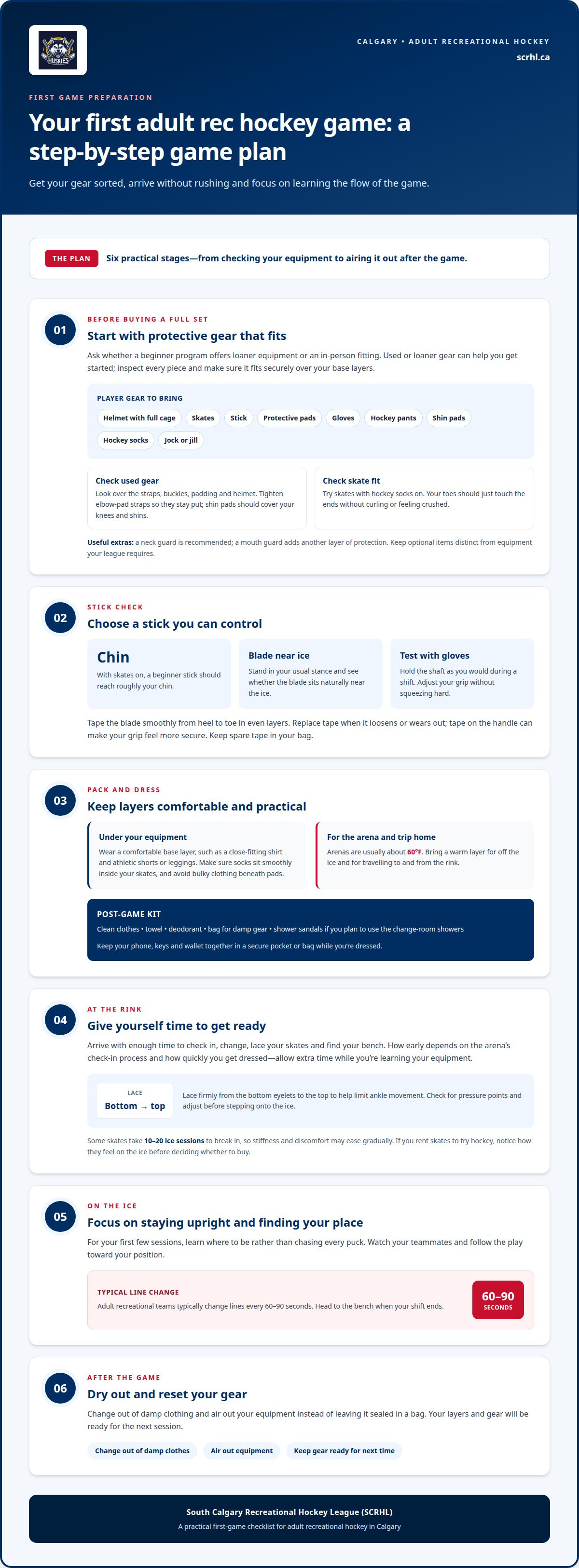
3. Advice for a first adult recreational hockey game
Leave enough time to check in, change, lace your skates and find your bench. How early to arrive depends on the arena’s check-in process and how quickly you get dressed. Give yourself time to put on each layer without rushing, especially while you’re learning how your equipment fits.
Wear a comfortable base layer under your hockey equipment, such as a close-fitting shirt and athletic shorts or leggings. Add socks that fit smoothly inside your skates, then dress in layers for the trip to and from the rink. Hockey arenas are usually about 60 degrees Fahrenheit, so a warm layer is useful off the ice. Avoid bulky clothing beneath pads, where it can affect fit.
Pack a small post-game kit with clean clothes, a towel, deodorant and a plastic or washable bag for damp gear. Bring shower sandals if you plan to use the change-room showers. Keep your phone, keys and wallet together in a secure pocket or bag while you’re dressed.
Before warm-up, lace skates firmly from the bottom eyelets to the top. This helps limit ankle movement. Some skates take 10-20 ice sessions to break in, so expect stiffness and discomfort to ease gradually. Don’t wait until game time to notice a pressure point; walk carefully in your skates and adjust the laces before stepping onto the ice.
For your first few sessions, focus on staying upright and learning where to be rather than chasing every puck. Watch teammates and follow the play toward your position. Adult recreational teams typically change lines every 60-90 seconds, so head to the bench when your shift ends. A simple, timely change keeps play moving and gives you a clear job to focus on.
After the game, change out of damp clothing and air out your gear rather than leaving it sealed in a bag. This helps you get your layers and equipment ready for the next session.
Arrive early enough to check in, change, lace your skates and find your bench without rushing. Allow extra time if you’re still learning how your equipment fits.
4. What hockey equipment is required for a first recreational hockey game in Canada?
For a Canadian recreational game, prepare a helmet with a full cage, skates, a stick, gloves and complete protective padding. Adult beginners also need a jock or jill. A neck guard is recommended for beginners and is increasingly required in adult leagues, so include one with your gear.
Choose a helmet and facemask that fit properly and are designed for hockey. A CSA-certified helmet can also be used legally in Canada. The year on its CSA certification shows when it was certified, not an expiry date, and CSA helmet certification does not expire in Canada.
Protective gear should cover the areas it’s designed for. Hockey pants protect the lower spine, hips and thighs. Shin pads should cover your knees and shins completely, while gloves should let your fingers and hands move comfortably. Secure elbow-pad straps so the pads don’t shift during play.
Wear hockey socks over your shin pads, attaching them to the Velcro on your hockey supporter. This helps keep the pads covered as you move. Check that your socks, pads and supporter fit together without bunching or slipping. A mouth guard is another useful protective item for a beginner.
Before leaving for the rink, lay out your gear in dressing order: base layer, supporter, socks and shin pads, followed by pants, elbow pads, gloves and helmet. Keep your stick and skates beside the protective gear. This quick check helps you catch anything you’ve forgotten before reaching the arena.
Properly fitted equipment is the key safety priority. If you’re still getting ready to play, find adult recreational hockey options and plan your next step on the ice.
South Calgary Recreational Hockey League (SCRHL): Fall Season Team Registration
South Calgary Recreational Hockey League (SCRHL) offers Fall Season Team Registration for adult players ready to move from planning their equipment to organized league play. If you have a team, this is the relevant next step. If you’re joining on your own, Individual Player Registration offers another way to get into the league.
SCRHL also offers Winter Season Team Registration and Morning Hockey Sessions. Choose the option that suits you, whether you’re organizing a team, registering individually or looking for morning ice time. These options connect your first-game preparation with a format that fits your schedule.
Once your gear is ready and you’re prepared to play, visit scrhl.ca to explore registration and session options, or contact South Calgary Recreational Hockey League (SCRHL) with your questions.
Make your first game the start of a routine
Treat your first game as a starting point, not a test of how much hockey you already know. Afterward, notice what felt comfortable, what needs adjusting and what you’d like to practise before playing again. Jot down a couple of notes while the details are fresh, so you can prepare with less guesswork next time.
Knowing what to bring to your first rec hockey game is one part of getting ready. A steady routine can make the rink feel more familiar over time. Set a reminder for your next session, organize your gear so it’s easy to find, and give yourself room to learn at your own pace.
When you’re ready to take the next step into adult recreational hockey, contact South Calgary Recreational Hockey League (SCRHL) to explore your options. Get your gear ready, step onto the ice and enjoy the experience.
Frequently Asked Questions
What are the rules for helmets, face protection, and neck guards in Canadian recreational hockey?
Most adult recreational leagues require a hockey helmet with a full cage, which is also the safest choice for beginners. The helmet and facemask should have a design and construction approved by the Hockey Equipment Certification Council (HECC); a CSA-certified helmet can also be used legally in Canada. Neck guards are recommended for beginners, and requirements vary by league.
What should you bring if you have never played hockey before?
Bring a complete set of protective equipment, skates, a stick and hockey clothing, or arrange loaner gear before your first game. A Learn to Play program can provide fitted equipment at an in-person fitting, and participants keep that gear after completing the program. Pack everything together ahead of time, then try on the full set to spot anything that’s missing.
How early should you arrive before a recreational hockey game?
Arrive early enough to check in, change, lace your skates and find your bench without rushing. Allow extra time if you’re still learning how your equipment fits.